Wednesday, July 3, 2024

NASA Explains Debris Slamming North Carolina Mountain Resort From Space

Image Reference: Found here

Headlines:
NASA reveals origins of bizarre 'furry UFO' that mysteriously slammed into luxury North Carolina mountaintop resort...

Falling 'space junk' has been unmasked as the culprit behind a bizarre UFO sighting this past May, which saw a large mysterious object fall from the sky onto a mountaintop resort.

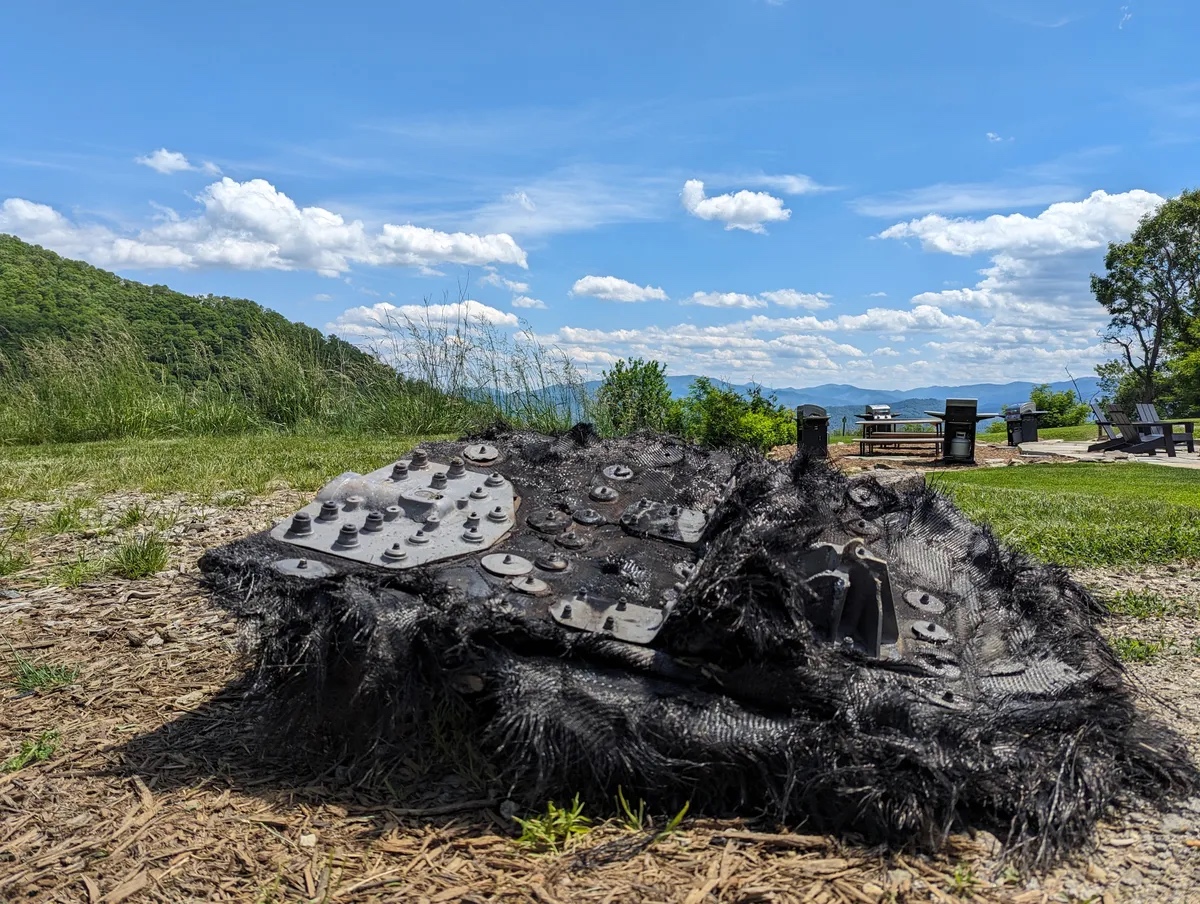
The giant, foreign-looking object looked decidedly mechanical, but also appeared to covered in a strange material that appeared akin to fur.

Those were actually frayed carbon fibers, a fact already aired to DailyMail.com by Smithsonian astrophysicist Dr Jonathan McDowell days after the find.

Days ago, NASA confirmed the debris was actually part of a SpaceX satellite - the firm's Crew Dragon capsule that reached the International Space Station in 2023.

Read more: Visit website

#news

SpaceX Falcon 9 launched the EarthCARE satellite, which will study clouds and aerosols in the Earth's atmosphere, into orbit from the Vandenberg Space Force Base in California. (Credit: SpaceX / Associated Press)

A landscaping crew working at The Glamping Collective, a mountaintop resort near Asheville in Haywood County, found a large mysterious object on May 22 that NASA confirmed is a piece of SpaceX's Crew Dragon capsule that reached the International Space Station (ISS) in 2023.

There was one large piece – about the size of a standard car hood and covered in a carbon fiber weave – found on a hiking trail, and several other smaller pieces fell in the backyards of nearby homes, according to a report by Space.com .

The objects were from the "Dragon spacecraft trunk hardware" that was "predicted to burn up fully," ABC 13 in North Carolina reported.

Other pieces of the Elon Musk-funded SpaceX 's capsule were found in Canada in February and more recently in Saudi Arabia around the time the piece in North Carolina was located, NASA said in its statement.

"NASA is unaware of any structural damage or injuries resulting from these findings," the space agency said in its statement.

BOEING'S PLAGUED STARLINER CAPSULE WOULD'VE BEEN ASTRONAUTS' 'LIFEBOAT' IF SHATTERED RUSSIAN SATELLITE HIT THE SPACE STATION

A Florida family had a similar, albeit a much scarier, run-in with space junk that didn't burn up as expected.

Tuesday, July 2, 2024

NASA And SpaceX Studying Ways To Mitigate Dragon Trunk Debris

Image More details: Visit website

International Asteroid Day: Asteroids Fly-by Earth In Serendipitous Celebration

Image Read more: Found here

Headlines:

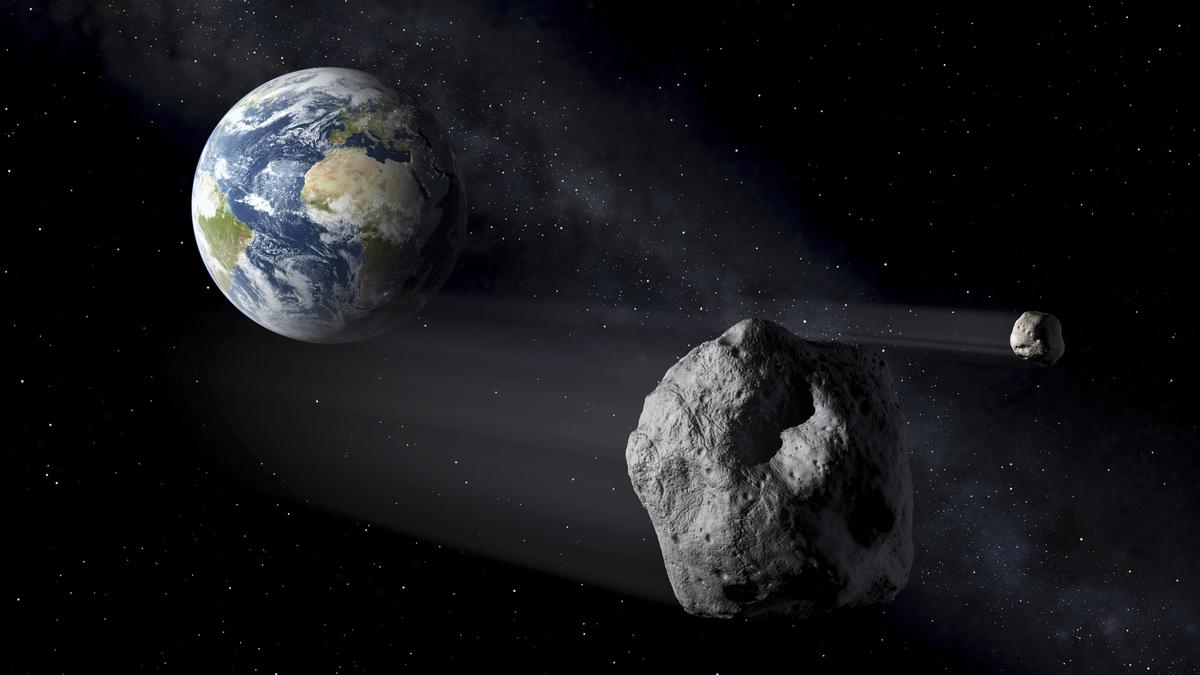
Two asteroids, one of them discovered earlier in June, passed by the Earth this week, a rare occurrence with serendipitous timing to commemorate the International Asteroid Day, according to space agencies around the world.

Explaining the footage taken by The Virtual Telescope Project, astrophysicist Gianluca Masi said that asteroid 2024 MK, with a diameter of around 200 metres, was at a distance of about three lakh kilometres when closest to the Earth – 77% of the planet⁘s distance from the Moon.

Masi, founder and director of the crowd-funded service provided by the Bellatrix Astronomical Observatory, Italy, was the commentator of a YouTube feed, streamed live at about 2:30 am June 30, IST. The asteroid was the closest to Earth about 10 hours before the feed went live, according to the commentator.

⁘It is a huge asteroid coming significantly close (to Earth) this time, but luckily for us, with no risks at all for our planet,⁘ Masi could be heard saying.

⁘But being so close and so large, this object has been very bright at the time of the close approach, so that if you were in the right part of the world, like the South-Western Americas, you could (see) this with a modest binoculars, my friends,⁘ Masi continued, deeming the asteroid fly-by as an ⁘exceptional⁘ one.

The fly-by is perfectly timed to coincide with International Asteroid Day on June 30. The day, also supported by the United Nations, marks the anniversary of the largest observed asteroid strike in recorded history in 1908, when an airburst above Tunguska in Siberia flattened more than 80 million trees.

Remnants from when the Solar System was formed, asteroids are often called ⁘minor planets⁘. There are thought to be about a billion of these irregular-shaped rocky objects orbiting the Sun.

The asteroid 2024 MK, which was discovered on June 16, 2024, highlights the need to continue improving our ability to detect potentially hazardous objects in our cosmic neighbourhood, said the ESA in a statement.

#news

ISS Research Development Conference Showcases Space Science

Image More details: Found here

The ISS Research and Development Conference (ISSRDC) , which its organizers bill as the only event dedicated to science and technology development on our nation's orbiting laboratory, will feature a session highlighting the partners supporting this research. ISSRDC 2024, highlighting the growing economy in low Earth orbit (LEO), will take place from July 29 to August 1 at Boston's Marriott Copley Place.

The session will explore the unique process of conducting research through NASA and the ISS National Lab while also emphasizing the role of implementation partners who assist in all stages, from design and preparation to in-orbit operations and payload return.

• Rick Mastracchio : Former NASA astronaut, Northrop Grumman director
• Kris Kuehnel : Managing director, Airbus U.S. Space ⁘ Defense, Inc.
• Tim Kopra : Former NASA astronaut, CEO of Starlab and Nanoracks

The conference will cover core aspects of ISS research, including cargo transport, external experiment platforms, and project support both inside and outside the station. ISSRDC 2024 features keynote speeches, panel discussions, technical sessions, and workshops. Attendees can explore the ISSRDC Marketplace Expo and network with industry peers.

The ⁘Steps to Space⁘ session, moderated by ISS National Lab Director of Payload Operations Robbie Hampton, will include panelists such as former NASA astronauts Rick Mastracchio and Tim Kopra, now representing Northrop Grumman and Starlab/Nanoracks respectively. Kris Kuehnel from Airbus U.S. Space ⁘ Defense will also share insights on external payload hosting services. For registration and sponsorship details, interested parties should visit the ISSRDC website .

Monday, July 1, 2024

Maine's First Satellite Is Headed Into Orbit

Image Read more: Visit website

Headlines:
The Portland Press Herald - Maine Sunday Telegram

Maine's first research satellite will be launched into space aboard a private rocket just after midnight Tuesday.

Wyc Grousbeck, whose family leads the ownership group, said it intends to sell the majority interest of the team this year or early next year.

Reference: Visit website

#news

Barring weather or technical hiccups, Maine's first research satellite will be launched into space aboard a private rocket early Tuesday to collect climate data for Maine students studying urban heat islands, phytoplankton and harmful algal blooms.

MESAT-1 is one of eight nano-satellites hitching a space-bound ride aboard Firefly Aerospace's Alpha rocket, which is slated to lift off from Vandenberg Space Force Base in California at 12:05 a.m. Tuesday, barring any weather or technical problems.

"The excitement is part of the experience," said Ali Abedi , a vice president for research at the University of Maine who leads the UMaine Space Initiative and oversaw the project. "The launch is exciting. Getting access to space data is exciting. It's the beginning of a new era in Maine."

Firefly Aerospace will livestream the launch, with programming starting at about 11:30 p.m. Monday.

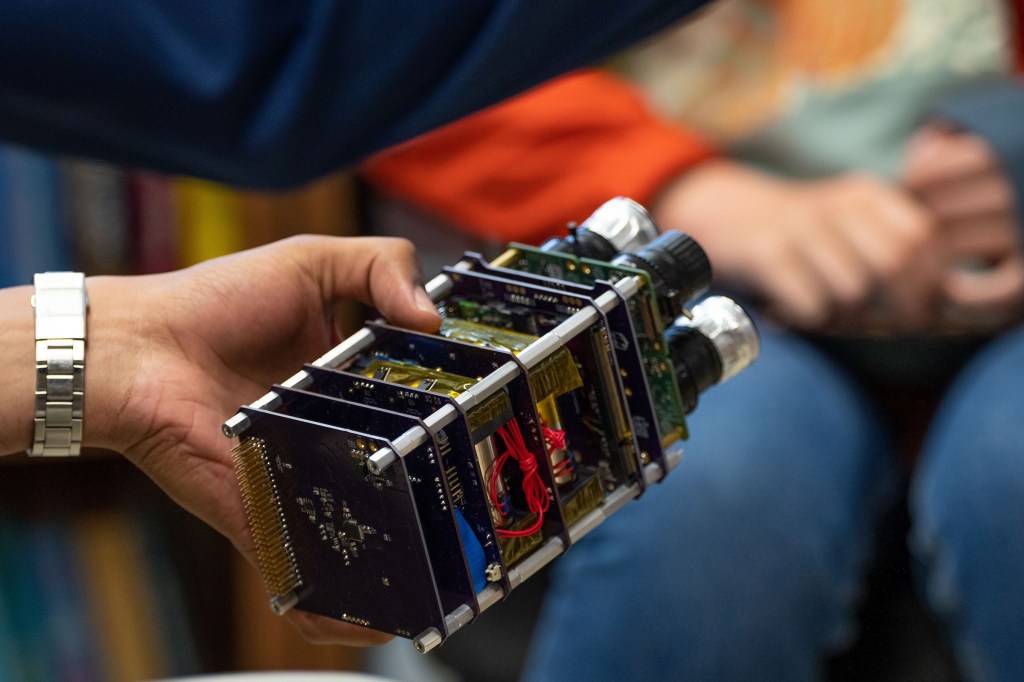
The MESAT-1 satellite when it was under development and being shown to a visiting group of high school students who were involved in the design of the satellite. Photo courtesy of the University of Maine

Of course, the rocket has to make it into space – all the way – before the satellite can go to work. Because of a software glitch, the last Firefly Alpha rocket failed to deliver its payload satellite into the proper orbit. It was parked so low in orbit that it was claimed by orbital drag. Advertisement

The MESAT-1's Firefly rocket was supposed to head skyward in 2022. After several delays, with Firefly now certain the glitches are fixed, the MESAT-1 was rescheduled for the end of June, but windy weather has pushed the launch back again. Abedi is hopeful that Tuesday will be a go.

Once deployed, MESAT-1 will circle the Earth in a 350-mile-high polar orbit at a speed of about 17,000 mph for up to two years. The stacked cubes are covered by antennae wires and a solar panel on one side, and feature four multispectral cameras that measure different wavelengths of light.

Robots Get A Fleshy Face (And A Smile) In New Research

Image More details: Visit website

Headlines:
* "Scientists Create Robot That Can Pick Fresh Fruits with Human-Like Precision" (The Verge, 2020) + Researchers at Georgia Tech have developed a robotic arm that can pick intact apples from a tree, mimicking human picking techniques. * "New AI-Powered Prosthetic Hand Allows Amputees to Feel Touch" (The Guardian, 2020) + Scientists at the University of California, Los Angeles (UCLA) have designed a prosthetic hand that uses artificial intelligence to simulate the sensation of touch. * "Japan's Robot Nanny Can Watch and Care for Infants" (BBC News, 2019) + Toyota has developed a robot that can monitor and care for infants, including changing diapers and feeding them. * "Robots Can Now Solve Rubik's Cube in Record Time" (The Washington Post, 2020) + Researchers at Carnegie Mellon University have developed a robot that can solve the Rubik's Cube in under 1 second... beating the human world record. * "China's Robot Taxi Service Launches in Major Cities" (Al Jazeera, 2020) + Chinese company NIO has launched a robot taxi service in major cities, "with the aim of reducing traffic congestion." * "Robotic Arm Can Pick and Prepare Fresh Vegetables for Cooking" (The Hindu, 2020) + Researchers at the Indian Institute of Technology (IIT) have developed a robotic arm that can pick and prepare fresh vegetables for cooking. * "AI-Powered Glasses Can Translate Languages in Real-Time" (The New York Times, 2020) + Scientists at the University of California... Berkeley have developed glasses that use artificial intelligence to translate languages in real-time. * "Germany's Robo-Taxi Service Launches in Berlin" (Deutsche Welle, 2020) + German company Webasto has launched a robot taxi service in Berlin, "with the aim of reducing transportation costs." * "Robot Can Recognize and Respond to Human Emotions" (The Telegraph, 2020) + Researchers at the University of Cambridge have developed a robot that can recognize and respond to human emotions, such as recognizing when someone is feeling ⁙⁙⁙. * "South Korea's Robot Coffee Shop Serves Drinks with a Smile" (Korea Times, 2020) + A robot coffee shop in South Korea has been designed to serve coffee and other drinks
#news

Engineers in Japan are trying to get robots to imitate that particularly human expression — the smile.

They have created a face mask from human skin cells and attached it to robots with a novel technique that conceals the binding and is flexible enough to turn down into a grimace or up into a squishy smile.

The effect is something between Hannibal Lecter's terrifying mask and the Claymation figure Gumby.

But scientists say the prototypes pave the way for more sophisticated robots, with an outward layer both elastic and durable enough to protect the machine while making it appear more human.

"Human-like faces and expressions improve communication and empathy in human-robot interactions, making robots more effective in health care, service and companionship roles," Shoji Takeuchi, a professor at the University of Tokyo and the study's lead researcher, said in an email.

There were 3.9 million industrial robots working on auto and electronics assembly lines and other work settings in 2022, according to the International Federation of Robotics.

Carsten Heer, a federation spokesman, said that humanoids were "an exciting area of development" but that mass market adoption would be complex, and could be constrained by cost.

The Shape Of The Solar System Has Changed Dramatically, Scientists Say

Image Source: Found here

Headlines:
• "NASA's Parker Solar Probe Discovers Shocking Solar Wind Pattern" (NASA, 2022) - The Parker Solar Probe has discovered a new pattern of solar wind speed and direction that challenges current understanding of the Sun's corona. • "Black Hole at Center of Milky Way Galaxy Has a Feed of Material" (Science Daily, 2022) - Astronomers have discovered a massive reservoir of material at the center of the Milky Way galaxy, which is being consumed by the supermassive black hole. • "El Niño and La Niña Events Impact Global Weather Patterns" (National Geographic, 2022) - Scientists have found that El Niño and La Niña events have a significant impact on global weather patterns, including extreme weather events. • "New Species of Ancient Human Discovered in the Philippines" (The New York Times, 2022) - A new species of ancient human has been discovered in the Philippines... shedding light on human evolution and migration. • "Ocean Currents Play a Key Role in Climate Regulation" (BBC News, 2022) - Scientists have found that ocean currents play a crucial role in regulating Earth's climate, "helping to distribute heat around the globe." • "T-Rex Soft Tissue Found Preserved in Ammonite Fossil" (The Guardian, 2022) - A new study has found preserved soft tissue from a Tyrannosaurus Rex embedded in an ammonite fossil. • "Water Found on Mars, a Crucial Find for NASA's Search for ---" (Fox News, 2022) - NASA's Perseverance rover has discovered evidence of water on Mars... which is a crucial finding in the search for --- beyond Earth.
#news

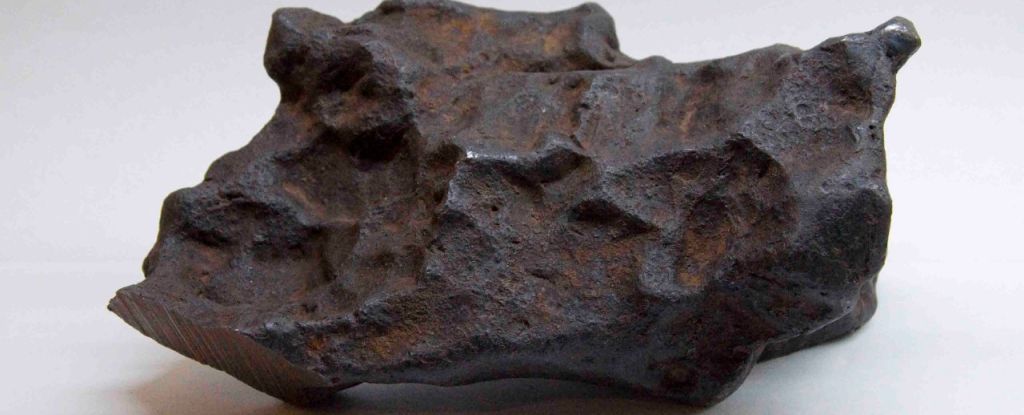
Before it arranged itself into a flattened disk, the distribution of dust and rocks had more in common with a donut than a pancake. This is the conclusion scientists reached after studying iron meteorites from the outer Solar System, finding that they can only be explained if the Solar System's shape was once toroidal.

This is information that can help us interpret other emerging planetary systems and determine the order in which they assemble.

The formation of a planetary system around a star starts in a molecular cloud of gas and dust drifting through space. If a portion of the cloud becomes dense enough, it will collapse under its own gravity, spinning as it goes, becoming the seed of a growing baby star . As it spins, the material in the surrounding cloud pulls into a circling disk that feeds into the protostar.

We've seen these disks time and again around other stars , with gaps carved by planets slurping up the dust as they go.

According to a team led by planetary scientist Bidong Zhang of the University of California Los Angeles, the composition of asteroids in the outer Solar System requires the cloud of material to be donut-shaped, rather than a series of concentric rings in a flat disk. This suggests that the first stages of the system's coalescence are toroidal.

The iron meteorites in question – chunks of rock that have made their long way to Earth from the outer Solar System – are richer in refractory metals than those found in the inner Solar System. These are metals such as platinum and iridium, whose formation can only take place in a very hot environment such as one close to a forming star.