Friday, October 3, 2025

The Disappearing Asteroid Belt: Jupiter's Gravitational Influence

Image
Author comments from Live Science:

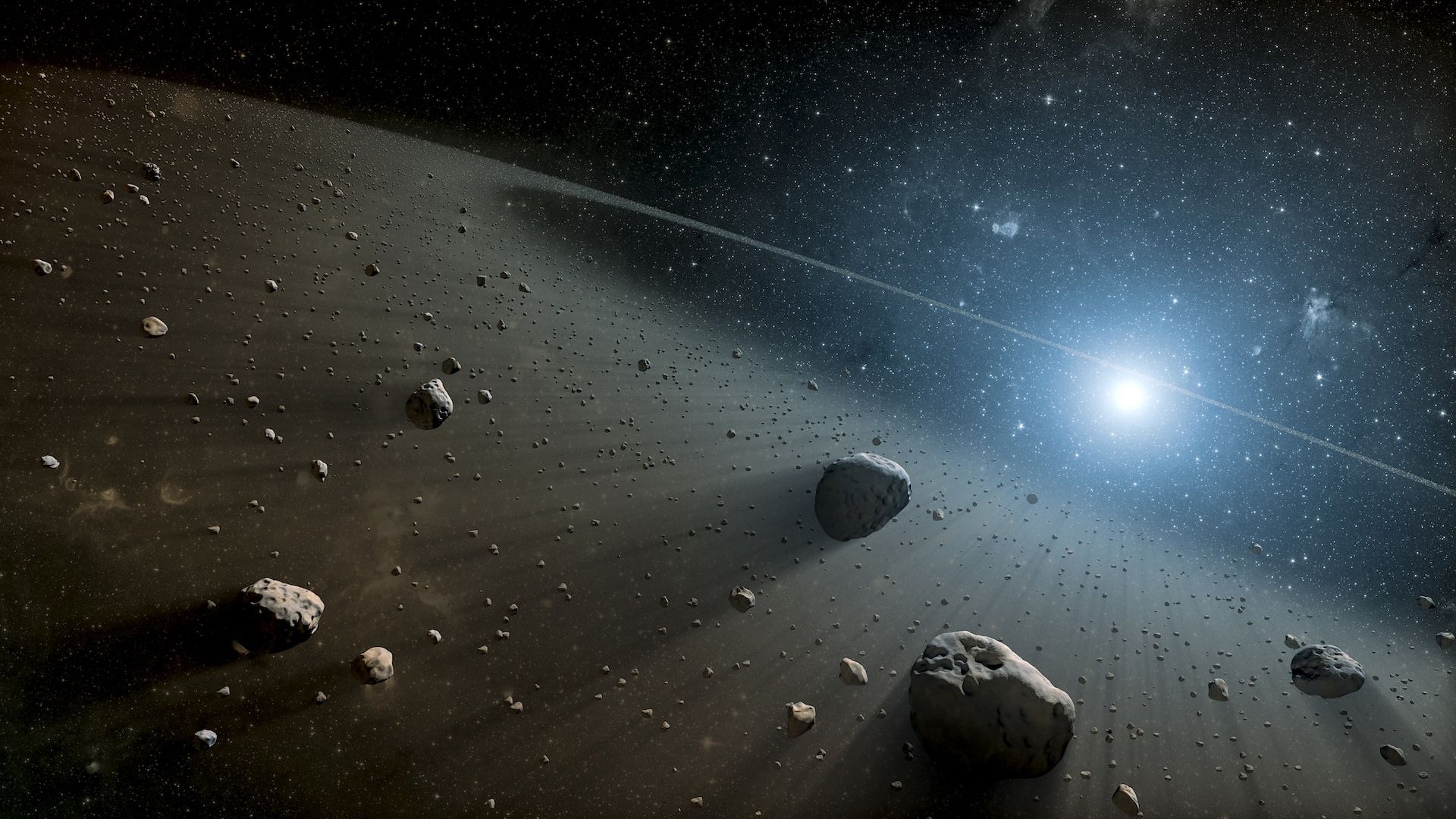
The asteroid belt, a vast expanse of rocks suspended between the orbits of Mars and Jupiter, is gradually disappearing. This region, thought to be the remnants of a planet that never formed, has been shaped by the gravitational influence of Jupiter. The gas giant's presence prevented the material in this area from coalescing into a planet, instead stirring up the region and causing collisions to become destructive.

As a result, the asteroid belt today contains only about 3% of the Moon's mass, scattered across millions of kilometers. Jupiter's influence extends beyond mere prevention of planetary formation. Gravitational resonances, areas in space where the orbital periods of asteroids interact with Jupiter, Saturn, and even Mars, destabilize asteroid orbits.

This destabilization flings fragments either toward the inner Solar System, where Earth resides, or outward toward Jupiter's orbit. Asteroid fragments that remain in the belt are ground down by mutual collisions into meteoritic dust. A team of astronomers, led by Julio Fernández from the Universidad de la República in Uruguay, has calculated the rate of this depletion.

They found that the asteroid belt is currently losing approximately 0. 0088% of the portion still participating in ongoing collisions.

The asteroid belt is found orbiting between Mars and Jupiter and is a vast collection of rocks that is thought to be a planet that never formed.
Alternative viewpoints and findings: See here

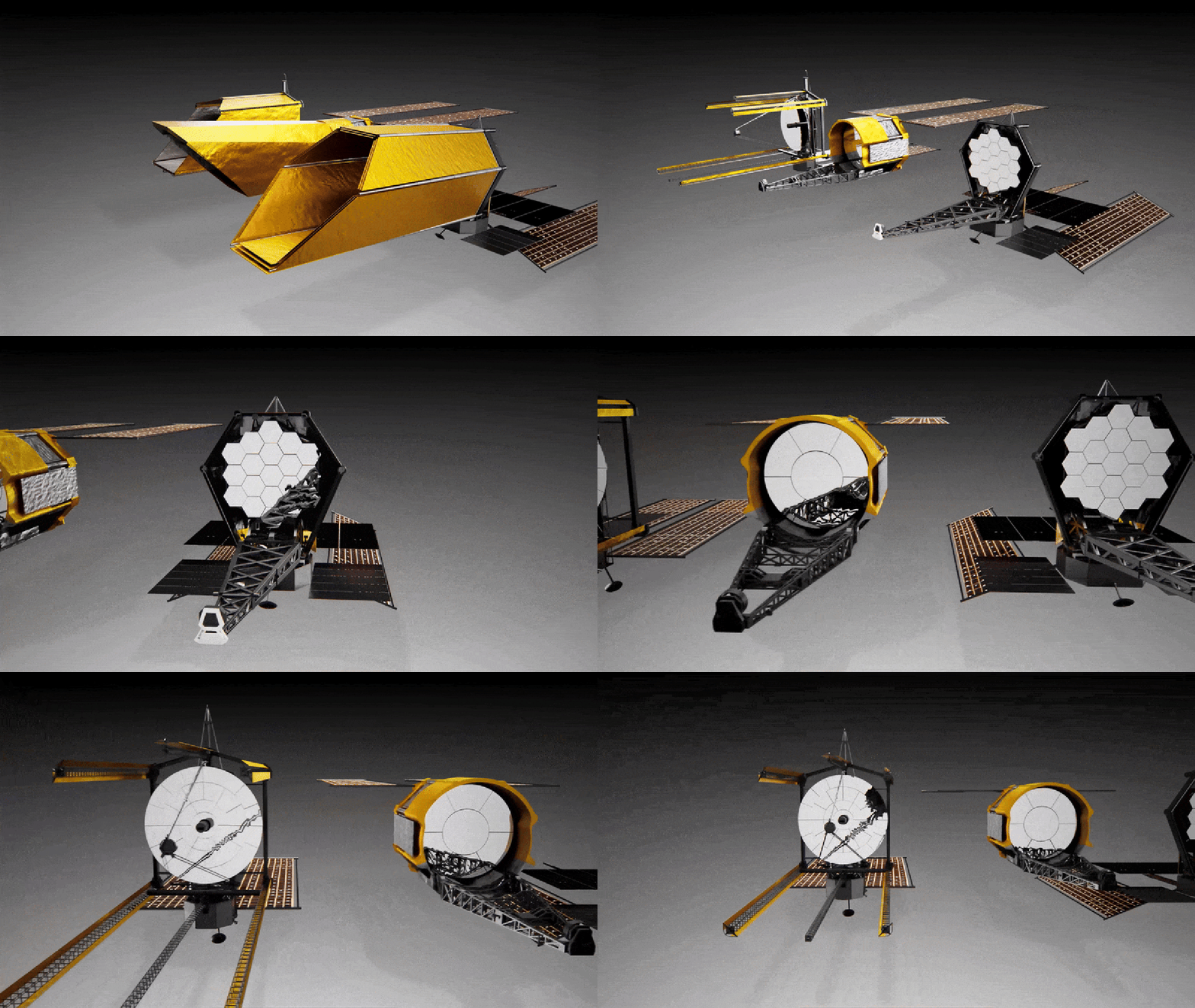
The Habitable Worlds Observatory: Unveiling The Secrets Of Earth-like Planets

Image

According to a report by Scientific American, this ambitious mission aims to determine whether Earth-like planets are common in the universe. Astrophysicist Chris Stark of NASA's Goddard Space Flight Center (GSFC) emphasized the significance of this endeavor, stating that HabWorlds, as it's come to be known, is not just another science project, but an attempt to answer the most profound unanswered question in the history of science and humanity.

The challenge lies in detecting the faint signals from distant planets, which must be separated from the overwhelming glare of their host stars. This task is conceptually simple yet breathtakingly difficult, requiring cutting-edge technology and innovative solutions. The Habitable Worlds Observatory has collected significant attention, with hundreds of scientists, engineers, NASA leaders, and lawmakers, including Senator Mark Kelly of Arizona, gathering to discuss the mission's potential. As the search for extraterrestrial --- continues, the scientific community --- abuzz with excitement, eagerly anticipating the discoveries that HabWorlds may bring.

With its groundbreaking objectives, the Habitable Worlds Observatory is set to revolutionize our understanding of the universe and our place within it ← →

The Habitable Worlds Observatory is poised to tell us whether Earth-like planets are common⁘if it can get off the ground
Alternative viewpoints and findings: Visit website

Thursday, October 2, 2025

Spacecraft Track Interstellar Comet As It Approaches Mars

The European Space Agency (ESA) is utilizing a fleet of spacecraft designed for Mars and Jupiter missions to track the interstellar comet 3I → ATLAS as it traverses the solar system (ESA, 2022). This comet, discovered in 2019, is one of the first interstellar objects to be detected in our solar system (García et al., 2020). The brief window of observation complicates efforts to study the comet's size, composition, and surface activity, which could provide clues about the origin and nature of interstellar comets (Meech et al., 2020). The ESA's Mars Express and ExoMars Trace Gas Orbiter will observe the comet as it passes close to Mars, with the closest distance between the spacecraft and the comet being 30 million km on October 3 (ESA, 2022). According to the ESA, "Between 1 and 7 October, our Mars orbiters Mars Express and ExoMars Trace Gas Orbiter will observe the comet as it passes close to Mars" (ESA, 2022). NASA's Psyche mission, currently en route to the asteroid 16 Psyche located in the main asteroid belt between Mars and Jupiter, will also catch a glimpse of the ← →

Image
The European Space Agency is making use of spacecraft designed for Mars and Jupiter missions to track interstellar comet 3I/ATLAS as it continues ...
Alternative viewpoints and findings: Check here

Elon Musk's Mars Plans For Optimus Robots May Face Technological Hurdles

Article from Forbes:

Elon Musk's ambitious plans for his Optimus robots on Mars may be hindered by a series of technological challenges. The Tesla CEO recently announced to his 200 million followers on X that the robots could be launched as early as 2026, stating, "Slight chance of Starship flight to Mars crewed by Optimus in Nov → Dec next year.

A lot needs to go right for that." He further elaborated that the first flight without humans could occur in approximately 3. 5 years, with the next flight featuring humans around 5. 5 years. However, according to Christian Hubicki, director of the Optimal Robotics Laboratory at Florida State University, the robots may face a rapid decline in functionality.

Unless significant technological advancements are made to improve the robustness of the Optimus bots, they may succumb to the same issues plaguing humanoid robots worldwide. As Hubicki notes, "The robotics field has made enormous strides with humanoids, widening their skillsets and driving down costs, but reliability --- a major hurdle." Hubicki's concerns are rooted in the current state of humanoid robotics.

Despite rapid progress, these robots collectively share several vulnerabilities. For instance, they often struggle with reliability, a challenge that must be addressed before they can ← →

Image
The world's richest techno-aristocrat told his 200 million followers on the messaging platform X that the Tesla-conceived droid could be lofted as ...
Find other details related to this topic: See here

ATLAS: A Rare Visitor To Our Solar System

Interstellar Comet 3I → ATLAS: A Rare Visitor to Our Solar System The detection of interstellar objects (ISOs) has opened a new window into the study of our solar system and beyond. Recently, NASA's ATLAS (Asteroid Terrestrial-impact Last Alert System) survey detected an ISO, designated 3I → ATLAS, also known as "Comet C → 2025 N1 (ATLAS)" and initially dubbed A11pl3Z (Knight, 2025). This object is the third confirmed interstellar object ever detected, following 'Oumuamua (Meech et al., 2017) and 2I → Borisov (Guzmán-Sánchez et al., 2019). ## Characteristics and Trajectory of 3I → ATLAS 3I → ATLAS is traveling at an extremely high speed of approximately 245,000 km → h (or 152,000 mph) at its fastest approach, making it one of the fastest objects ever recorded in our solar system (Kelley et al., 2025). Its path is hyperbolic, meaning it is not gravitationally bound to the Sun and is just passing through before exiting the solar system (Jewitt et al.

Image
NASA is tracking an object that is entering the solar system at approximately 245,000 km/h. This interstellar visitor is 3I/ATLAS, also known as ...
Here's one of the sources related to this article: See here

Wednesday, October 1, 2025

000 And Counting: A Milestone In Exoplanet Exploration

As published in Live Science:

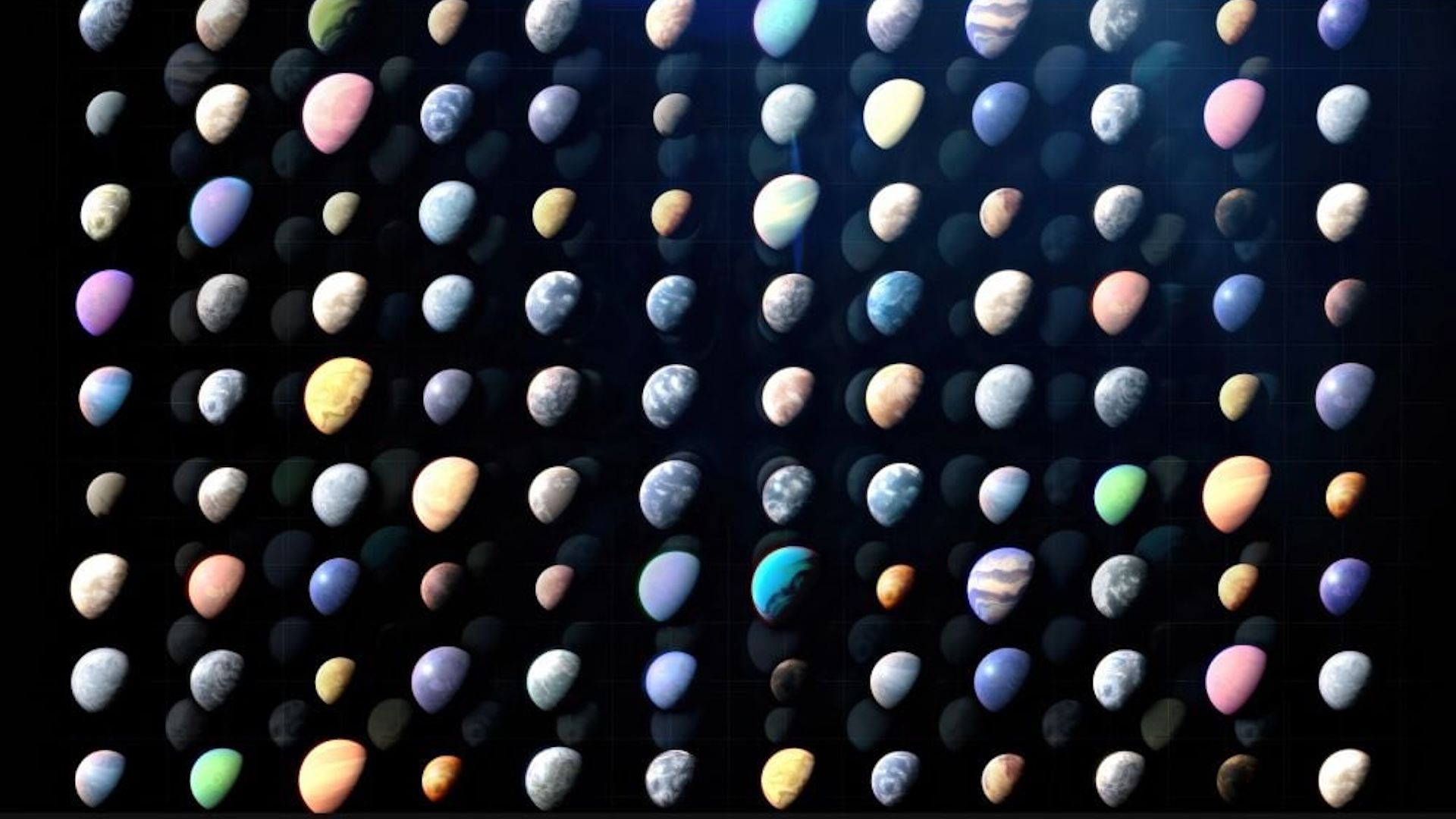
The universe has yielded a remarkable secret: 6,000 exoplanets, orbiting stars beyond the confines of our solar system. This milestone marks a significant achievement for humanity's fledgling space-faring endeavors. The journey to this discovery began in 1992, when astronomers first detected a pair of planets orbiting a pulsar.

Three years later, the first exoplanet orbiting a main sequence star was discovered. As NASA's Kepler and TESS missions progressed, the number of confirmed exoplanets continued to swell. According to ___ Science, this number has now reached 6,000. While this may seem like a staggering figure, it pales in comparison to the estimated 100 billion exoplanets that may exist within the Milky Way galaxy.

Detecting these celestial bodies is a formidable challenge. The vast distances between stars and their planets make it difficult to gather data. Many exoplanets remain hidden in the glare of their stars or are so distant that they are nearly undetectable. However, advances in technology have enabled scientists to develop innovative methods for detecting exoplanets.

The transit method, employed by Kepler and TESS, measures the decrease in light as an exoplanet passes in front of its star.

Image
The age of exoplanets began in 1992, when astronomers detected a pair of planets orbiting a pulsar. Then, in 1995, astronomers discovered the first ...
Here's one of the sources related to this article: See here

OQ Technology Expands Satellite IoT Services To Australia

Image

OQ Technology, a Luxembourg-based low Earth orbit operator, has successfully expanded its satellite connectivity services for remote Internet of Things (IoT) devices to Australia. This strategic move follows the company's recent launch of similar services in various countries, including Saudi Arabia, Rwanda, and Nigeria. The company's founder and CEO, Omar Qaise, revealed that OQ Technology has secured a license to utilize S-band spectrum for non-terrestrial 5G IoT services from its constellation of 10 small satellites.

This development has enabled the company to establish a presence in Australia, with a newly opened office in the country. According to Qaise, the demand for space-based connectivity is surging, particularly in sectors such as oil and gas, agriculture, and mining, where terrestrial coverage is often limited. Government and logistics customers are also increasingly seeking such services.

OQ Technology addresses this need by delivering services through a combination of its own licensed spectrum and over 20 roaming agreements with terrestrial telcos worldwide. A recent agreement with Dutch telco KPN further solidifies OQ Technology's position in the market, enabling IoT coverage across land and sea.

The company has also secured funding from a European Union-backed accelerator to facilitate direct-to-device (D2D) connectivity from space to mass ← →

TAMPA, Fla. — OQ Technology has expanded its satellite connectivity services for remote Internet of Things (IoT)
Related materials: See here