 More details: Visit website
⁘Picture swarms of bees or midges,⁘ Aronson said. ⁘They move, that creates sound, and the sound keeps them cohesive, many individuals acting as one.⁘
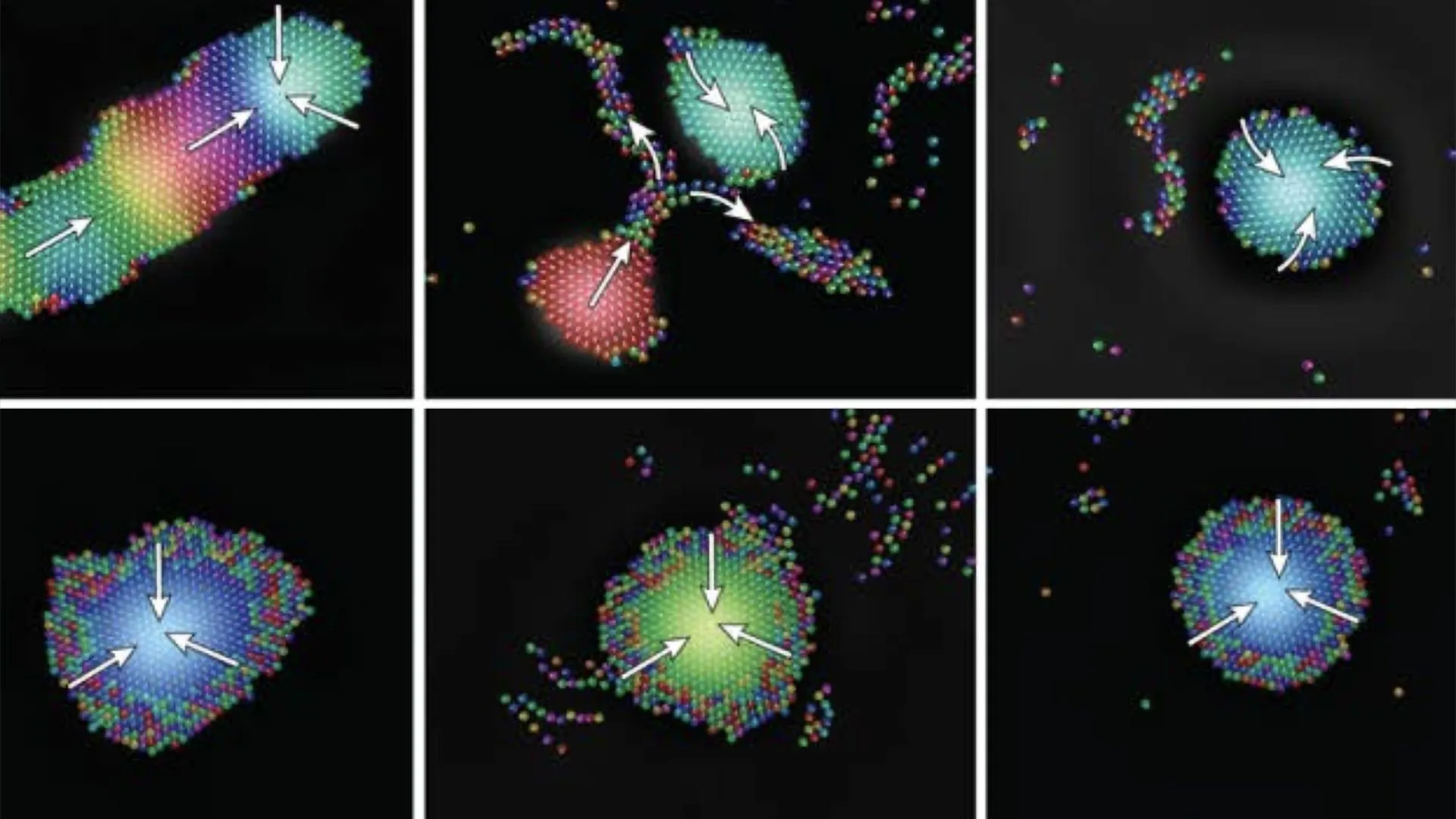
Since the miniature, sound-broadcasting swarms of micromachines are self-organizing, they can navigate tight spaces and even re-form themselves if deformed.
The swarms' collective -- or emergent -- intelligence could one day be harnessed to carry out tasks like cleaning up pollution in contaminated environments, Aronson explained.
⁘This represents a significant leap toward creating smarter, more resilient and, ultimately, more useful microrobots with minimal complexity that could tackle some of our world's toughest problems,⁘ he said.
⁘The insights from this research are crucial for designing the next generation of microrobots, capable of performing complex tasks and responding to external cues in challenging environments.⁘
For the study, the team developed a computer model to track the movements of tiny robots, each equipped with an acoustic emitter and a detector.
They found that acoustic communication allowed the individual robotic agents to work together seamlessly, adapting their shape and behavior to their environment, much like a school of fish or a flock of birds.
While the robots in the paper were computational agents within a theoretical -- or agent-based -- model, rather than physical devices that were manufactured, the simulations observed the emergence of collective intelligence that would likely appear in any experimental study with the same design, Aronson said.
⁘We never expected our models to show such a high level of cohesion and intelligence from such simple robots,⁘ Aronson said. ⁘These are very simple electronic circuits. Each robot can move along in some direction, has a motor, a tiny microphone, speaker and an oscillator. That's it, but nonetheless it's capable of collective intelligence.
It synchronizes its own oscillator to the frequency of the swarm's acoustic field and migrates toward the strongest signal.⁘

No comments:
Post a Comment