Astronomers may have finally cracked the case of the disappearing exoplanet Fomalhaut b, thanks to new images from the Hubble Space Telescope. The mystery surrounding this exoplanet, which was first discovered in 2008, has been a long-standing one. Located 25 light-years from Earth, Fomalhaut, the star at the center of this phenomenon, is known for its prominent ring of dust and rubble, a region where planet formation is actively happening.
The breakthrough came when astronomers, led by Jason Wang from Northwestern University, observed a vast cloud of dust released by colliding planetesimals in the debris disk of Fomalhaut. These planetesimals, suspected to be planet-building blocks, slammed into each other, producing a bright blob in Hubble images. The size of this cloud suggests that the impacting planetesimals were approximately 30 kilometers in diameter, slightly larger than the Martian moon, Phobos. This new discovery offers an alternative explanation for the vanishing exoplanet Fomalhaut b.
Instead of being a planet, it is likely that Fomalhaut b was an expanding cloud of dust produced by a previous collision between planetesimals. The similarity between the new cloud and Fomalhaut b when it was first discovered is striking.
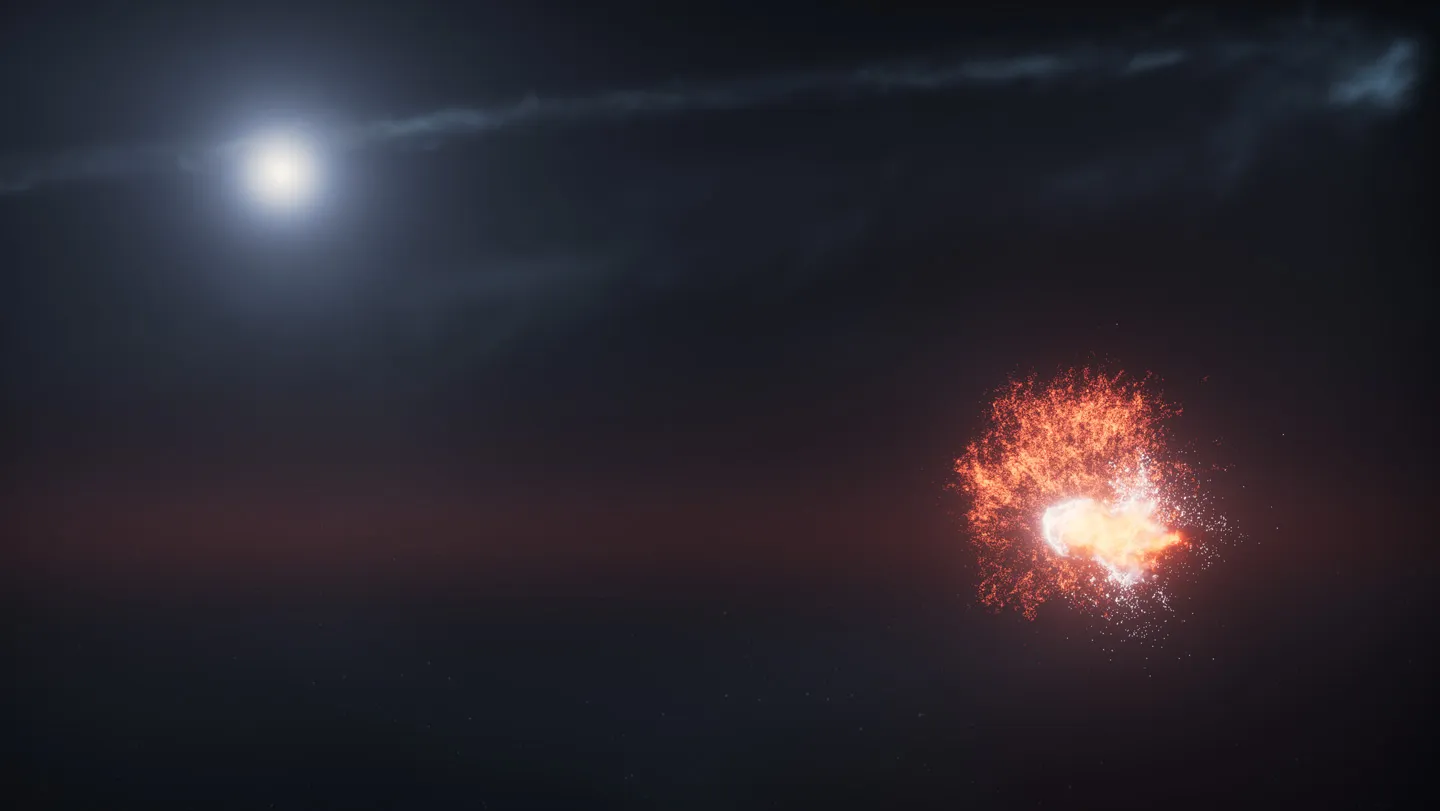
“It's the first time we've ever seen colliding planetesimals outside of our own solar system,” says Jason Wang, an astronomer at Northwestern ...Related perspectives: See here

No comments:
Post a Comment