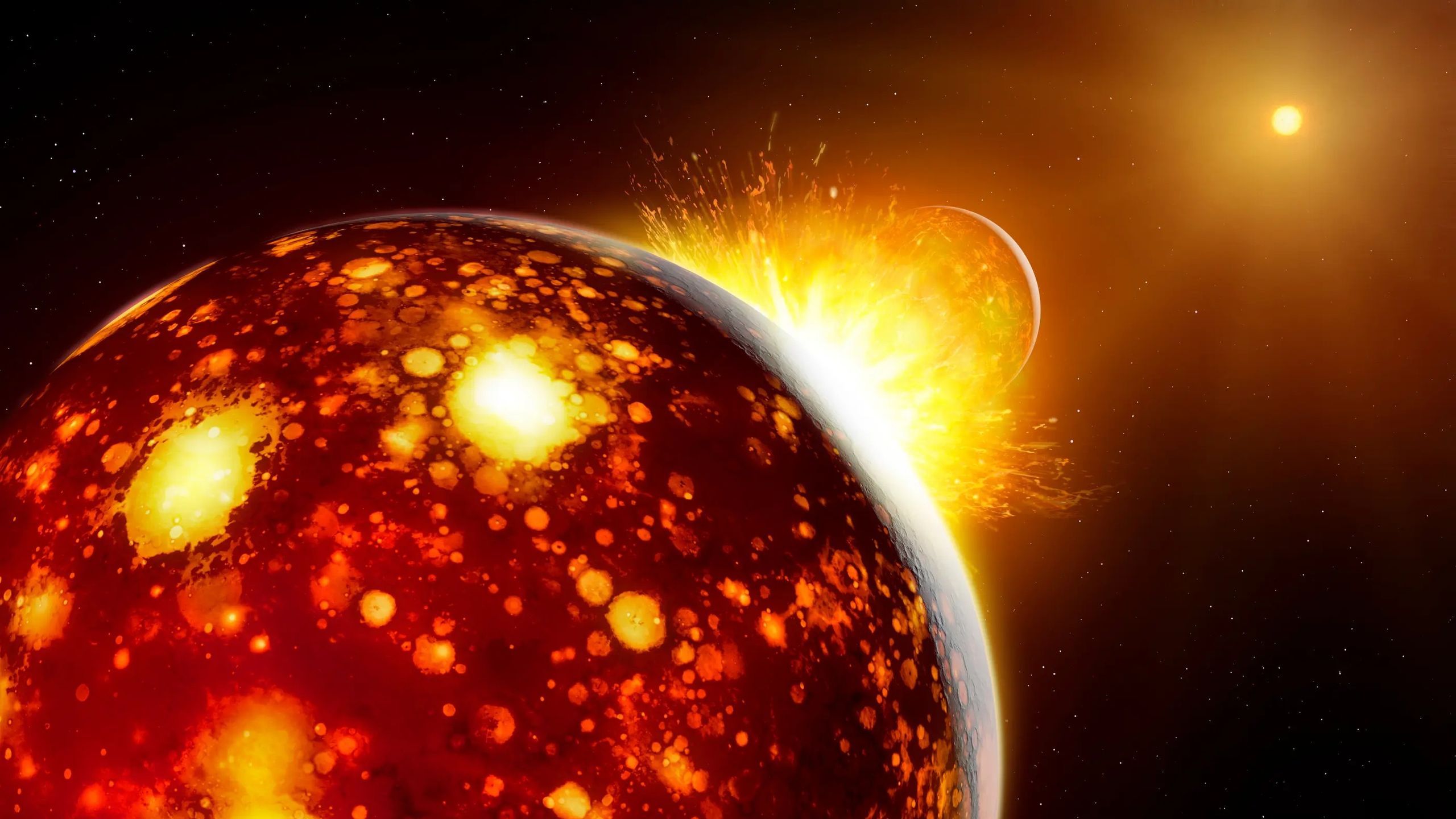
A groundbreaking study reveals that a long-lost planet, nicknamed Theia, may have once orbited next to Earth, ultimately leading to the formation of the moon. This Mars-size world, which existed around 4. 5 billion years ago, collided with the young Earth, melting huge swaths of the planet's mantle and blasting a disk of molten debris into orbit.
The wreckage eventually clumped together to form the moon. According to Timo Hopp, a geoscientist at the Max Planck Institute for Solar System Research in Germany, Theia and proto-Earth share a similar origin story. "Theia and proto-Earth come from a similar region of the inner solar system," Hopp told --- Science. The findings, detailed in a paper published in the journal Science, suggest that Theia was a rocky world that formed in the inner solar system, likely even closer to the sun than Earth. The study analyzed moon samples from Apollo missions, terrestrial rocks, and meteorites, providing new insights into Theia's composition and origin.
The results reinforce the classical picture of how rocky planets assembled billions of years ago. In the turbulent first 100 million years after the sun formed, the inner solar system was crowded with dozens to hundreds of planetary embryos - ← →
The catastrophic collision that forged the moon, and marked one of the most consequential events in Earth's early history, may have been triggered ...Looking to read more like this: See here

No comments:
Post a Comment