Showing posts with label January. Show all posts

Saturday, January 31, 2026

From Electric Cars To Humanoid Robots And AI

Information column from Yahoo News:

Tesla Undergoes Radical Transformation. The electric vehicle pioneer is pivoting towards robotics and artificial intelligence. This bold move marks a significant departure from its core business. Tesla's CEO, Elon Musk, announced the company's strategic shift during its Q4 2025 earnings call. The Fremont, California factory, once dedicated to producing the Model S and Model X, will now focus on manufacturing the Optimus humanoid robot at scale. The ambitious goal is to produce up to one million units annually. This transformation comes as Tesla reported its first annual revenue decline. Despite this, the company's earnings narrowly beat expectations. The luxury EVs, Model S and Model X, have seen a sharp decline in demand. In contrast, the high-volume models, Model 3 and Model Y, now account for most deliveries. The Optimus program, also known as the Tesla Bot, was introduced in 2021. Musk envisions these robots performing hazardous, repetitive, or mundane tasks in factories and homes. Third-generation Optimus designs are expected to begin assembly by the end of 2026, with potential public availability in 2027. Tesla is committing significant resources to this endeavor, with plans to spend roughly $20 billion in capital

Image
Tesla is taking one of the boldest turns in its history, and it's not just about electric cars anymore.
More takeaways: See here

Friday, January 30, 2026

Rare Planetary Alignment To Occur On February 28

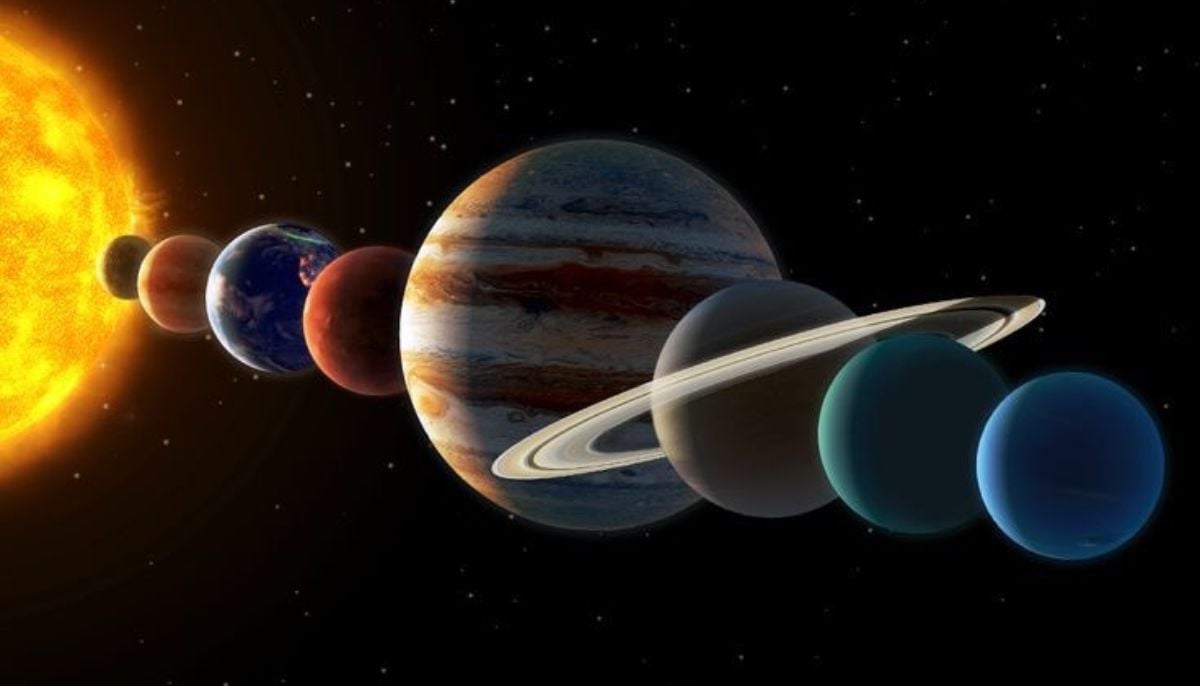
The celestial ballet is set to mesmerize sky watchers once again. A rare astronomical event, known as a planetary alignment, is slated to occur on February 28, 2026, when six planets will converge in the southwestern sky after sunset. Mercury, the smallest and closest planet to the sun, will shine briefly, followed by the radiant Venus, which will be easily visible to the naked eye. Jupiter and Saturn will also be visible, with Jupiter's steady glow making it easily identifiable without special equipment. However, Uranus and Neptune, being dimmer and farther away, will require binoculars to be spotted clearly. This spectacular event is made possible by the planets' orbits around the sun, which lie roughly on the same flat plane, known as the ecliptic. As the planets move at different speeds based on their distance from the sun, the alignment occurs when their orbits synchronize, causing them to appear clustered in a small region of the sky from Earth's vantage point. According to a report by thenews. com. pk, this rare event will be visible in the southwestern sky from most regions, offering a breathtaking spectacle for stargazers.

Image
For sky watchers, another rare astronomical event is on the horizon. On February 28, 2026, six planetary alignment will dazzle the sky after sunset.
Related materials: Check here

NASA's Lunar Tech Revolutionizes Earthly Innovations In Housing And Robotics

Image

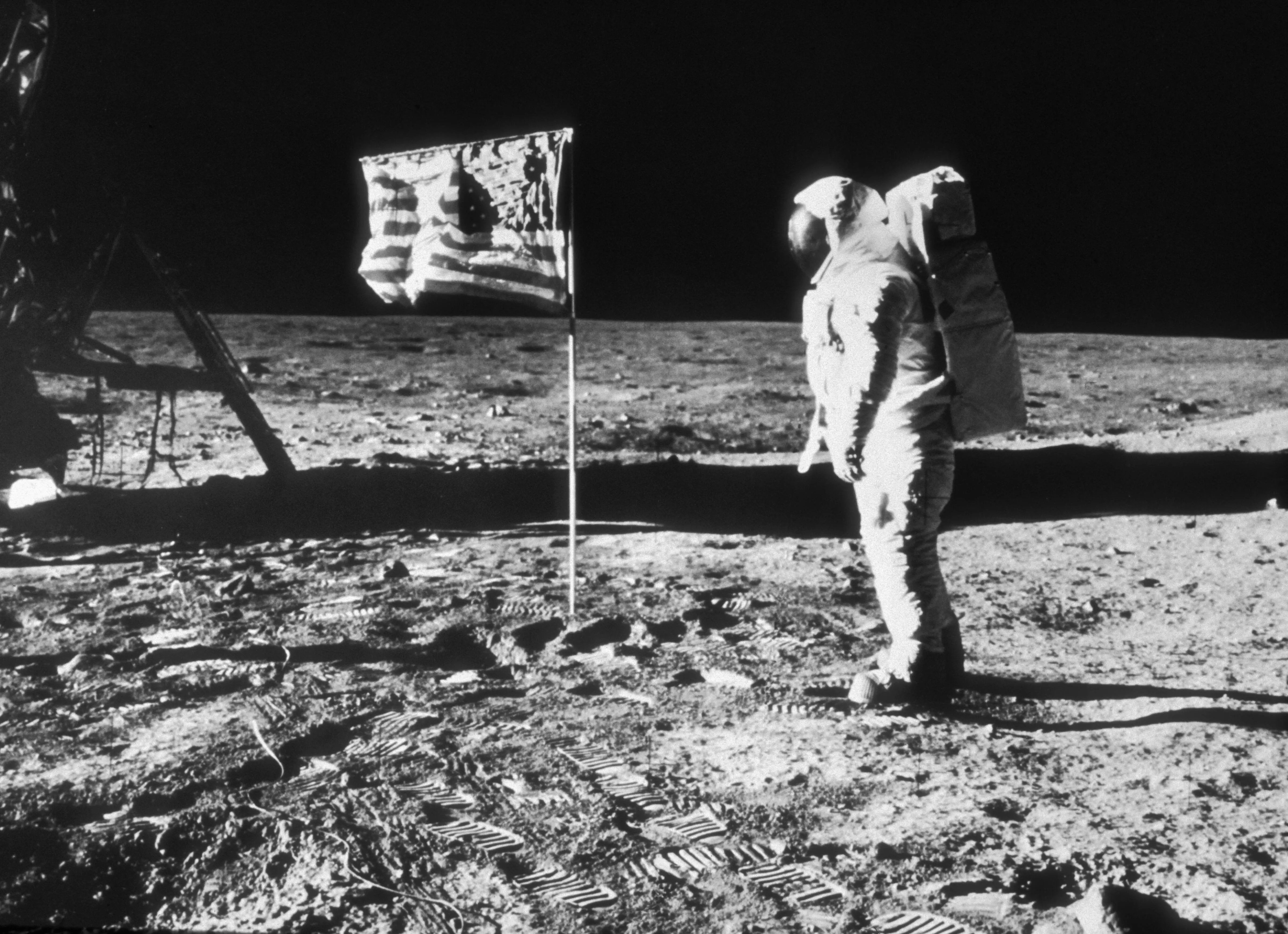
NASA's lunar mission technology is being repurposed for Earthly applications, revolutionizing housing and robotics. The agency's Technology Transfer program has licensed systems developed for sustained lunar missions, as documented in Spinoff 2026. These technologies tackle challenges like autonomous construction and robotic task execution. They are now being applied to building construction and robotic operations on Earth. This supports housing production and automated labor across multiple industries. The Artemis lunar program drives innovation, pushing the boundaries of what is possible. The same systems that enable astronauts to --- and work on the Moon are being adapted for commercial use. Through the Technology Transfer program, NASA shares these systems with private companies for non-space uses. As reported by primetimer. com, Spinoff 2026 marks 50 years of documenting this process. The publication highlights how lunar and deep space technologies are adapted for commercial sectors. This milestone demonstrates the vast potential of space exploration to drive innovation on Earth. By transferring lunar mission technology, NASA is fostering a new era of collaboration and progress.

Lunar mission technology supports next generation housing and robotics by transferring systems developed for Moon exploration into commercial use on...
Find other details related to this topic: Check here

Thursday, January 29, 2026

Oxford Space Systems And SSTL Successfully Deploy Large Antenna In Orbit

In a remarkable achievement, Oxford Space Systems and Surrey Satellite Technology Limited (SSTL) have successfully deployed the Wrapped Rib Antenna in orbit on the CarbSAR mission. This milestone marks a significant breakthrough for Oxford Space Systems, as it validates the flight heritage of its first large deployable reflector. The CarbSAR demonstration mission, launched on January 11, 2026, aboard a SpaceX Falcon 9 rocket, has achieved a crucial objective with the successful deployment of the antenna. This accomplishment is a testament to the dedication and expertise of the Oxford Space Systems team, who have invested years in developing, testing, and refining the technology. The partnership between Oxford Space Systems and SSTL has yielded impressive results, with Andrew Cawthorne, Managing Director of SSTL, expressing pride in the collaboration. He highlights the potential of compact satellite platforms and looks forward to building on this achievement for future SAR and Earth observation missions. According to SpaceNews, the details of this remarkable achievement have been closely followed, and the successful deployment of the Wrapped Rib Antenna has significant implications for the future of space exploration and Earth observation. With this milestone, Oxford Space Systems and SSTL have demonstrated their capabilities and set the stage for future innovations in the field.

Image
Harwell and Guildford, UK ⁘ Oxford Space Systems and Surrey Satellite Technology Limited (SSTL) today announced the successful in-orbit deployment ...
Related materials: Check here

Wednesday, January 28, 2026

NASA Research Plane Makes Belly Landing At Texas Airport After Mechanical Issue

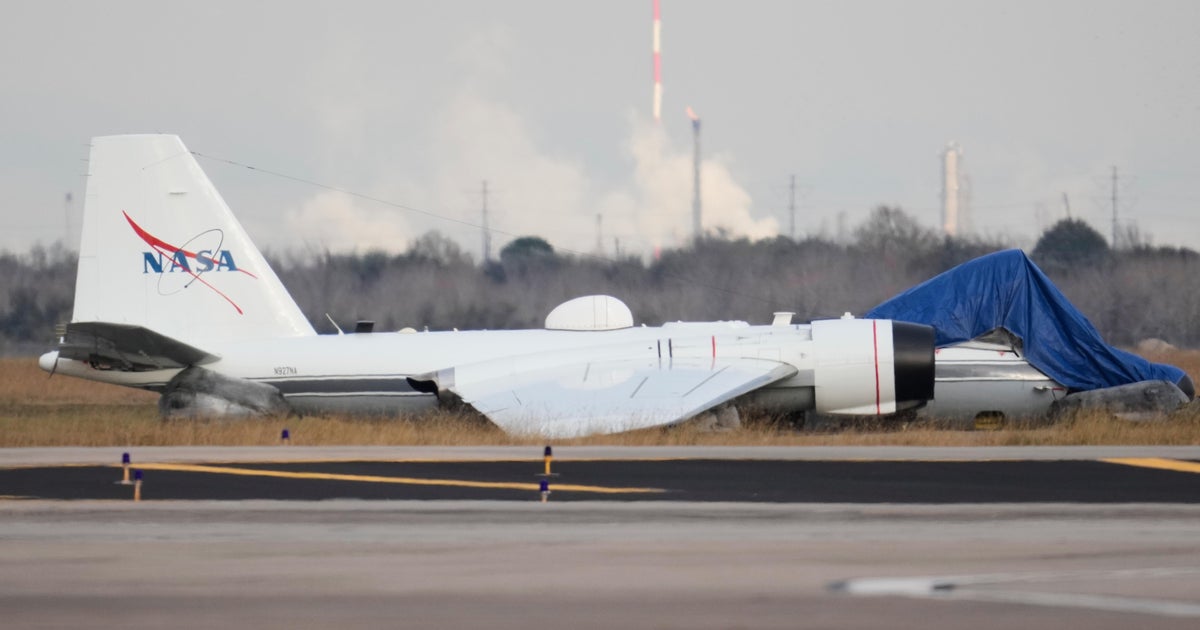
A most distressing incident occurred at Ellington Airport in Texas, as a NASA research plane, the WB-57, was forced to execute a belly landing on Tuesday. The aircraft, with its slender fuselage and dual crew seats, had been conducting high-altitude research missions since the 1970s. The crew, comprising a pilot and a sensor equipment operator, successfully evacuated the plane, and fortunately, all were reported safe. The incident was precipitated by a mechanical issue, which NASA has pledged to investigate. Eyewitness footage captured the plane's harrowing descent, as it touched down on the runway without landing gear, sending flames and smoke billowing behind it. The aircraft, capable of soaring to altitudes exceeding 63,000 feet, was seen sliding steadily down the track, its wings bouncing in a most unsettling manner. The NASA WB-57, an invaluable asset to the scientific community, has been utilized for various research missions, including atmospheric studies. For a more comprehensive understanding of this incident, CBS News provides valuable information, offering a detailed account of the event, as reported on their website, cbsnews. com.

Image
A NASA research plane malfunctioned and had to touch down in Texas without landing gear on Tuesday, sliding across the runway on its belly and ...
Find other details related to this topic: See here

Asteroid Impact On The Moon: A Rare Scientific Opportunity In 2032

Published by ScienceAlert:

In the vastness of space, a celestial event is brewing, A 60-meter-wide asteroid might just collide with the Moon in 2032.
The chances are small, only 4 percent, but not negligible, you see,
Scientists are preparing for both the bad and the good, a serendipitous spree. The asteroid, 2024 YR4, has a scheduled date with fate,
On December 22nd, 2032, it might just seal the Moon's state.
The impact would release energy equivalent to a medium-sized bomb,
A medium-sized thermonuclear weapon, to be precise, a massive impact to come. Yifan He of Tsinghua University and co-authors have a plan,
To study the geology, seismology, and chemical makeup of the Moon's hand.
A preprint on arXiv reveals the bright side of this event,
A once-in-a----time chance to collect data, a true scientific bent. Physicists will rejoice at this rare opportunity,
To monitor the impact and collect actual data, a true novelty.
The impact will vaporize rock and produce plasma, a sight to behold,
Visible from the Pacific region, where it will be night, young and old. The James Webb Space Telescope

Image
There's a bright side to every situation. In 2032, the Moon itself might have a particularly bright side if it is blasted by a 60-meter-wide ...
Alternative viewpoints and findings: Visit website

Tuesday, January 27, 2026

Global Experts Gather At 2026 Macao International Forum On Space And Planetary Sciences

Image

Global experts converged in Macao for the 2026 Macao International Forum on Space and Planetary Sciences. Over 300 scholars from 10 countries and regions attended. The forum aimed to provide a platform for researchers to engage in dialogue and promote coordinated development of future research. President of Macau University of Science and Technology, Zhu Jian-Kang, emphasized Macao's role in China's aerospace and deep-space research. Macao's Science and Technology Development Fund has promoted local scientific innovation and interdisciplinary collaboration. The event was organized by Macau University of Science and Technology, Shandong University, and the Association for Promotion of Science and Technology of Macao. According to chinadaily. com. cn, the forum featured presentations and thematic discussions. The forum seeks to strengthen exchanges between China and the international planetary science community. chinadaily. com. cn reports that the event is further supported by the Macao Science and Technology Development Fund.

MACAO -- The 2026 Macao International Forum on Space and Planetary Sciences kicked off on Tuesday, drawing more than 300 scholars in the fields of ...
Other references and insights: Visit website

Astronomers Discover Massive Moon With Water Orbiting Distant Exoplanet

Image

Astronomers have made a groundbreaking discovery, identifying a possible massive moon with water orbiting a distant world. According to a report by The Times of India, this extraordinary finding has sparked immense interest in the scientific community. The exoplanet, which is yet to be named, is said to be located at a considerable distance from Earth, and its moon is believed to possess a substantial amount of water. The TOI Science Desk, a team of esteemed journalists, has been at the forefront of curating news and features on this remarkable discovery. Their in-depth analysis and expert insights have provided readers with a comprehensive understanding of the implications of this finding. This celestial --- is a significant discovery, as the presence of water on a moon orbiting a distant planet could have far-reaching consequences for our understanding of the universe. The scientific community is abuzz with excitement, as this finding could potentially pave the way for further research into the existence of --- beyond our planet. The TOI Science Desk's meticulous reporting has shed light on the intricacies of this discovery, making it accessible to readers from diverse backgrounds. As the scientific narrative unfolds, one thing is certain – this remarkable finding will continue to captivate astronomers and space enthusiasts alike.

The TOI Science Desk stands as an inquisitive team of journalists, ceaselessly delving into the realms of discovery to curate a captivating ...
Related perspectives: Check here

The Humanoid Robot Designed To Revolutionize Social Spaces

A new humanoid robot, Sprout, has made its public debut, aiming to revolutionize the industry of building "approachable" robots for homes, schools, and social spaces. Fauna Robotics, a stealth startup, has developed Sprout over two years of secret research. The robot's design is distinct from sleek and intimidating humanoids built by companies like Tesla. Sprout's creator, Rob Cochran, co-founder and CEO of Fauna Robotics, draws inspiration from science fiction, citing WALL-E and Baymax as influences. The robot is a software developer platform, targeting robot tinkerers and costing $50,000. Early customers include Disney and Boston Dynamics. Fauna Robotics claims to be the first American company to actively ship robots as a developer platform. For more information on this story, ABC News provides valuable insights.

Image
NEW YORK -- As the new robot called Sprout walks around a Manhattan office, nodding its rectangular head, lifting its windshield wiper-like ...
Related perspectives: Visit website

Monday, January 26, 2026

The Rise Of Plug-in Solar Systems: Overcoming Regulatory Barriers To Renewable Energy

Image

The advent of plug-in solar systems has brought about a paradigm shift in the realm of renewable energy, offering a promising solution for individuals seeking to reduce their reliance on traditional energy sources. These innovative systems, characterized by their plug-and-play functionality, have the potential to significantly alleviate the financial burden of electricity bills for consumers. However, the proliferation of plug-in solar systems is hindered by outdated federal, state, and regional regulations, which often impose arbitrary fees and cumbersome paperwork, effectively creating barriers to entry for those seeking to install these systems. Some utilities, driven by a desire to maintain their monopoly on energy generation, interpret these regulations in a manner that prohibits distributed generation altogether. Notably, many of these regulations were enacted prior to the development of modern inverters, which enable solar electricity to safely feed back into the grid. As a result, local utilities, with a vested interest in preserving their monopolies, are often responsible for interpreting these regulations, leading to a conflict of interest. Despite these challenges, efforts to promote the adoption of plug-in solar systems have yielded positive results. In certain regions of the United States, these systems have gained legal status, and are now readily available for purchase on online retailers, including Amazon. According to industry experts, the average customer can

These plug-and-play systems are prohibited in some states in the U.S. because of outdated federal, state, and regional regulations.
Related materials: Check here

Unveiling The Secrets Of The Milky Way: The Nancy Grace Roman Space Telescope's Groundbreaking ...

Staff inbox at phys.org:

A groundbreaking astronomical endeavor is set to revolutionize humanity's understanding of the Milky Way galaxy. The Nancy Grace Roman Space Telescope, launched by NASA, will embark on an extraordinary journey to the center of the galaxy, unveiling unprecedented insights into the densely populated region surrounding the supermassive black hole. At the heart of this ambitious project lies the Galactic Bulge Time-Domain Survey, which aims to scrutinize the galactic bulge – a densely populated area comprising hundreds of millions of stars and potential exoplanets. This survey, as reported by phys. org, will be conducted over 438 days, with observations separated into six "seasons" spanning five years. The Roman Space Telescope will focus on six patches of the galactic bulge, including the center, every 12 minutes, allowing it to track changes in the motion and light of celestial bodies over extended periods. According to Jessie Christiansen of Caltech / IPAC, this survey will be the highest precision, highest cadence, and longest continuous observing baseline survey of the galactic bulge. By delving into the mysteries of the Milky Way's center, the Roman Space Telescope will provide a deeper understanding of dark matter, dark energy, and exoplanets. phys. org reports that this mission will transform various areas of astronomy, addressing

Image
This article has been reviewed according to Science X's editorial process and policies . Editors have highlighted the following attributes while ...
Here's one of the sources related to this article: Visit website

David Grusch's Recent Appearance On Joe Rogan's Podcast Has Sparked A Heated

Image

He claimed that biblical descriptions of angels could be evidence of extraterrestrial _. According to Grusch, these beings, often depicted as suddenly appearing, emitting light, or delivering divine messages, might have been misinterpreted as divine entities. Grusch, a former US intelligence operative turned whistleblower, has assembled significant attention for his allegations of government cover-ups regarding non-human craft. His statements, though speculative, have resonated with many. As reported by International Business Times UK, Grusch's comments have been met with both fascination and skepticism. Some researchers argue that the consistency of angelic descriptions across centuries warrants further exploration. They suggest that ancient witnesses may have been describing extraordinary events in the only terms they knew. However, scientists and skeptics counter that these claims rely on reinterpretation rather than concrete evidence. Grusch's background has lent credibility to his statements, even when discussing unconventional ideas. As International Business Times UK notes, his allegations have prompted calls for greater transparency from lawmakers, although officials have yet to confirm the existence of alien technology. The debate surrounding Grusch's claims continues to unfold, with many left to ponder the possibility of an otherworldly explanation for biblical accounts.

Biblical passages describing angels often reference beings appearing suddenly, emitting light, or delivering messages from the heavens.
Other references and insights: See here

Sunday, January 25, 2026

NASA's Artemis II Mission Set To Send Humans Back To The Moon In 2026

Image

This year promises to be a thrilling one for space enthusiasts, with several high-profile missions set to launch. The trend of humans investing time and resources into space exploration is expected to continue in 2026. A major milestone is on the horizon for NASA, as it prepares to send humans back to the Moon with the Artemis II mission. Scheduled to launch by February 2026, the mission will see a team of astronauts embark on the Orion capsule to Lunar orbit. The crew, comprising Mission Commander Reid Wiseman, NASA astronauts Christina Koch and Victor Glover, and Jeremy Hansen from the Canadian Space Agency, have been training for this historic event. Notably, Koch and Glover have spent over 100 days on the International Space Station, with Koch accumulating over 300 days in space. Hansen, a first-time flyer, expressed his gratitude for the opportunity, calling it “an absolute privilege.” The Artemis II mission marks a significant return to the Moon, a feat that has been 50 years in the making since the conclusion of the Apollo program. According to Good News Network, the Artemis crew had finished training preparations, and the rocket and capsule have been rolled out onto the launch pad at NASA's Kennedy Space Center.

From a return of humans to Lunar orbit, to Japan's first crack at Mars, the trend of humans spending more and more time and money on and in space is...
Related perspectives: Visit website

Saturday, January 24, 2026

Blue Origin's New Shepard Rocket Set To Launch On January 22 With Six Passengers

The forthcoming Blue Origin rocket launch, spearheaded by Jeff Bezos, has collected significant attention from space enthusiasts. Scheduled to take off on Thursday, January 22, at 9:30 a. m. ET from Launch Site One in Texas, the New Shepard suborbital rocket will carry six passengers to the edge of space. Upon reaching an altitude of over 60 miles, these space tourists will be treated to a breathtaking view of Earth and experience a few moments of microgravity. This exclusive club of space travelers will comprise celebrities, business leaders, and others who have undertaken this extraordinary journey. Blue Origin's spaceflight company has been offering these cosmic excursions since Bezos' maiden crewed voyage in 2021. For those unable to participate, Blue Origin will provide a ---stream of the launch on its website and social media platforms, commencing 30 minutes prior to liftoff. A Federal Aviation Administration operations plan advisory indicates a backup opportunity is available the following day in case of postponement. According to USA TODAY, the launch marks Blue Origin's first spaceflight of 2026. The New Shepard rocket's launch will be a significant event, offering a glimpse into the experiences of space tourists.

Image
Blue Origin's next rocket launch from Florida may not happen for some time, but space enthusiasts can still watch Jeff Bezos' company conduct an ...
Related perspectives: Visit website

NASA And Department Of Energy Partner To Develop Lunar Nuclear Reactors

Featured in SpaceNews:

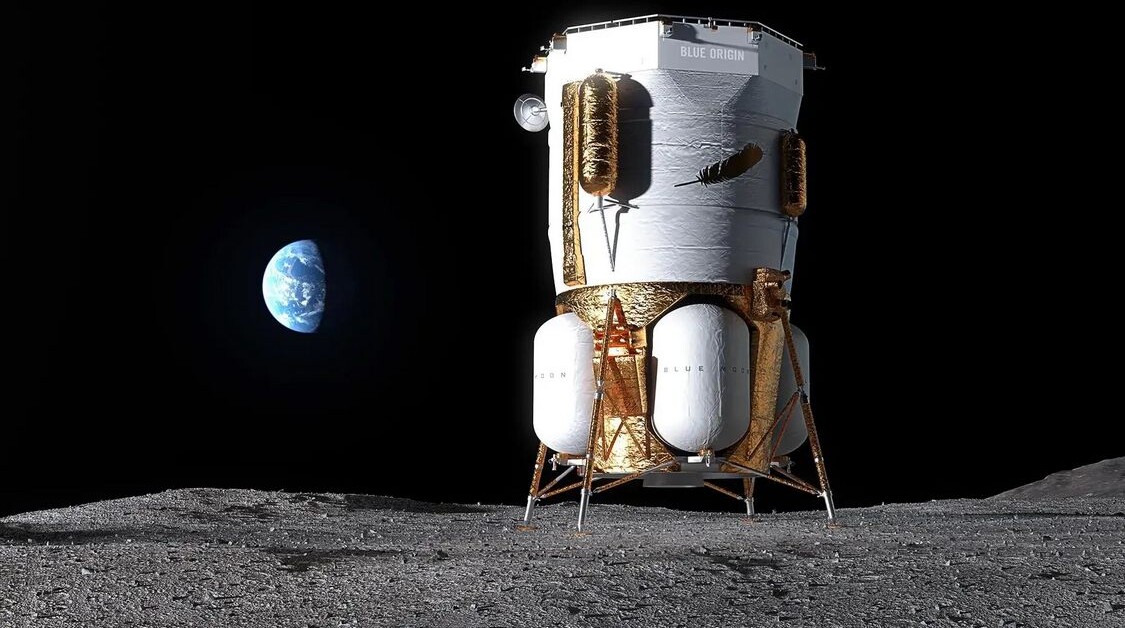
In a significant development, NASA and the Department of Energy have joined forces to propel lunar exploration forward. The two agencies have signed a memorandum of understanding to collaborate on the development of nuclear reactors for the moon, a crucial step towards establishing a sustainable presence on the lunar surface. This partnership, centered around NASA's Fission Surface Power (FSP) program, aims to create a nuclear reactor capable of operating on the moon, with a target power output of at least 100 kilowatts. The system is expected to be ready for launch by the end of 2029. NASA Administrator Jared Isaacman emphasized the importance of harnessing nuclear power to drive future space exploration. "America is committed to returning to the moon, building the infrastructure to stay and making the investments required for the next giant leap to Mars and beyond," he stated. The collaboration between NASA and the Department of Energy is not new, with the two agencies having worked together on nuclear power systems for decades. A notable example is the Kilowatt Reactor Using Stirling Technology (KRUSTY) project, which conducted ground tests of a nuclear reactor that could later be flown in space. The memorandum of understanding outlines the division of responsibilities for the FSP program, with NASA managing and funding the program, and providing the Department of Energy with ← →

Image
WASHINGTON — NASA and the Department of Energy have agreed to work together on development of nuclear reactors for the moon as industry awaits the ...
You might also find this interesting: See here

SpaceX Set To Launch Starlink Satellites From California's Vandenberg Space Force Base

Image

A most thrilling event is set to unfold on the West Coast, as a SpaceX Falcon 9 rocket prepares for liftoff in California. The anticipation is palpable, as this launch marks a significant milestone in the deployment of Starlink internet satellites. The Vandenberg Space Force Base will play host to this spectacular occasion, with SpaceX poised to launch 25 Starlink satellites into low-Earth orbit. This ambitious endeavor aims to provide global connectivity, and the people of California are uniquely positioned to witness this marvel of modern technology. For those who cannot be present in person, SpaceX offers a convenient _stream option, allowing enthusiasts to partake in the excitement from the comfort of their own homes. A Federal Aviation Administration operations plan advisory has also indicated a backup opportunity for the following day, should the launch be postponed. The Falcon 9 rocket, a stalwart of SpaceX's fleet, stands at an impressive 230 feet tall, and its two-stage design has proven itself to be a reliable workhorse in the pursuit of space exploration. As reported by USA TODAY, this launch represents a significant step forward in the development of SpaceX's Starlink program, and Californians are eagerly awaiting the opportunity to witness this remarkable event.

Another SpaceX Falcon 9 rocket is due to launch on the West Coast – and Californians have plenty of ways to watch liftoff.
Alternative viewpoints and findings: See here

Friday, January 23, 2026

NASA Ends Funding For Independent Planetary Science Advisory Groups, Sparking Concern In Scientifi...

Image

NASA's decision to end financial support for independent planetary science advisory groups has sparked surprise and concern within the scientific community. A letter posted on the agency's website on January 16 revealed that funding for these groups would cease towards the end of April 2026. These groups have provided crucial feedback on various science efforts, including Mars exploration, ocean worlds, and extraterrestrial sample storage. The Planetary Society's director of government relations, Jack Kiraly, expressed bewilderment at the decision, stating that it "makes no sense" and lacks a clear rationale. The independent input from these groups has been instrumental in supporting key NASA missions, such as New Horizons, Curiosity, and Perseverance Mars rovers. Kiraly emphasized that consulting outside experts is vital for the agency's success, particularly when striving to be at the forefront of science and technology. The sudden termination of financial support has raised questions about the implications for NASA's future scientific endeavors. The agency's decision to end support for these groups has left many in the scientific community wondering about the reasoning behind this move. The information in this article was first published in "Yahoo News".

NASA is quietly ending financial support for independent planetary science advisory groups, according to a letter posted to the agency's website on ...
You might also find this interesting: Check here

Thursday, January 22, 2026

Elon Musk Predicts Future With More Robots Than People

Elon Musk's recent assertion that the future will involve "more robots than people" has sparked a mixture of intrigue and skepticism. During a 15-minute interview at the World Economic Forum in Davos, Switzerland, Musk shared his vision of a techno-utopian future, where robots will "saturate all human needs." The billionaire entrepreneur, who is at the helm of SpaceX, Tesla, and xAI, claimed that his company, Tesla, will start selling humanoid robots, dubbed Optimus, to the public early next year. This prediction, however, was met with a tepid response from the audience, who may have been recalling Musk's past promises that have yet to materialize. Musk's track record of making technological predictions that have not come to fruition may have contributed to the audience's skepticism. For instance, he had previously stated that Tesla's fully autonomous self-driving technology was only "two years" away, a claim that was made as far back as 2015. Despite this, Musk remained optimistic, declaring that he believes self-driving cars are "essentially a solved problem at this point." The National Transportation Safety Administration had opened an investigation into Tesla last October, following a number of railroad accidents involving its ← →

The brief conversation between Elon Musk and BlackRock's Larry Fink was marked by vague promises and an unenthusiastic audience.
Related materials: Visit website

Astronomers Discover Channel Connecting Our Solar System To Distant Star Systems

As published in Earth.com:

Astronomers at the Max Planck Institute have made a groundbreaking discovery, unveiling a channel of hot, low-density plasma that appears to connect our solar system to distant star systems. This phenomenon, revealed through meticulous mapping and data analysis, has sparked excitement within the scientific community. The Local Hot Bubble, a region approximately 300 light years across, has long been known to envelop our solar system. Formed by powerful stellar explosions, or supernovas, this area is characterized by a low-density, high-temperature environment. Researchers, led by Dr. L. L. Sala, utilized data from the eRosita instrument to confirm the existence of a tunnel-like structure. By combining eRosita's findings with older data from ROSAT, another X-ray survey, astronomers have gained a more detailed understanding of our local region. The painstaking process of dividing the sky into thousands of bins and extracting subtle signals of warm gas, dust cavities, and interstellar structures ultimately led to the detection of this channel. Notably, the temperature of the Local Hot Bubble exhibits a north-south dichotomy at high latitudes. The newly discovered tunnel appears to stretch toward the Centaurus constellation, potentially connecting our neighborhood to distant star systems.

After years of careful mapping, a new analysis reveals what appears to be a channel of hot, low-density plasma stretching out from our solar system ...
Other related sources and context: Visit website

Wednesday, January 21, 2026

Vermont Lawmaker Proposes Task Force To Investigate Unidentified Aerial Phenomena

In a bold move, Vermont lawmaker Rep. Troy Headrick is taking the state's residents' concerns about unidentified aerial phenomena to new heights. With the introduction of a groundbreaking bill, H. 654, Headrick aims to establish the Vermont Airspace Safety and Unidentified Anomalous Phenomena Task Force, a pioneering initiative that would bring together experts from various fields to investigate reports of mysterious objects in the state's skies and waters. This ambitious proposal seeks to address the growing unease about national security threats lurking in the air, with a focus on objects exhibiting "performance characteristics not consistent with currently understood technologies." The task force, comprising officials from Vermont's departments of transportation and public safety, lawmakers, and subject matter experts, would work in tandem with federal partners and researchers to develop enhanced policies and mitigate potential safety risks. Headrick's endeavor is not driven by personal expertise, but rather a commitment to staying vigilant about emerging trends in public safety. The bill's introduction was, in fact, sparked by a constituent's concerns, highlighting the importance of lawmakers remaining attuned to the needs and anxieties of their constituents. As the Vermont legislature considers this innovative proposal, one thing is clear: the state's residents are eager for answers about the strange objects inhabiting their skies and waters.

Image
A Vermont lawmaker is setting his sights on the skies with a new bill poised to create a UFO panel within the state.
Alternative viewpoints and findings: Check here