The sun's outer boundary, a previously enigmatic entity, has been mapped with unprecedented precision, yielding valuable insights into the prediction of solar storms. Heliophysicist Sam Badman describes the Alfvén critical surface, the shifting boundary between the sun and the solar system, as a "corrugated, spiky shape." As solar activity intensifies, this boundary expands and becomes increasingly spiky, according to research published in the Astrophysical Journal Letters. The Alfvén surface serves as an invisible demarcation, marking a point of no return for plasma and particles emanating from the sun, which ultimately form the solar wind.
This boundary roughly delineates the corona, visible during eclipses, from the solar wind. By charting the Alfvén surface, scientists may better forecast the impact of solar activity on satellites, human and animal health, and atmospheric phenomena such as auroras. Previously, estimates of the Alfvén surface's size and shape relied on observations from spacecraft positioned at a distance from the sun comparable to Earth's orbit. However, NASA's Parker Solar Probe has ventured into uncharted territory, crossing the Alfvén surface for the first time in 2021 and subsequently dipping into the corona 15 more times.
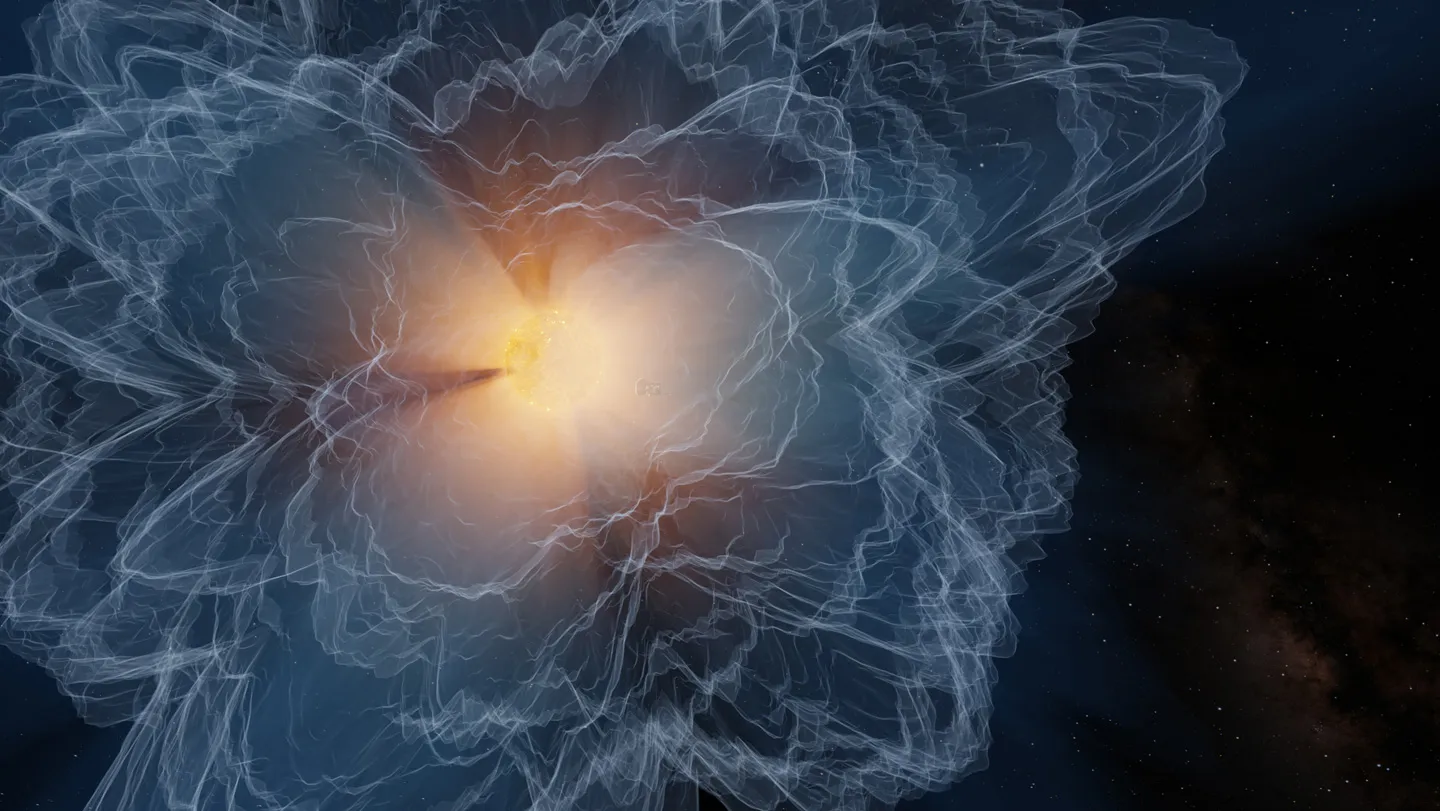
That's what scientists have gleaned from the first verified maps of the shifting boundary between the sun and the rest of the solar system.Here's one of the sources related to this article: See here

No comments:
Post a Comment