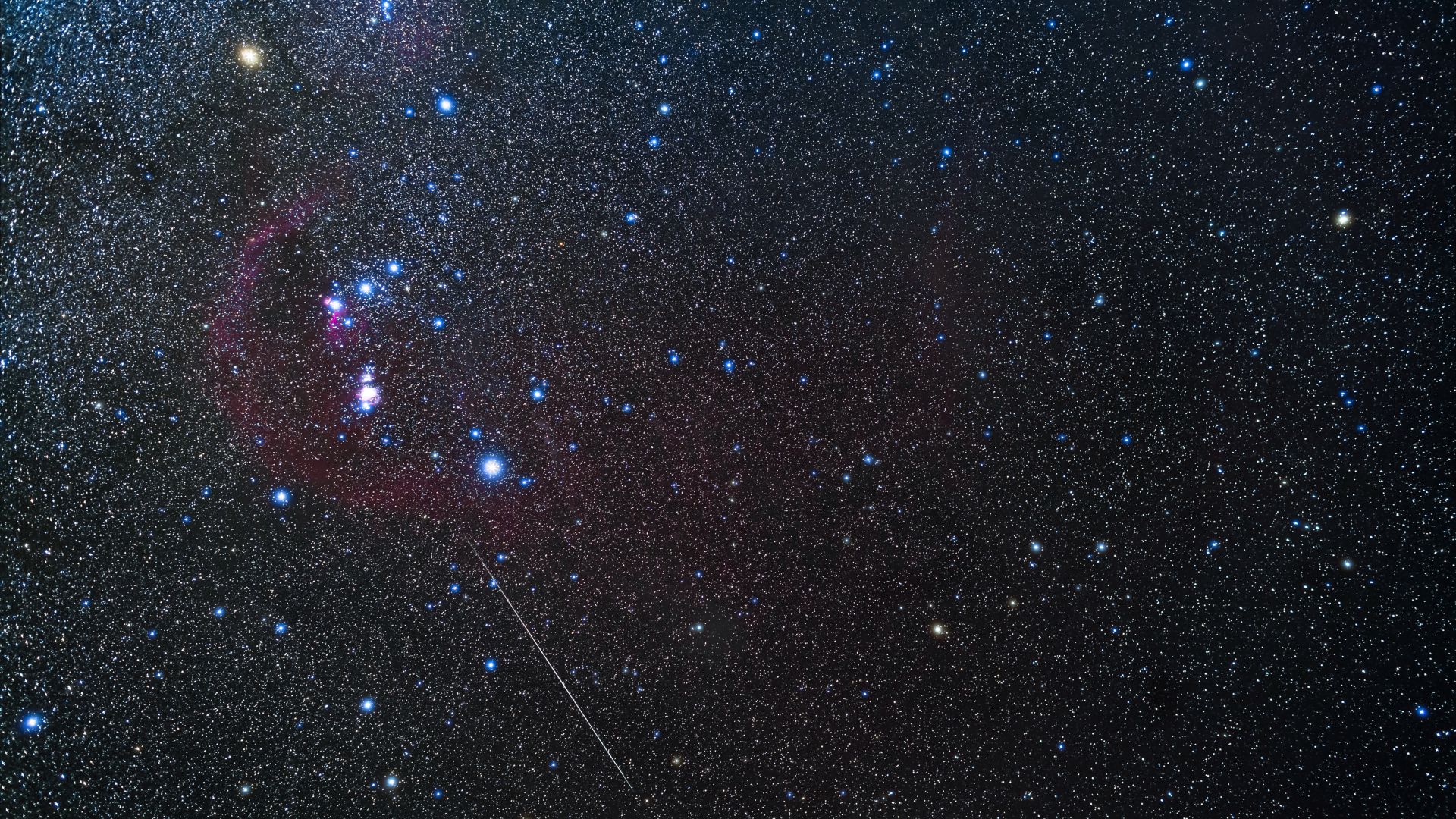
The night sky is a canvas of wonder, a vast expanse of twinkling stars and celestial bodies that have captivated human imagination for centuries. As the new moon phase occurred on February 17, the darkness of the post-sunset realm was illuminated only by the faint glow of distant stars, a perfect opportunity for stargazers to explore the wonders of the universe. The new moon, positioned directly between the sun and Earth, was hidden from view, its presence felt only by the annular solar eclipse that was visible across a swathe of Antarctica, a spectacular display of celestial alignment. Mercury, a bright "evening star", shone low in the west, its steady light visible for a brief hour following sunset, a fleeting glimpse of a planet that is often elusive. For the lucky few with a clear view of the western horizon, Venus was also visible, its light vying for attention in the glow of the setting sun, a brief appearance before it disappeared from sight. Saturn, with its iconic rings, was visible less than 15 degrees to the upper left of Mercury, its rings finally starting to reveal themselves after a period of being edge-on to Earth, a thin line that had seemed to disappear in November last year. The constellation Orion,
 More takeaways: Visit website
No comments:
Post a Comment