Wednesday, December 31, 2025

Astronomers Discover Compact Cluster Of Objects In Kuiper Belt

In the vast expanse of the solar system, a team of astronomers, led by Amir Siraj, a doctoral student in astrophysics at Princeton University, has made a groundbreaking discovery. A compact cluster of objects has been found within the Kuiper belt, a distant region of icy bodies beyond Neptune. Located approximately 4. 0 billion miles from the Sun, or 43 astronomical units, this cluster has left scientists intrigued.

The Kuiper belt, a realm of celestial bodies, has long been a subject of interest for researchers seeking to unravel the secrets of the solar system's formation. Siraj's research focuses on the outer solar system's orbits, which hold clues about planets that may have moved or interacted in the distant past. The newly discovered cluster is notable for its objects' proximity to the ecliptic, the plane of Earth's orbit around the Sun, and their unusually round paths.

This finding builds upon earlier research, which identified a known clump of low-tilt Kuiper belt orbits, dubbed the kernel, at about 44 astronomical units. Initially reported in 2011, the kernel was characterized as a special population of cold classical objects, thought to have formed in place. The detection of this pattern was facilitated by the examination of orbital elements, which describe an ← →

Astronomers have found a compact new cluster of objects inside the Kuiper belt, which is a distant band of icy bodies at the edge of our solar ...
You might also find this interesting: See here

DC's Skies Were Littered With US Fighter Jets Chasing UFOs.

The night was warm and muggy over New Castle Air Force Base in Delaware, the kind of heat that clung to the metal skins of the alert fighter jets lined along the runway. Lt. William L. Patterson of the 142nd Fighter Interceptor Squadron did not stray far from the flight line as part of the readiness posture routine for pilots in 1952: Keep the engines warm, be airborne in minutes and stay alert for the remote chance that Soviet bombers close in on the mid-Atlantic.

Then the order came: intercept unknown objects flying around the White House and Pentagon. Radar screens at nearby Washington National Airport and Andrews Air Force Base were lighting up with targets no one could identify, and they taunted restricted airspace.
Across the country, Americans were constantly looking up. The Red Scare churned on, the Korean War dragged into another year and the threat of Soviet bombardment felt imminent.

The country was also in the middle of a record-breaking year for UFO sightings – adding to mounting concerns of aerial attacks – including an eerily similar case just a week earlier, when radar operators and commercial pilots reported unfamiliar objects in the skies over the nation's capital maneuvering in ways no known aircraft could.

For generations, the events of those two weekends were treated as a Cold War ghost story safely relegated to the past. But as 2025 draws to a close, more pilots than ever are reporting unexplained encounters in US airspace, according to Americans for Safe Aerospace , a nonprofit offering pilots confidential channels to report their sightings.

The modern surge in reports raises the same unanswered questions that sent Patterson scrambling into the night more than 70 years ago. The retelling of how that night and the chaotic days that followed unfolded is based on a historical review of unclassified government documents, archived news articles, books, interviews with researchers, and more.

Other related sources and context: Visit website

Tuesday, December 30, 2025

The Year Space Exploration Reaches New Heights

Image
Article from Gizmodo:

As 2025 draws to a close, the space industry is poised on the cusp of a revolutionary year, with a slew of ambitious missions slated for 2026. The mantra "onwards and upwards" seems to encapsulate the sector's unwavering optimism. A profusion of launches and milestones are on the horizon, promising to push the boundaries of exploration further than ever before.

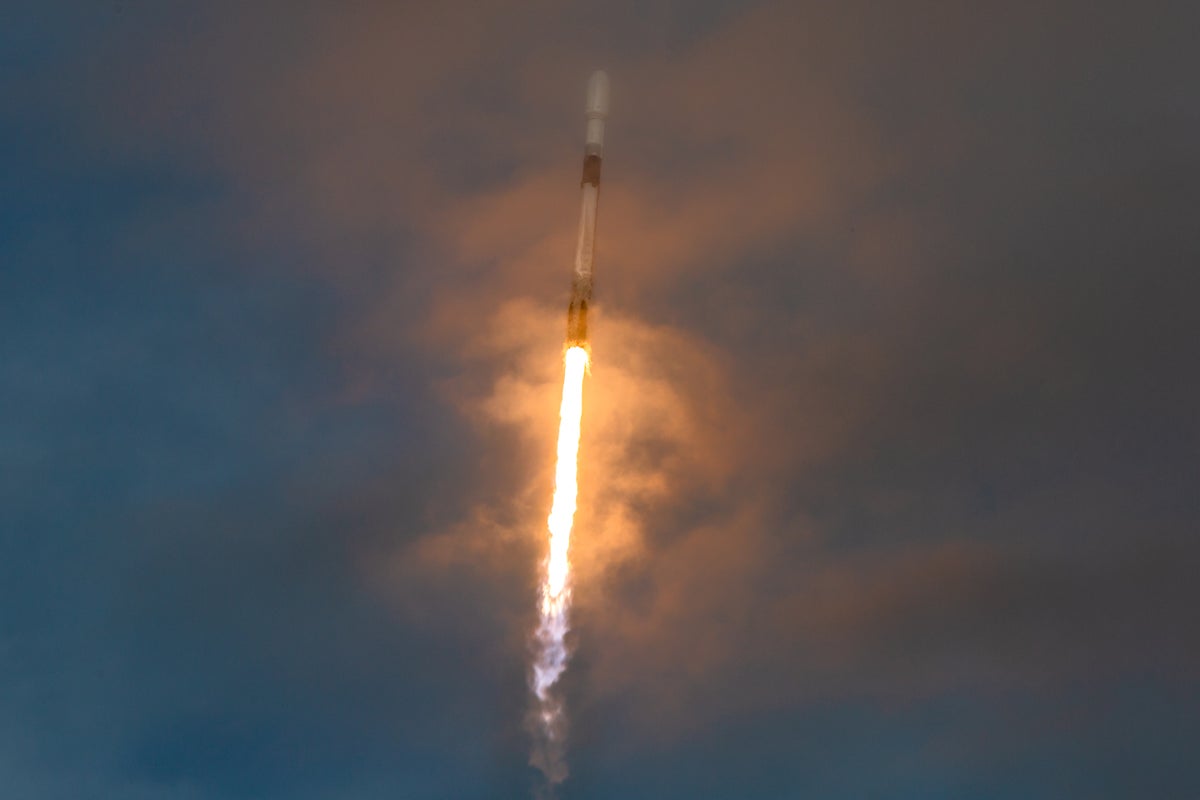
At the forefront of this excitement is the anticipated launch of SpaceX's Starship Version 3 (V3), touted as the largest and most powerful rocket ever built. This behemoth of a launch vehicle is designed to ferry American astronauts back to the Moon, deploy the next generation of Starlink satellites, and pave the way for a new era of Mars exploration.

If all goes according to plan, Starship V3 will make its maiden voyage in early 2026. Notably, this upgraded iteration will stand approximately 5 feet taller than its predecessor, boasting a larger propellant capacity and novel docking adapters for in-orbit fuel transfer. The significance of Starship V3 cannot be overstated, as it underpins NASA's Artemis 3 mission, which aims to return astronauts to the Moon using a modified version of the rocket, dubbed the Human Landing System (HLS).

There were many impressive moments in spaceflight this year, but if the industry had a slogan, it would be “onwards and upwards.
Find other details related to this topic: Visit website

Monday, December 29, 2025

Amanda Nguyen's Dark Descent: The Crushing Weight Of Fame And Depression

Amanda Nguyen's voice trembles in the shadows of her own narrative, a testament to the unyielding power of her truth. The civil rights activist, who soared to unprecedented heights in April aboard the Blue Origin spaceflight alongside Katy Perry and Gayle King, now confronts the dark underbelly of her experience. The euphoria of that momentous occasion was short----d, as a global backlash ensued, leaving Nguyen to grapple with the crushing weight of depression.

In a poignant statement posted to Instagram on December 28, Nguyen revealed the depths of her struggle, confessing that her depression might linger for years. The words, ⁘Another dream turned into a nightmare,⁘ hang in the air like a challenge, a stark reminder of the unforgiving nature of public scrutiny. The 34-year-old activist described feeling like ⁘collateral damage⁘ amidst an ⁘onslaught⁘ of ⁘hostile impressions⁘ that accompanied the breathless media coverage of the space mission.

Nguyen's recollection of those trying times is a heart-wrenching testament to the human cost of fame. She recounted being bedridden for a week, unable to escape the suffocating grip of her emotions.

Image
The civil rights activist revealed that she's been struggling with her mental health in the months since the Blue Origin space flight  she was on in...
More takeaways: Check here

Lives Of The Astronauts

NASA's latest walkthrough video of the International Space Station offers a unique glimpse into the daily ___s of astronauts on board. The ISS, with its 16,700 cubic feet of habitable space, is a marvel of engineering. The guided tour, lasting under 15 minutes, begins in the Columbus Laboratory Module, a key component of the station.

This module, contributed by the European Space Agency, is equipped for studying fluid physics and microgravity. Commander Nicole Mann leads the tour, moving into Japan's Kibo experiment module. Kibo focuses on satellite deployments and features an external robotic arm. The video was recorded during the Crew-4 and Crew-5 missions in October 2022. The ISS is a symbol of global cooperation in space exploration.

Astronauts on board conduct various experiments and tests. The station's facilities support a wide range of scientific research. The walkthrough video showcases the ISS's impressive capabilities. It highlights the station's role in advancing our understanding of space. The ISS continues to be an essential hub for space research and exploration.

Image
There is nearly 16,700 cubic feet of habitable area aboard the International Space Station (ISS). That makes it larger than a six-bedroom, ...
Other related sources and context: Visit website

China's LandSpace Rivals SpaceX With Reusable Rocket Tests And IPO Plans

Image

In a bold move to rival Elon Musk's SpaceX, China's rocket startup LandSpace has made significant strides in the commercial space race. Drawing inspiration from SpaceX's approach, LandSpace has adopted rapid iteration, vertical integration, and a focus on reusable, cost-efficient launch technology. The Beijing-based firm recently made history by becoming the first Chinese entity to conduct a reusable rocket test, a feat that has seemingly put SpaceX on alert.

According to Dai Zheng, chief designer of the Zhuque-3 rocket, "SpaceX can push products to the edge and even into failure, quickly identifying limits and iterating." This approach has allowed LandSpace to make notable progress, including the successful launch of Zhuque-2, the world's first operational rocket powered by liquid methane and liquid oxygen.

This milestone is significant, as methane-fueled engines are widely regarded as the future of rocketry. As reported by The American Bazaar, LandSpace is now preparing to go public to fund its future projects, mirroring the plans of its U. S. rival, SpaceX. Founded in 2015, LandSpace has gained international attention for its innovative approach and government support.

The company's success reflects China's growing ambition in the space sector, where it aims to reduce its dependence on state launch systems ← →

China is looking to give Elon Musk a run for his money. China's rocket startup LandSpace has made no secret about drawing inspiration from Musk's ...
Find other details related to this topic: Check here

Sunday, December 28, 2025

SpaceX's Potential IPO: A New Era For Space Exploration?

Image

SpaceX's Potential IPO: A New Era for Space Exploration? As Elon Musk's SpaceX considers an initial public offering (IPO) in 2026, the implications for space exploration are multifaceted. Valued at up to $1. 5 trillion, this move could inject tens of billions of dollars into the company, but it's not just about the money.

SpaceX's integral role in NASA and Pentagon missions, including ferrying crew and cargo to the International Space Station and launching satellites into orbit, hangs in the balance. According to Scientific American, SpaceX's potential IPO would put it alongside traditional aerospace giants like Boeing and Northrop Grumman, as well as industry newcomers like Rocket Lab and Firefly Aerospace. This development has experts like Matthew Weinzierl, a Harvard Business School researcher, expressing surprise.

Weinzierl notes that while an IPO for SpaceX's Starlink satellite internet service was expected, a comprehensive IPO for the entire company is a bold move. If SpaceX goes public, it will face increased scrutiny, shareholder interest, and investment in research and development. This could be a boon for space science, as Aaron Boley, a planetary scientist at the University of British Columbia, points out that SpaceX has been a driving force behind ← →

SpaceX is mulling an IPO in 2026. Here⁘s how that could affect its work with NASA and the push to put humans on Mars
Looking to read more like this: See here

Saturday, December 27, 2025

Wang Leehom's Dazzling Concert Sparks Debate On Robotics In Entertainment

Image
First seen in Yahoo Entertainment:

In a recent concert in Chengdu, China, Taiwanese-American singer Wang Leehom stunned the audience with a troupe of dancing robots. On December 19, 2025, Wang Leehom took the stage with six humanoid robots, developed by Unitree Robotics, which danced in perfect sync with the music and human performers. The robots, weighing around 75 pounds each and costing approximately $13,500, wore costumes and moved with fluidity, culminating in a flawless front flip that electrified the crowd.

The performance, which was widely shared on social media, has sparked a heated debate about the role of robotics in the performing arts. While some, including Elon Musk, have praised the impressive display, others have expressed concerns that the technology could replace human dancers and compromise the quality of entertainment.

Many have questioned the prioritization of robotics in entertainment, suggesting that advancements in the field could be better utilized in areas like engineering or medicine. On TikTok, a video of the performance posted by Channel News Asia (CNA) assembled 16 million views, with commenters criticizing the use of robots in entertainment.

Reddit users also weighed in, with some viewing the performance as a harbinger of a dystopian era.

Taiwanese-American singer Wang Leehom surprised the audience when he took the stage with dancing robots at a concert in Chengdu, China, on Dec.
You might also find this interesting: Visit website

Friday, December 26, 2025

E Reveals Classified US Program For Communication With Non-Human Intelligence

Image

Jacques Vallée, a renowned UFO researcher, has made a startling revelation about human interaction with extraterrestrial entities. In a recent interview on the podcast "Weaponized" hosted by Jeremy Corbell and George Knapp, Vallée shared details about a classified US program that allegedly established direct communication with non-human intelligence 20 years ago.

This program, conducted under controlled laboratory conditions at a secure facility, utilized a sophisticated process to interact with these entities on an ongoing basis. Vallée's claims have sparked significant interest, as he described the process by which officials interacted with these non-human beings. According to him, the US government was able to establish "direct, structured communications" with a non-human intelligence, which he deemed factual based on his meetings with people involved in the program.

However, Vallée also expressed uncertainty about the nature of the entity, leaving open the possibility that it may have been simulated. The UFO expert also drew parallels with other unexplained events, such as the 1917 Fatima incident, where 80,000 people witnessed a massive disc-shaped object between them and the sun.

Vallée's interpretation of this event as a significant testimony adds to the mystique surrounding UFOs and aliens.

The UFO researcher Jacques Vallée has recently made startling remarks regarding the communication with extra-terrestrial entities in a recent ...
Find other details related to this topic: Check here

Thursday, December 25, 2025

NASA's Artemis II Mission Set For Historic Lunar Flyby In 2026

Image

The anticipation is palpable as NASA's Artemis II mission receives the green light for 2026, marking a pivotal moment in human spaceflight. For the first time in over five decades, astronauts will embark on a journey around the moon, reviving a legacy that had lain dormant since 1972. This forthcoming mission, now slated for February 2026, will see four astronauts aboard the Orion spacecraft, traversing a free-return trajectory that will loop around the moon and back to Earth. Scheduled to last approximately 10 days, Artemis II will comprise two orbits of Earth, followed by a highly elliptical orbit.

This crewed lunar flyby, rather than a landing, will serve as a crucial stepping stone for future lunar expeditions. The mission assumes significance as it will be the first major human spaceflight undertaken during Isaacson's tenure, with a routine SpaceX mission to the International Space Station in February 2026 being the only other major human spaceflight scheduled around the same time.

As the space agency presses on with its ambitious plans, the Artemis II mission promises to be a defining moment in the exploration of deep space. By sending humans back into the vast expanse, NASA is not only rekindling a legacy but also laying the groundwork for the next ← →

Are you ready for NASA's most significant human spaceflight in a generation? Originally planned for September 2025 and now slated for February 2026 ...
Alternative viewpoints and findings: Check here

Blue Origin's New Shepard Launch, Sports Highlights

In a remarkable display of innovation, Blue Origin's recent New Shepard launch showcased a cutting-edge 'free flying' camera that captured the capsule separation from a unique perspective. This technological feat was part of a highly anticipated event that has collected significant attention. The New Shepard launch, spearheaded by Jeff Bezos, is a notable achievement in the realm of space exploration.

The 'free flying' camera, deployed during the launch, provided an extraordinary view of the capsule separation, offering a fresh and unparalleled visual experience. Meanwhile, in sports news, Tyler Soderstrom's career trajectory has taken a dramatic turn, with his contract value skyrocketing from $820,000 to a potential $131 million. This substantial increase is a testament to his impressive performance and the team's confidence in his abilities.

In basketball, Jalen Brunson's 13-point fourth quarter propelled the Knicks to a thrilling 126-124 comeback, showcasing his skill and determination. The intense matchup between the Cowboys and Commanders on Christmas Day also demonstrated the competitive spirit of the teams, despite the game having no bearing on their standings.

On a more practical note, shoppers can look forward to significant savings on seasonal essentials, with discounts of up to 50% on select items from Sony and Craftsman.

Image
Blue Origin's New Shepard launch featured a new 'free flying' camera that was deployed to capture capsule separation.
Here's one of the sources related to this article: See here

Wednesday, December 24, 2025

NASA Aircraft Uncovers Hidden Mineral Treasures In The American West

First seen in Space:

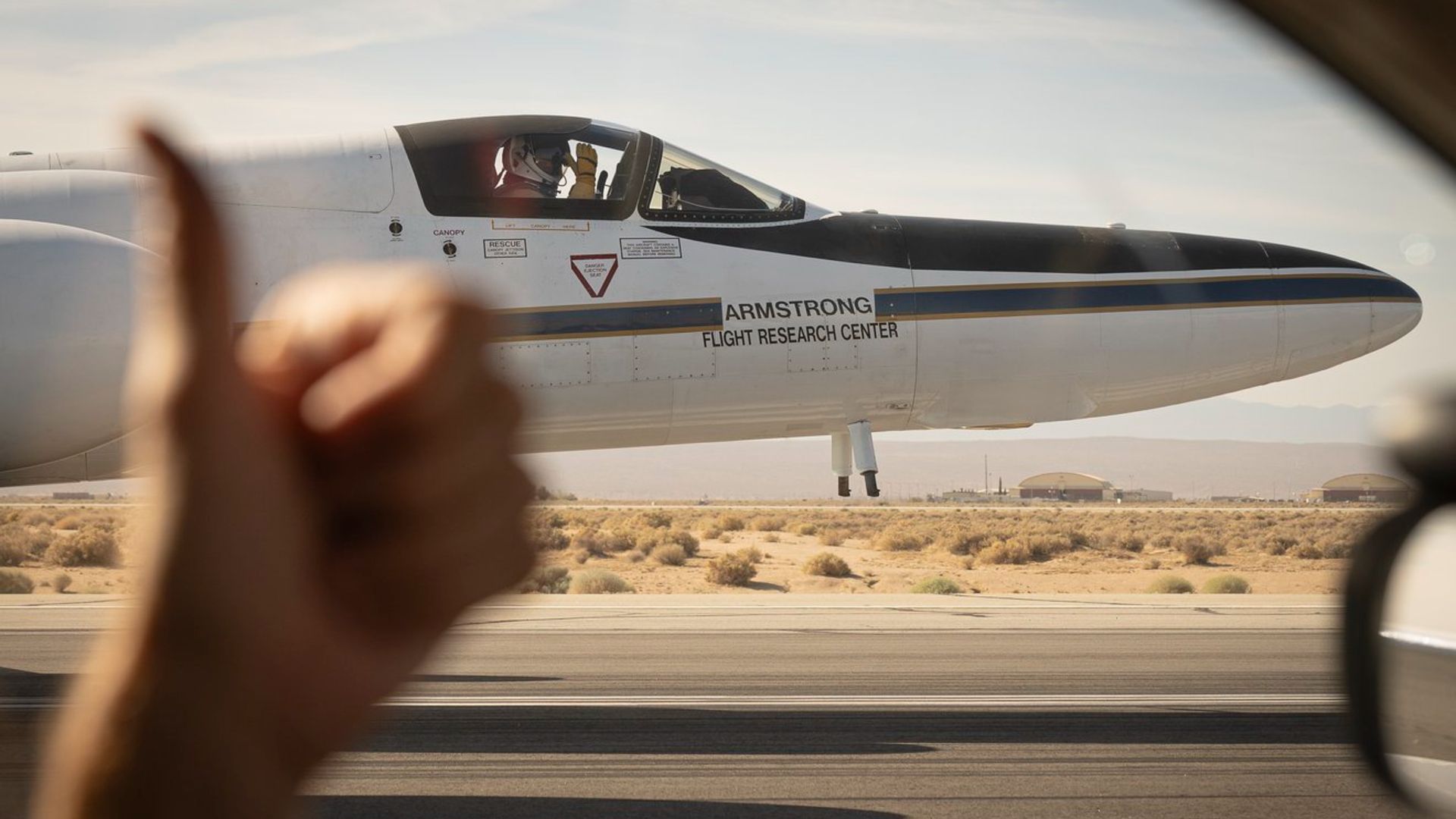
At 60,000 feet above the Earth's surface, a NASA aircraft is on a mission to uncover the hidden treasures of the mineral world. The Airborne Visible → Infrared Imaging Spectrometer-5 (AVIRIS-5), a sensor developed by NASA's Jet Propulsion Laboratory (JPL), is scouring the American West for critical minerals that power consumer electronics, electric vehicles, and clean energy technologies.

This unassuming device, roughly the size of a microwave, has been flying high since 1986, with continuous improvements made by JPL over the years. AVIRIS-5 is part of the GEMx project, a joint research endeavor with the U. S. Geological Survey (USGS) aimed at detecting surface traces of critical minerals. These minerals, including aluminum, lithium, zinc, graphite, tungsten, and titanium, are essential for manufacturing supply chains of crucial technologies such as semiconductors, solar electricity systems, and electric vehicle batteries.

The GEMx project has already covered over 366,000 square miles of the American West since 2023, with deserts proving to be an ideal spot for mineral spectroscopy due to the scarcity of trees. AVIRIS-5 works by detecting the unique chemical structures of these minerals, which reflect different wavelengths of light, ← →

Image
The sensor is called AVIRIS-5 (Airborne Visible/Infrared Imaging Spectrometer-5), and it comes from technology developed by NASA's Jet Propulsion ...
Find other details related to this topic: See here

SpaceX Starship Launch Debris Poses Risk To Air Traffic

According to phys.org:

According to these documents, debris from a January 16 launch from SpaceX's Texas site, Starbase, threatened three airplane flights, including a JetBlue flight to Puerto Rico, a private jet, and an international Iberia Airlines flight. The incident forced the JetBlue flight to adjust its flight path into a holding pattern, while the private jet and Iberia Airlines flight ventured into the FAA's keep-out zones due to fuel emergencies.

A similar Starship explosion occurred during a March launch attempt from Texas, shutting down air traffic to several Florida airports, including Orlando International Airport. The debris field from the January incident was visible from Florida, the Bahamas, and several Caribbean islands as the broken-up spacecraft streaked across the sky.

In response to the Wall Street Journal article, SpaceX took to social media to defend its commitment to airspace safety. The company claimed that the reporters were "spoon-fed incomplete and misleading information from detractors with ulterior motives.

Image
This article has been reviewed according to Science X's editorial process and policies . Editors have highlighted the following attributes while ...
Other related sources and context: Check here

Astronomers Witness Planetary Formation In Action Around Star Fomalhaut

Astronomers have made a groundbreaking discovery in the Fomalhaut star system, located 25 light-years from Earth. This young system, visible as a bright star in the southern sky, offers a unique glimpse into the early stages of planetary formation. A wide belt of debris surrounds Fomalhaut, indicating that planet formation is still underway.

Within this disk, massive objects called planetesimals, ranging from tens to hundreds of miles in width, follow dense orbital paths. These collisions between planetesimals are a crucial aspect of planetary formation. The significance of Fomalhaut lies in its youth and the insight it provides into the history of our own solar system.

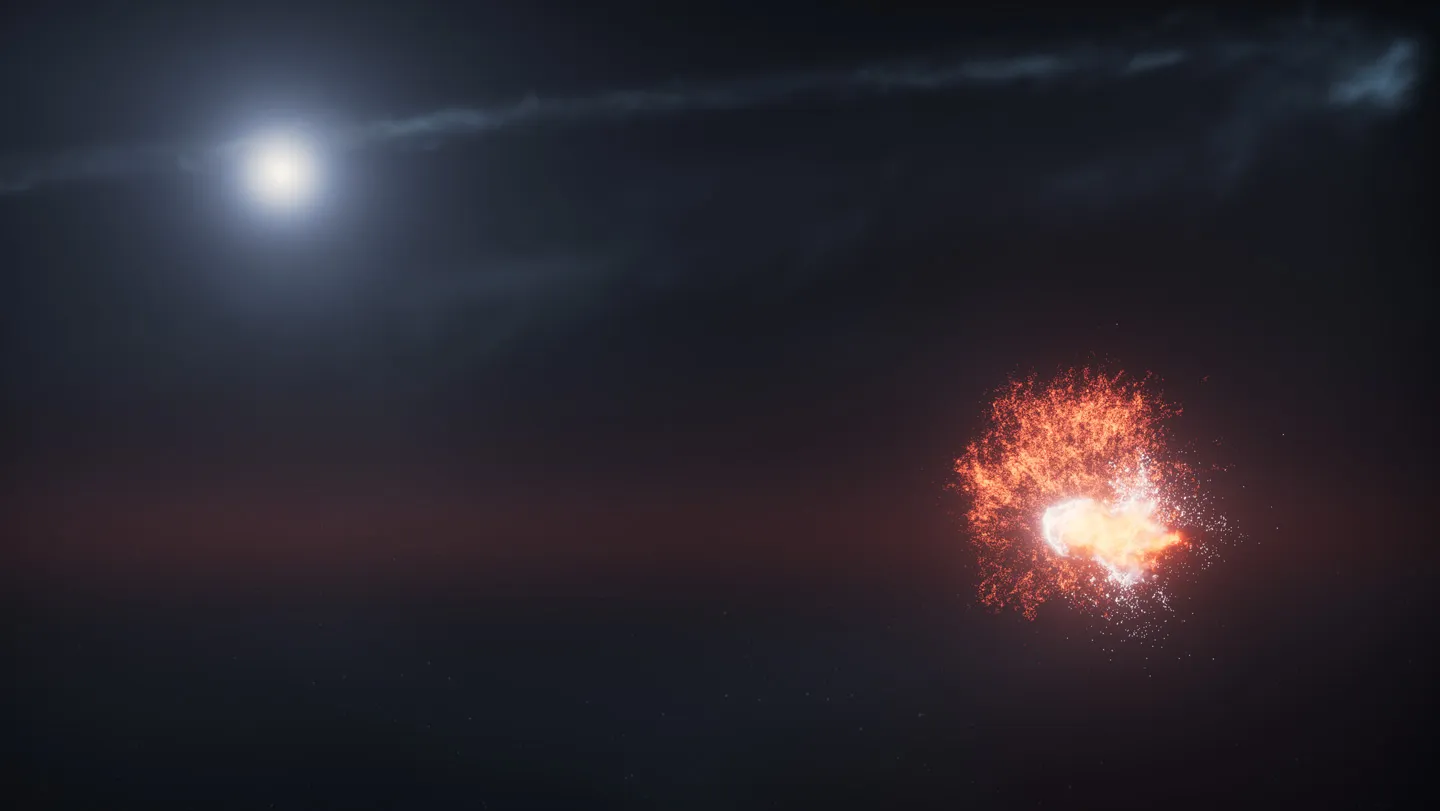
In just 20 years, astronomers have observed the aftermath of two massive asteroid collisions. In 2004 and 2023, bright points of light appeared near the disk, later identified as clouds of dust ejected by colossal impacts. These events provide valuable information about the dynamic and chaotic process of planetary formation.

The study of Fomalhaut and its planetary system has far-reaching implications for our understanding of the formation and evolution of celestial bodies. By examining this nearby system, scientists can gain a deeper understanding of the complex processes that shape the development of planetary systems, including our own.

Young star systems, like nearby Fomalhaut, are messy places. Rocks slam together and icy bodies shatter.
More takeaways: Check here

Tuesday, December 23, 2025

Comets, Stars, And Celestial Discoveries

Image
Information column from Science News:

The thrill of discovery is a tantalizing prospect for space enthusiasts. Imagine being one of the lucky ones who got to witness the rare interstellar visitor, Comet 3I → ATLAS, as it made its way through our solar system in 2025. This celestial guest was spotted on July 1 by the ATLAS survey telescope in Chile and gave astronomers a thrilling show as it sprouted a tail, swung around the sun at an incredible 200,000 kilometers per hour, and was even photographed by spacecraft across the solar system, including from the surface of Mars. For those who missed the comet's closest pass to Earth on December 19, don't worry - it remained visible until spring 2026 as it headed back out into interstellar space.

Meanwhile, astronomers were abuzz with excitement as they may have finally caught a glimpse of Betelgeuse's companion star. This red supergiant, located in the constellation Orion, has long been suspected to be part of a binary system with a star about the mass of the sun orbiting it every 2,000 days. If confirmed, this smaller star, potentially named Siwarha, meaning "her bracelet," would be doomed to fall into its larger companion in the next 10,000 years ← →

From eclipses on demand to a rare interstellar visitor to the chances of Earth being flung out of orbit, some news in 2025 made us ponder our place ...
Looking to read more like this: Check here

The Dark Side Of Humanoid Robots: Safety Concerns And Secrecy Surround Emerging Technology

Image

The burgeoning world of humanoid robots is shrouded in mystery, with their capabilities and limitations largely unknown. Recent events have brought this issue to the forefront, sparking concerns about the strength and potential risks of these machines. At the center of this discussion is Figure AI, a robotics company facing a lawsuit from Robert Gruendel, a former safety engineer.

The lawsuit alleges that Figure AI's humanoid robot, Figure 02, demonstrated alarming strength during tests, capable of fracturing a human skull. Gruendel claims he was fired after raising concerns about the robot's safety. Figure AI has vehemently denied these allegations, stating that Gruendel was let go due to poor performance.

The company has not provided further details, leaving many questions unanswered. Meanwhile, in China, the CEO of Engine AI had a harrowing experience with his company's T800 robot, which knocked him to the ground during a demonstration. Although the CEO was prepared and wearing protective gear, the incident highlights the uncertainty surrounding the capabilities of these machines.

These parallel incidents raise crucial questions about transparency in humanoid robot development. As these machines become increasingly sophisticated, it is essential that developers share information about their capabilities and limitations to ensure public safety.

Robot demonstrations and lawsuits are raising questions and concerns about the capabilities -- and strength -- of humanoid robots.
Alternative viewpoints and findings: Check here

Monday, December 22, 2025

Scientists Study Rare Interstellar Comet 3I → ATLAS As It Passes Through The Solar System

In the vast expanse of space, a rare visitor has been making its way through the solar system, captivating the attention of astronomers and scientists alike. The interstellar comet, 3I → ATLAS, was discovered on July 1, 2025, by the Asteroid Terrestrial-impact Last Warning System (ATLAS), and it has been the subject of intense study ever since.

As it made its closest approach to Earth on December 19, 2025, passing at a distance of 1. 79 astronomical units, or approximately 270 million kilometers, NASA's Europa Clipper and Parker Solar Probe spacecraft were poised to gather crucial information about this enigmatic object. The Europa Clipper, part of a suite of NASA missions, joined forces with the Parker Solar Probe to observe 3I → ATLAS from various vantage points in space.

Preliminary findings, as reported by NASA, reveal no unusual anomalies outside the normal range for a comet; however, further analysis is still underway. This comet, expected to pass near Jupiter in early 2026, offers scientists a unique opportunity to study its motion and composition. By comparing material from beyond the solar system with comets formed closer to the Sun, researchers can gain valuable insights into the formation and evolution of ← →

Image
Europa Clipper is part of a set of NASA missions that recently observed 3I/ATLAS, an interstellar comet passing through the solar system.
You might also find this interesting: See here

Uncovering The Secrets Of A Mysterious Metal Shard: A Quest For Extraterrestrial Technology

Image
Staff inbox at Popular Mechanics:

The search for extraterrestrial --- and technology has led scientists to scrutinize a mysterious metal shard discovered on Earth in 1947. Initially linked to the Roswell incident, the debris was later identified as part of a U. S. Air Force balloon designed to monitor Soviet nuclear experiments. Despite this, the metal shard's unusual composition sparked interest among researchers.

The specimen, obtained by Tom DeLonge's To the Stars Academy and later investigated by the All-Domain Anomaly Resolution Office (AARO), is a magnesium alloy primarily composed of magnesium and zinc, with additional elements such as bismuth and lead. AARO and ORNL's recent findings describe the metal shard as exhibiting extraordinary properties.

To determine if the metals originated from Earth, ORNL scientists analyzed the isotopic signatures, which represent the ratios of different element isotopes. This investigation aims to uncover any physical and chemical properties that could indicate an extraterrestrial technosignature or even inertial mass reduction, potentially enabling levitation.

The study's results offer a fascinating glimpse into the ongoing quest to identify signs of alien technology and biosignatures. By exploring the properties of this enigmatic metal shard, researchers may uncover new insights into the possibility of extraterrestrial --- and its technological capabilities.

As Earthlings, we're curious about whether alien civilizations like ours are out there, or if they exist at all.
Related materials: See here

Sunday, December 21, 2025

Scientists Discover Planet Remarkably Similar To Star Wars' Tatooine

Image

Scientists have made a groundbreaking discovery, unveiling a planet that bears an uncanny resemblance to Tatooine, the iconic Star Wars setting. Researchers at Northwestern University in Chicago have identified a gas giant, dubbed 'HD 143811 AB b', located approximately 446 light-years from Earth. This extraordinary planet orbits two stars, a phenomenon that has captivated astronomers and Star Wars enthusiasts alike.

HD 143811 AB b's unique configuration sets it apart from other twin-star planets discovered in the past. Notably, it is six times closer to its dual light sources than any previously known example. This close proximity provides scientists with a rare opportunity to study the intricate dance of stars and planets in a multi-star system. The discovery, published in the journal Astronomy & Astrophysics, has significant implications for the field of astrophysics.

By examining the orbital patterns of HD 143811 AB b and its twin stars, researchers can gain valuable insights into the complex interactions between celestial bodies. For those interested in exploring this fascinating topic further, AS USA provides valuable information and updates on the latest scientific discoveries, including this remarkable find.

For generations, impressions of extraterrestrial exploration have been colored by the otherworldly representations on Star Wars .
Other related sources and context: Check here

Saturday, December 20, 2025

SpaceX's Rumored $1. 5 Trillion IPO: A New Era In Space Innovation

The whispers of SpaceX's impending Initial Public Offering (IPO) have been echoing through the corridors of the space industry, leaving many to wonder about the valuation of the private space giant. At the center of the speculation is Elon Musk's ambitious plan to take SpaceX public, potentially making it a $1. 5 trillion company.

Rumors had been circulating about a private placement of stock at an $800 billion valuation, a move that would provide liquidity for employees and investors. This valuation is twice SpaceX's private market value at its most recent capital raise. Eric Berger of Ars Technica confirmed the IPO rumors, and Musk himself validated Berger's hypothesis. The crux of SpaceX's plan lies in raising substantial capital to fuel its next phase of innovation.

Musk intends to deploy this capital to develop a modified version of the Starlink satellite, which will serve as a foundation for building data centers in space. His vision is to establish "satellite factories on the Moon" and construct an "electromagnetic railgun" to accelerate AI satellites to lunar escape velocity without relying on rockets.

This bold plan aims to enable SpaceX to launch over 100TW → year of AI data center satellites into space, providing artificial intelligence services to Earth.

For about a week, multiple media outlets have reported rumors that the biggest and most profitable private space company in the world was ...
Here's one of the sources related to this article: Check here

Friday, December 19, 2025

Asteroid May Collide With Moon In 2032, Posing Risks To Satellites And Astronauts

A building-sized asteroid, dubbed 2024 YR4, may collide with the moon in 2032, scattering debris into near-Earth space. According to NASA aerospace engineer Brent Barbee, there's a 4 percent chance of a lunar impact and a 1 percent chance that the asteroid will scatter tiny meteorites toward Earth, posing risks to satellites and astronauts.

The potential impact could release energy equivalent to 6 million metric tons of TNT, roughly 400 times the energy released by the Hiroshima bomb. Scientists initially thought YR4 might hit Earth, but further observations ruled out that possibility. The asteroid's size and mass are estimated to be around 60 meters wide, but precise details are unknown.

To mitigate risks, Barbee suggests deflecting or breaking up YR4 using a fast-moving impactor or a nuclear blast at least three months before the lunar impact. A reconnaissance mission in the next few years could provide crucial information, but development would need to start soon. Hawaii would have an excellent view of the potential impact, while the western United States would have a fairly favorable view.

The estimated collision date is December 22, 2032. According to Science News, Barbee presented these findings at the American Geophysical Union's annual meeting on ← →

Image
NEW ORLEANS — There's about a 4 percent chance that a building-sized asteroid will hit the moon in 2032.
Related perspectives: Visit website

Rare Image Of Planet Orbiting Two Stars Captured, Defying Conventional Wisdom

In a breakthrough that has left astronomers awestruck, a rare image of a planet orbiting two stars has been captured, defying conventional wisdom about the complexities of planetary formation. This extraordinary find, courtesy of a team of researchers led by Jason Wang, an assistant professor of physics and astronomy at Northwestern University, has provided a unique glimpse into the intricate dance of celestial bodies.

The planet in question, a gas giant, occupies a precarious position, hovering closer to its twin suns than any other directly imaged world known to exist in a binary star system. This remarkable arrangement challenges long-held assumptions about the hostile environment surrounding pairs of stars, where gravitational forces are in constant turmoil.

Typically, planets are detected indirectly, their presence inferred by the subtle wobble or dimming of their host star. However, when a telescope manages to capture a direct image of a planet, it is a significant event. In this instance, the image reveals a planet thriving in a gravitationally complex environment, offering scientists a rare opportunity to study the behavior and survival of planets around pairs of stars.

The discovery has far-reaching implications, allowing astrophysicists to test theories about planetary formation in systems governed by multiple stars.

Most planets are never seen directly. Astronomers usually detect them indirectly by watching a star dim or wobble as a hidden planet tugs on it.
More takeaways: Check here

Thursday, December 18, 2025

Silicon Valley Startup Aims To Deploy Lethal Humanoid Robot For Military Use By 2027

Image

In the burgeoning field of humanoid robotics, a Silicon Valley startup named Foundation is charting an ambitious course. The company's vision is to deploy its 5'9", 180-pound humanoid robot, Phantom, in various settings, including factories, communities, and homes. However, what sets Foundation apart is its explicit intention to market Phantom to the U. S. military as a potential customer.

This robot is designed not only to perform tasks but also to carry lethal weaponry and engage in combat. Foundation's CEO, Sankaet Pathak, has outlined an aggressive production plan, aiming to manufacture 50,000 Phantom robots by the end of 2027. To put this into perspective, the company plans to produce 40 robots this year, 10,000 next year, and a staggering 40,000 in 2027. Pathak acknowledges the enormity of this undertaking but expresses confidence in his team's ability to execute it.

The Foundation team comprises top talent from renowned companies such as Tesla, 1X, Boston Dynamics, and SpaceX. Notably, the company's head of manufacturing is a former Tesla manufacturing director who worked on the Model X and Y ramp. This expertise is expected to inform Foundation's approach to scaling production.

Most of the hundreds of humanoid robot startups around the world are building robots for work, whether in the factory, the community, or the home.
Related perspectives: See here

Hubble Space Telescope Sheds Light On Mysterious Disappearance Of Exoplanet Fomalhaut B

Review by Science News:

Astronomers may have finally cracked the case of the disappearing exoplanet Fomalhaut b, thanks to new images from the Hubble Space Telescope. The mystery surrounding this exoplanet, which was first discovered in 2008, has been a long-standing one. Located 25 light-years from Earth, Fomalhaut, the star at the center of this phenomenon, is known for its prominent ring of dust and rubble, a region where planet formation is actively happening.

The breakthrough came when astronomers, led by Jason Wang from Northwestern University, observed a vast cloud of dust released by colliding planetesimals in the debris disk of Fomalhaut. These planetesimals, suspected to be planet-building blocks, slammed into each other, producing a bright blob in Hubble images. The size of this cloud suggests that the impacting planetesimals were approximately 30 kilometers in diameter, slightly larger than the Martian moon, Phobos. This new discovery offers an alternative explanation for the vanishing exoplanet Fomalhaut b.

Instead of being a planet, it is likely that Fomalhaut b was an expanding cloud of dust produced by a previous collision between planetesimals. The similarity between the new cloud and Fomalhaut b when it was first discovered is striking.

Image
“It's the first time we've ever seen colliding planetesimals outside of our own solar system,” says Jason Wang, an astronomer at Northwestern ...
Related perspectives: See here

Wednesday, December 17, 2025

Spielberg's Sci-Fi Film Disclosure Day Set To Explore Extraterrestrial Truth

Steven Spielberg is venturing back into the realm of science fiction with his upcoming movie, Disclosure Day. The Oscar-winning director, known for his iconic films like Close Encounters of the Third Kind and E. T. the Extra-Terrestrial, has released the first trailer for his new project, starring Emily Blunt. According to People. com, the film's logline poses a thought-provoking question: "If you found out we weren't alone, if someone showed you, proved it to you, would that frighten you?" The movie's premise suggests that the truth about extraterrestrial --- will be revealed to the world, leaving humanity to grapple with the implications.

Spielberg collaborated with screenwriter David Koepp, with whom he has worked on several projects, including Jurassic Park and War of the Worlds. The film's score will be composed by John Williams, marking his 30th collaboration with Spielberg. The movie's release date is set for June 2024, and billboards have already begun appearing in Times Square and Los Angeles, teasing the film with the cryptic message: "all will be disclosed - Spielberg 06. 12. 26".

Image
The Oscar-winning director, 78, is returning to science fiction with his next movie, out in June. On Tuesday, Dec.
Other related sources and context: See here

US Space Force Seeks Advanced Boost-Phase Interceptors For Enhanced Missile Defense Capabilities

Image

The U. S. Space Force is actively seeking cutting-edge technologies to enhance its space-based interceptors, specifically designed to thwart ballistic missiles during their boost phase within the atmosphere. This pursuit is underscored by a recent Small Business Innovation Research solicitation, which outlines the need for high-G propulsion systems, advanced seekers, and low-size, weight, and power interceptors that can be seamlessly integrated into space vehicles.

The desired outcome of this endeavor is to develop interceptors capable of swift detection-to-intercept timelines, thereby bolstering the Space Force's ability to respond to emerging threats. Currently, state-of-the-art interceptors exhibit high performance but are often larger and less optimized for rapid deployment or distributed constellations.

In contrast, the Space Force envisions a new generation of boost-phase interceptors that can engage missiles at altitudes of less than 120 kilometers above the Earth's surface, with intercept times of under 180 seconds. To achieve this ambitious goal, the Space Force is looking for solutions that incorporate advanced features such as dual-pulse or throttleable motors, high-grain solid or hybrid propellants, and thrust vector control.

These interceptors should be capable of fast shutdown and reignition of rocket motors, as well as improved specific impulse for more efficient thrust.

The U.S. Space Force is looking for advanced technologies for space-based interceptors that can intercept ballistic missiles during their boost ...
More takeaways: Check here

Tuesday, December 16, 2025

NASA's Artemis II Mission Prepares For Historic Crewed Test Flight

Image

NASA's Artemis II mission is generating significant excitement as the space agency prepares for its first crewed test of the Space Launch System (SLS) rocket and Orion spacecraft. The mission, slated to launch in a few months, will see four astronauts fly around the moon and back again, marking a crucial step towards the crewed Artemis III lunar landing, potentially as early as 2027. In anticipation of this epic mission, NASA has released the first episode of a new show, "Moonbound: Charting the Course," which offers a 22-minute deep dive into the preparations being made for the 10-day flight. According to John Honeycutt, the mission management team chair, "When you put crew on a rocket, it's no longer a test flight.

This one needs to perform, and will perform, as good or better than the first one did – no doubt about it." The Artemis II mission will follow a precise course, including a Kennedy Space Center launch, a lunar flyby, and an ocean splashdown. After several days in an elliptical Earth orbit, the crew will head toward the moon, coming within 3,300 miles of the lunar surface.

With NASA⁘s first launch toward the moon in five decades potentially only a few months away , the space agency has just released the first episode ...
Here's one of the sources related to this article: Visit website

Blue Origin's Indian River Lagoon Wastewater Discharge Sparks Concerns

Image

Blue Origin, founded by Jeff Bezos, has been quietly discharging nearly 500,000 gallons of industrial wastewater daily into the Indian River Lagoon. This wastewater originates from the company's rocket-component testing and cooling systems, initially meeting drinking water standards. The process, permitted by Florida for about five years, has recently come under scrutiny due to permit renewal and violations.

The wastewater flows into a large pond, approximately the size of seven football fields, before reaching the lagoon. The permit renewal, which includes some changes to wastewater handling, has sparked concerns among conservationists and the Brevard County Commission. They are now advocating for a public hearing before the state permit is renewed.

The draft permit does not increase Blue Origin's discharge cap but introduces stricter monitoring and numeric limits for nutrients, aligning with updated water quality requirements. A second, smaller outfall for cooling-tower water has been formalized within the existing wastewater capacity. The Indian River Lagoon, an ecologically sensitive waterway, receives industrial wastewater from various sources, including manufacturing, commercial businesses, and petroleum- and chemical-contaminated sites. For more information on this topic, Texans Wire provides valuable insights and updates on the situation.

Jeff Bezos' Blue Origin aims to keep discharging almost 500,000 gallons a day of water that starts as drinkable, is used in rocket-component testing...
Looking to read more like this: Check here

NASA's MAVEN Spacecraft Teeters On Brink Of Disaster

Image
According to Gizmodo:

In a shocking turn of events, NASA's Mars Atmosphere and Volatile EvolutioN (MAVEN) spacecraft, a vital Martian probe, has lost contact with Earth, leaving scientists scrambling to restore communication. The orbiter, launched in November 2013, has been studying the Red Planet's atmosphere for over a decade, providing crucial insights into the planet's atmospheric ___ over time.

According to NASA, the last telemetry data received from MAVEN was on December 4, and despite efforts to reestablish contact, the team's latest update paints a grim picture. A brief signal on December 6 revealed that the spacecraft was rotating in an unexpected manner, suggesting its orbital trajectory may have changed.

MAVEN plays a pivotal role in NASA's Martian exploration, serving as one of four orbiters that relay communications between ground control and the Perseverance and Curiosity rovers. Fortunately, the other three orbiters - NASA's Mars Reconnaissance Orbiter, Mars Odyssey, and the European Space Agency's ExoMars Trace Gas Orbiter - remain operational.

To mitigate the ___ of MAVEN, NASA is arranging additional communication passes from the remaining orbiters, allowing the Perseverance and Cur ← →

Last week, NASA revealed that it lost contact with a vital Martian probe that's been studying the Red Planet for more than a decade.
Other references and insights: See here

Monday, December 15, 2025

SpaceX Valued At Approximately $800 Billion Ahead Of Potential 2026 IPO

In a recent development, SpaceX, the rocket and satellite maker led by Elon Musk, has authorized an insider share sale that values the company at approximately $800 billion. This valuation is based on a per-share price of $421, nearly double the $212 a share set in July at a $400 billion valuation. The company's ambitious plans are evident in its preparation for a possible public offering in 2026. The funds raised would support an "insane flight rate" for its developmental Starship rocket, artificial intelligence data centers in space, and a base on the moon.

According to a company message seen by Bloomberg on December 12, SpaceX is moving ahead with plans for an Initial Public Offering (IPO) that would seek to raise significantly more than $30 billion. This would make it the biggest listing of all time. The company is targeting a valuation of about $1. 5 trillion, which would put it near the market value that Saudi Aramco established during its record 2019 listing.

This new valuation surpasses the previous record of $500 billion set by OpenAI, the owner of ChatGPT, in October. As a result, SpaceX has once again become the world's most valuable closely held company.

Image
This article has been reviewed according to Science X's editorial process and policies . Editors have highlighted the following attributes while ...
You might also find this interesting: See here

Global Planetary Defense Efforts Put To The Test With Comet 3I

The launch of the planetary defense drill in response to the approaching comet 3I → ATLAS is a proactive and crucial step towards protecting the planet from potential future threats. The collaboration between space agencies and experts from around the world is a testament to the global recognition of the importance of planetary defense.

By monitoring 3I → ATLAS and practicing tracking its trajectory, scientists can refine their techniques and prepare for potential hazardous asteroid or comet encounters. The fact that 3I → ATLAS poses no immediate threat to Earth allows for a valuable opportunity to test and improve detection and tracking methods. The involvement of NASA's Mars Reconnaissance Orbiter and HiRISE camera in the campaign highlights the utilization of advanced technology in monitoring and understanding celestial bodies.

According to NASA, the comet's unconventional characteristics, such as non-gravitational acceleration and bizarre jets, can be explained by its natural composition and behavior. The International Asteroid Warning Network's mission to detect and monitor potentially hazardous asteroids and Near-Earth Objects is essential in assessing potential impacts to the planet.

As the comet passes within 170 million miles of Earth on December 19, the data collected during this exercise will contribute significantly to the development of strategies for planetary defense.

With 3I/ATLAS just days away from making its closest approach to Earth, agencies around the globe are conducting the largest and most extensive ...
Other references and insights: See here

Exploring The Wonders Of Space: A Tour Of America's Premier Space Museums

The vast expanse of space, a frontier that continues to captivate human imagination. In the United States, a nation that has spearheaded space exploration, numerous institutions have been established to showcase the wonders of the cosmos. These space museums, scattered across the country, offer a glimpse into the mysteries of the universe, inspiring awe and curiosity in visitors of all ages.

In Houston, the city's space museum is a must-visit destination, boasting an impressive collection of space artifacts and interactive exhibits. The retired space shuttle Atlantis takes center stage, displayed at a 43. 21-degree angle with payload bay doors open, inviting visitors to explore its inner workings. A Behind the Gates bus tour offers a deeper dive into the museum's offerings, taking visitors to the Apollo → Saturn V Center, where a massive 363-foot Saturn V rocket hangs horizontally overhead.

The Hayden Planetarium, another notable institution, features the 87-foot Hayden Sphere, a marvel of engineering that allows visitors to grasp the size and distance of the cosmos. The Cosmic Pathway, a 360-foot-long ramp, compresses 13 billion years of history into a single, immersive experience. Visitors can also touch a 4.

Image
Houston, we have a list of great museums where you can learn about outer space, from science to history.
Looking to read more like this: Check here

Sunday, December 14, 2025

NASA's Maven Spacecraft Suddenly Loses Contact With Ground Stations

The Maven spacecraft, a stalwart observer of the Martian atmosphere, had been orbiting the red planet since 2014, diligently collecting data on the upper atmosphere and its interaction with the solar wind. Its mission, aptly named Mars Atmosphere and Volatile Evolution, had yielded significant insights, including the revelation that the sun's influence had stripped Mars of its atmosphere, transforming it from a warm and wet world to the arid and cold one that exists today.

Maven had also played a crucial role as a communication relay for NASA's Curiosity and Perseverance rovers. But on December 6, something went terribly wrong. Maven abruptly stopped communicating with ground stations, leaving scientists scrambling to understand the cause of the sudden silence. According to NASA, the spacecraft was functioning normally before it disappeared behind Mars, only to reappear with an unsettling stillness.

The incident has left the scientific community perplexed, wondering what could have triggered such an unexpected malfunction. Meanwhile, two other NASA spacecraft, the Mars Reconnaissance Orbiter and Mars Odyssey, continue to orbit Mars, gathering valuable data and insights. The Mars Reconnaissance Orbiter, launched in 2005, has been instrumental in capturing breathtaking images of the Martian surface, including the eerie "teddy bear ← →

Image
Maven, an acronym for Mars Atmosphere and Volatile Evolution, abruptly stopped communicating with ground stations on Dec. 6.
Looking to read more like this: Check here

The Future Of Humanoid Robotics

Image

Humanoid Robotics Revolution: Transforming Homes, Workplaces, and Cities The world is on the cusp of a revolution in humanoid robotics, with innovations that are redefining the boundaries between humans and machines. The latest breakthroughs in artificial intelligence, tactile sensitivity, and mobility are enabling robots to perform complex tasks with precision and dexterity, transforming the way they integrate into our ___s. According to a report by Geeky Gadgets, humanoid robots are being designed to perform a wide range of tasks, from household chores to industrial automation.

These robots are capable of jogging and navigating complex environments, folding laundry, and even assisting in disaster response. With advancements in AI, tactile sensitivity, and mobility, humanoid robots are becoming increasingly sophisticated, blurring the line between human and machine. Companies like Agile Robots and Shenzhen's sanitation innovators are at the forefront of these advancements, introducing solutions that enhance productivity and safety in industrial and public service sectors.

For instance, robots are being designed to autonomously navigate city streets, handle delicate assembly tasks, and even brew coffee with exacting preferences. The impact of humanoid robotics will be profound, with far-reaching implications for society. As Geeky Gadgets notes, these innovations are not just about convenience; they're about creating a future ← →

Imagine a world where your morning coffee is brewed by a robot that remembers your exact preferences, your home is cleaned by a machine with ...
Related perspectives: See here

The Discovery Of Exoplanets: A New Frontier In Astronomy

Image
First seen in WIRED:

Astronomers have made tremendous progress in discovering planets beyond our solar system, known as exoplanets. The last planet found in our solar system was Pluto, discovered by Clyde W. Tombaugh nearly 100 years ago. However, in 1992, a new planet was discovered orbiting another star, marking the beginning of exoplanet exploration.

Since then, over 6,000 exoplanets have been cataloged, with names like HD 189733b, a planet with extreme conditions, including molten glass rain and winds reaching 9,000 kilometers per hour. The challenge in detecting exoplanets lies in their distance and dimness. Telescopes have limited resolving power, and even the Hubble Space Telescope can only detect a giant Jupiter-sized planet at a distance of 590 billion kilometers, which is a mere 0. 06 light years away.

The nearest star, Proxima Centauri, is 4. 25 light years away, making it difficult to detect planets using traditional methods. Another obstacle is the dimness of planets, as they reflect much less light than their host stars. During the day, Jupiter is invisible from Earth due to the overwhelming brightness of the sun.

It was almost 100 years ago that Clyde W. Tombaugh discovered Pluto. That was the last planet found until 1992, when humans found another one.
More takeaways: Visit website

Saturday, December 13, 2025

Astronomers Make Groundbreaking Observations Of TRAPPIST-1 System With James Webb Space Telescope

Image
Review by ScienceDaily:

The TRAPPIST-1 system, a collection of seven planets orbiting a small, cool star, has long fascinated astronomers due to its striking resemblance to our own solar system, albeit in a scaled-down version. Located approximately 39 light-years from Earth, this planetary family has been the subject of intense study, particularly with the recent deployment of NASA's James Webb Space Telescope. Sukrit Ranjan, an assistant professor at the University of Arizona's Lunar and Planetary Laboratory, and his research team have made groundbreaking observations of the TRAPPIST-1 system using the James Webb Space Telescope. Their findings, published in the Astrophysical Journal Letters, offer a nuanced glimpse into the possible atmospheric composition and surface characteristics of TRAPPIST-1e, one of the system's Earth-size planets. According to Ranjan, "The basic thesis for TRAPPIST-1e is this: If it has an atmosphere, it's habitable." However, he cautions that the first-order question must be, "Does an atmosphere even exist?" This query underscores the complexity and uncertainty surrounding the planet's properties. The research team employed the James Webb Space Telescope's powerful Near-Infrared Spectrograph (NIRSpec) to investigate the presence of an ← →

Two recent scientific papers report the first detailed observations of the TRAPPIST-1 system made with NASA's James Webb Space Telescope.
Related materials: Visit website

Spielberg's UFO Movie Sparks Speculation And Theories Among Fans

The recent unveiling of cryptic billboards for Steven Spielberg's upcoming UFO movie has stirred a hornet's nest of speculation among enthusiasts of alien conspiracy theories. According to a report by the New York Post, these enigmatic posters, which appeared in cities like New York and Los Angeles, bear the ominous phrase "All will be disclosed" alongside Spielberg's name and the release date of June 12, 2026. The image of a human eye peering through a mysterious silhouette only adds to the sense of intrigue.

Fans of Spielberg took to social media to dissect the meaning behind the billboards, with some suggesting that the director may be using this film to reveal the existence of real aliens to the world. Chris Ramsay, a YouTube personality devoted to UFO theories, posited that Spielberg might have been chosen to deliver a carefully constructed revelation about extraterrestrial ---. Ramsay's theory, as reported by the New York Post, proposes that Spielberg could have been granted access to authentic UAP footage or even an actual UFO, which he would then present to the public through his film.

This line of thinking has sparked a flurry of debate, with some enthusiasts convinced that Spielberg's movie will be a nice improvment in the realm of ← →

Steven Spielberg's new UFO movie has reignited speculation within the alien conspiracy theory community, especially after cryptic billboards teasing...
Other related sources and context: Check here

Southeast Asia's Growing Ambitions In The Space Sector

Review by MIT Technology Review:

Southeast Asia's foray into the space sector is gaining momentum, as evident at the Thai Space Expo held in Bangkok. The event, which took place in a bustling shopping mall, drew enthusiastic attendees from emerging space nations such as Vietnam, Malaysia, Singapore, and Thailand. Among the exhibits on display was a package of Thai basil chicken, identical to the one recently launched to the International Space Station by Charoen Pokphand Foods, the largest food company in Thailand. This unusual display reflects the region's growing excitement about its potential in the space industry.

Optimism is palpable, with Candace Johnson, a partner at Seraphim Space, a UK investment firm operating in Singapore, stating that Southeast Asia is "perfectly positioned to take leadership as a space hub." Johnson cited numerous opportunities for growth and development in the sector. Thailand is poised to make significant strides, with plans to build a spaceport to launch rockets in the coming years, as announced by the Geo-Informatics and Space Technology Development Agency. The country's proximity to the equator would provide an added boost to rocket launches, thanks to Earth's rotation. Various companies are exploring ways to tap into the global space economy.

Image
It's a scorching October day in Bangkok and I'm wandering through the exhibits at the Thai Space Expo, held in one of the city's busiest shopping ...
You might also find this interesting: Visit website

Friday, December 5, 2025

New Technique Allows Scientists To Map Spots On Distant Stars

Scientists have made a groundbreaking discovery, unveiling a novel method to detect and map spots on distant stars. This innovative technique utilizes observations from NASA missions of orbiting planets, providing unprecedented insights into the celestial bodies. According to NASA's Goddard Space Flight Center, researchers can now effectively map spots on stars by leveraging data from orbiting exoplanets.

This advancement has significant implications for the field of astrophysics, enabling scientists to gain a deeper understanding of the complex interactions between stars and their planetary systems. The ability to map spots on distant stars is crucial, as it allows researchers to study the surface features of these celestial bodies in greater detail.

By analyzing the data from orbiting exoplanets, scientists can infer the presence of spots on the star's surface, which can have a profound impact on the star's behavior and its surrounding planetary system. This breakthrough is a testament to the ingenuity and dedication of scientists at NASA's Goddard Space Flight Center, who continue to push the boundaries of human knowledge and understanding.

As researchers continue to explore the vast expanse of space, discoveries like this one serve as a poignant reminder of the awe-inspiring complexities and mysteries that remain to be unraveled. Information for this article was obtained from Yahoo News.

Image
There is a new method to detect and map spots on stars by "using observations from NASA missions of orbiting planets.
Related materials: See here