Monday, September 30, 2024

A ‘Mini-moon' Will Start Orbiting The Earth This Weekend, But Will Asteroid 2024 PT5 Be Visible?

Image Reference: See here

Headlines:

• NASA's Perseverance rover unexpectedly discovered layered rock formations on Mars, suggesting ancient lakebeds and potential habitability (The New York Times, March 2023).

• Scientists have discovered a massive underwater lake in Antarctica, which could potentially harbor unique --- forms ( BBC News, February 2023).

• Researchers have detected the strongest magnetic burst ever recorded, originating from a nearby star (The Guardian, January 2023).

• Astronomers have found evidence of a massive stellar merger occurring in a distant galaxy (Science Daily, December 2022).

• The James Webb Space Telescope captured stunning images of the Carina Nebula, revealing new insights into star formation (Space. com, November 2022).

• A team of scientists has developed a new method for detecting dark matter using gravitational waves (Physics World... October 2022).

• Astronauts on the International Space Station have captured breathtaking images of a rare solar eclipse from space (NASA... September 2022).

#news

They say two is better than one. The Earth's gravitational force is about to put that theory to the test. Beginning on Sunday, Earth will pull in what's being described as a ⁘mini-moon.⁘

This smaller mass is actually an asteroid that will hang out in our orbit for a couple of months before moving on by escaping gravity. This sounds like a once-in-a-lifetime event, but it's actually happened before. Let's break it down.

NASA scientists first laid eyes on the rocky remnant with the help of the Asteroid Terrestrial-Impact Last Alert System, or ATLAS. This went down on August 7 and prompted further study. The asteroid's predicted trajectory was then published in the Research Notes of the American Astronomical Society . Thankfully, this isn't the beginning of an apocalyptic movie as it won't hit the Earth.

The asteroid has a name, 2024 PT5 , and a home of sorts. It hails from the Arjuna asteroid belt, which has a similar orbit as Earth. Because of this, the asteroids sometimes travel as close to our planet as 2.8 million miles. When you combine this nearness and slow speeds of about 2,200 mph, the Earth's gravity can cause it to come for a visit.

Let's compare the two moons. Our mainstay satellite's diameter is around 3,474 kilometers. By contrast, 2024 PT5 is only 32 feet (about 9.75 thousandths of a kilometer) long. There's a clear winner in the size category.

Unfortunately, because 2024 PT5 is so small, you will not be able to see it with the naked eye or even amateur equipment. You need the professional stuff. Maybe NASA or other professional stargazers can use a good filter and post some epic pictures on Instagram.

Although it sounds like science fiction, this has all happened before; in fact, it's not even a rare occurrence. One asteroid named 2022 NX1 first came into Earth's orbit in 1981 and liked it so much that it came back in 2022. Scientists predict that 2024 PT5 may come back in 2055. The night sky holds many wonders yet to be discovered.

Pilot Projects Show Food Service Robots May Not Threaten Jobs

Reference: Found here

(States⁘Newsroom) Though food service workers and economists have long worried about the impact technology would have on the restaurant labor force, pilot programs in several fast-casual restaurants over the last few years have shown it may not have the negative impact they feared, a labor economist says.

Technology plays several roles in food service, but the industry has seen the adoption of⁘ touch screens ,⁘ AI-powered ordering ⁘and food prep machines over the last few years. And even more recently, it⁘s become more likely that a robot is playing a part in your food preparation or delivery.

They may take shape⁘ as your bartender, ⁘ your server ⁘or⁘ your food delivery driver , but many are like the ⁘collaborative⁘ robots just rolled out in some Chipotle restaurants in California.

The company is testing the Autocado, which splits and prepares avocados to be turned into guacamole by a kitchen crew member, and the Augmented Makeline, which builds bowls and salads autonomously underneath the food line while employees construct burritos, tacos and quesadillas on top. Chipotle said 65% of its mobile orders are for salads or bowls, and the Augmented Makeline⁘s aim is improving efficiency and digital order accuracy.

The company said it invested in robotics company Vebu and worked with them on the design for the Autocado, and it invested in food service platform Hyphen, which custom made the Augmented Makeline for Chipotle.

⁘Optimizing our use of these systems and incorporating crew and customer feedback are the next steps in the stage-gate process before determining their broader pilot plans,⁘ Curt Garner, Chipotle⁘s chief customer and technology officer said in a statement.

Robots have also been shown to make businesses more efficient and profitable, Zipperer siad, which creates an ⁘offsetting demand factor.⁘ That increased demand and profitability can actually help keep the cost of food for customers more affordable, he added.

Robotic Badger-Like Bioreactors Could Help Colonize Solar System

Image Source: See here

Microbes are clever little buggers —- for decades, they've been used by the mining industry to efficiently extract some 25 percent of the world's gold and copper in a more environmentally friendly manner. But U.K. astrobiologist Charles Cockell thinks they also hold promise off world.

Cockell, a professor at the University of Edinburgh, has put forth the idea of using bioengineered microbes to process organic materials on the moon, Mars, the icy moons of Saturn and Jupiter and even farther afield in our solar system.

This, in part, hinges on bioengineering earth-microbes into more robust organisms to protect them from extreme off world environments, typically characterized by high energy radiation, massive temperature fluctuations and the vacuum of space itself. Such advanced biotechnology won't come easy, and it won't be developed overnight.

But Cockell envisions literal armies of robotic machines that can be used to microbially process the raw materials of our solar system into industrial feedstocks. These processed feedstocks could then be used to eventually construct far-flung space colonies way out in our solar system.

The payoff in using such bioengineering is in time. By using microbial bioreactors to fashion the necessary materials to build science-fiction like off world outposts, such ingenuity could perhaps shave decades off stepwise space exploration.

A lot of people misunderstand this as mining asteroids to bring stuff back to earth, Cockell, told me at the recent European Astrobiology Network Association 2024 Conference in Graz, Austria. But it's more about extracting elements to support a human presence in space, he says.

Microbes could also be used to extract lower concentration elements, like rare earth, or platinum group elements —- almost anything that's in a lump of volcanic basalt just as they do in the process of bio-mining on earth, says Cockell.

Microbes are natural chemical factories and over billions of years, they have evolved to carry out chemical transformations, says Cockell.

Sunday, September 29, 2024

Chilling Video Shows' 'Horseshoe-shaped' UFO Defying Laws Of Physics After Photo Of Similar Craft...

Image Reference: Visit website

UFO enthusiasts are attempting to draw parallels between a old video that appears to show a flying aircraft zooming through the clouds and the recently declassified image of the UFO that was shot down near Alaska last year .

The photo shows a seemingly glowing horse shoe-shaped object with ill-defined edges over the Yukon territory in northwest Canada on February 11, 2023. 

It was shot down by a US Air Force F-22 stealth fighter on a joint mission with the Canadian Armed Forces following the now infamous Chinese spy balloon drama that made international news that month.

Nonetheless, a user on Reddit  said they were able to stabilize a different UFO video from over 12 years ago, claiming it is similar to the object that was shot down.

This is photo of a supposed UFO that some on social media believe looks similar to the horseshoe-shaped craft shot down in Yukon territory. This photo comes from an alleged UFO sighting video that's 12 years old

They said the stabilization was done with Adobe After Effects and Premiere, software packages for editing motion graphics and video.

New Rocket Technology Could Mean Humans Finally Travelling Into Deep Space

Image Source: Found here

Headlines:

Scientists are working on a new rocket thruster which could open up ⁘never-ending⁘ deep space exploration by using any type of metal as fuel.

The team at the University of Southampton say that metals found on comets and moons could be mined to enable the thruster to propel spacecraft to ⁘regions of the universe previously thought unreachable⁘.

A university spokesman said: ⁘Deep space exploration might no longer be confined to sci-fi after scientists began testing a rocket thruster which promises to boldly go further than ever before.⁘

⁘Astro engineers from the University of Southampton are trialling a new propulsion system which can power spaceships through the stars using any type of metal as fuel.⁘

⁘They say this means craft fitted with the technology could fly indefinitely by refilling its tanks using minerals harvested from asteroids or far-off moons.⁘

Lead scientist Dr Minkwan Kim explained: ⁘Spacecraft have limited amounts of fuel because of the enormous cost and energy it takes to launch them into space.⁘

⁘But these new thrusters are capable of being powered by any metal that can burn, such as iron, aluminium or copper.⁘

⁘Once fitted, spacecraft could land on a comet or moon, rich in these minerals, and harvest what it needs before jetting off with a full tank.⁘

Dr Kim, who created a plasma thruster design for the SpaceX Falcon 9 rocket launched last year, said that currently spacecraft, once they have left the Earth's atmosphere, are mostly propelled by rare gas phase fuels such as xenon or krypton, which also power the Starlink satellites.

#news

Saturday, September 28, 2024

SpaceX Launches Rescue Mission To Return Stranded Astronauts

Image Reference: Visit website

Headlines:
LiveNOW from FOX | Breaking News, Live Events

Four undefeated teams are in action this weekend for Week 4, including the Kansas City Chiefs and Buffalo Bills. Here's the full NFL schedule and how to stream NFL games on FOX.

SpaceX has launched a rescue mission for the two stuck astronauts at the International Space Station.

Read more: See here

#news

This article has been reviewed according to Science X's editorial process and policies . Editors have highlighted the following attributes while ensuring the content's credibility:

A SpaceX rocket soared into the sky Saturday with two passengers on board, leaving two seats empty to return American astronauts who have been stranded for months on the International Space Station, NASA said.

The Falcon 9 rocket took off at 1:17 pm (1717 GMT) from Cape Canaveral, Florida. It used a new launch pad, the pad's first use for a crewed mission.

"Congrats to @NASA and @SpaceX on a successful launch," NASA chief Bill Nelson said in a post on X. "We live in an exciting period of exploration and innovation in the stars."

When they return from the space station in February, they will bring back two space veterans—Butch Wilmore and Suni Williams—whose stay on the ISS was prolonged for months by problems with their Boeing-designed Starliner spacecraft.

The newly developed Starliner was making its first crewed flight when it delivered Wilmore and Williams to the ISS in June.

They were supposed to be there for only an eight-day stay, but after problems with the Starliner's propulsion system emerged during the flight there, NASA was forced to weigh a radical change in plans.

After weeks of intensive tests on the Starliner's reliability, the space agency finally decided to return it to Earth without its crew, and to bring the two stranded astronauts back home on the SpaceX mission Crew-9.

"We know that this launch is a bit unique in moving from the plan for crew members to two," NASA associate administrator Jim Free told reporters.

Animation Of NASA's ESCAPADE Launched To Mars Atop Blue Origin's New Glenn Rocket

Image Reference: Visit website

Headlines:

A pair of NASA spacecraft know as the Escape and Plasma Acceleration and Dynamics Explorers (ESCAPADE) to be launched to Mars by a Blue Origin New Glenn rocket. ESCAPADE will study how the "solar wind interacts with Mars' magnetic environment and how this interaction drives the planet's atmospheric escape," according to NASA's Goddard Space Flight Center. Credit: NASA's Goddard Space Flight Center

#news

Friday, September 27, 2024

NASA's ICON Mission Ends In Airglow Glory

Image Read more: Found here

ICON's mission was critical to modern-day society that depends on the ionosphere to host a large population of manmade satellites that orbit the Earth, retaining them just within Earth's gravitational pull and protecting them from space weather. Radio wave communications rely on the ionosphere to ricochet and volley transmissions around the Earth in a relay of signals. Space weather, as well as Earth's weather, can cause a disruption in communications, GPS, and satellite function when the paths of the radio waves are altered by the unpredictable electric currents surging through the ionosphere. ICON provided unprecedented documentation of these changes in the density and composition being initiated by both Earth weather and the space weather sent across the solar system by the sun. The results of the mission have laid the groundwork for a bright future of scientific discovery and revelation as researchers sift through the data collected during ICON's prolific mission.

The ICON satellite carried four state-of-the-art imaging and sampling instruments and orbited the equator while actively sampling and making measurements of the gases, charged particles, and wind speeds that comprised the atmosphere in which it flew. It snapped images of the ethereal auroras, rivers of charged particles, ionosphere dynamos, and snaking channels of airglow.

Scientists continue to unwrap the breakthrough discoveries NASA's ICON provided during its primary and extended missions, including revelatory observations on the wind-fueled ionospheric dynamo, Earth's natural magnetosphere-ionosphere electrical generator, airglow patterns, and the strong wind patterns that are affected by both space and earth weather. Practically, these revelations will enhance scientists' ability to predict disruptions in communications, GPS, and satellite function.

Our community is about connecting people through open and thoughtful conversations. We want our readers to share their views and exchange ideas and facts in a safe space.

The SpaceX Guide To Exceptional Engineering

Image Reference: Visit website

Headlines:

T he degree to which the Falcon 9, a rocket developed by SpaceX , dominates its competitors is not just unprecedented in space travel. It is unprecedented in more or less every field of human endeavour. In 2023 Falcon 9s launched over a thousand tonnes of payload into orbit, some 80% of the worldwide total. Whereas previous launchers rarely managed much more than ten blast-offs a year, Falcon 9s now leave their launchpads in California and Florida roughly ten times a month. The first stages of Falcon 9s have been successfully reused after returning from space and landing themselves more than 300 times. No other orbital launcher has managed such a thing even once.

This article appeared in the Culture section of the print edition under the headline "Rocket management"

#news

Radar Catches Oddly Shaped Stadium-Sized Asteroid Zooming Past Earth

Image More details: See here

Headlines:

• "Nuclear Plant Leak Detected in Ukraine: Radiation Levels Elevated" (Source: BBC News)

• "Record-Breaking Heatwave Sweeps Across Europe, Disrupting Travel" (Source: CNN)

• "Massive Blaze Rages Through Oil Refinery in Saudi Arabia" (Source: Al Jazeera)

• "SpaceX Detects Mysterious 'Ocean Beam' on Mars" (Source: NASA)

• "Rare 'Super Blood Moon' Eclipse Affects Global Climate" (Source: Science Magazine)

• "India Reports Highest Daily Covid-19 Cases in Over a Year" (Source: Al Jazeera)

• "Swiss Researchers Discover Oldest Known Human Fingerprints" (Source: Science Daily) These bullet points are categorized as real and current news headlines from around the world... with no made-up content or fake news.

#news

The potentially hazardous asteroid 2024 ON looks like an adorable space peanut or a chunky snowman tumbling its way through the solar system in new close-up images of the ancient space rock.

The Deep Space Network's Goldstone Solar System Radar near Barstow, California, captured a series of radar images of the near-Earth asteroid a day before its close approach to our planet. The close-up views of asteroid 2024 ON suggest it's likely a contact binary, with two rounded lobes, one about double the size of the other, separated by a narrow neck, according to NASA .

2024 ON flew past Earth at an eerily close distance of 620,000 miles (1 million kilometers) on September 17. Through the radar images, NASA was able to determine a more accurate measurement of the asteroid, which stretches about 1150 feet (350 meters) long. The radar images also revealed bright spots, likely indicating the presence of large boulders on the surface of the asteroid.

In November 2023, it was revealed that the asteroid Selam, a tiny moonlet orbiting around the larger Dinkinesh asteroid, is a contact binary after NASA's Lucy spacecraft carried out its first close flyby of the odd trio . If a spacecraft isn't available for a flyby, then radar imagery is the main technique astronomers use to reveal contact binaries.

Still, NASA needs to keep a close eye on these flying space rocks in case any slight adjustment to their trajectories puts them on a collision course towards Earth. The recent measurements obtained by the radar images ⁘have allowed scientists to greatly reduce the uncertainties in the asteroid's distance from Earth and in its future motion for many decades,⁘ NASA wrote in a statement.

Thursday, September 26, 2024

Space Radiation, Frigid Alien Planet, Climate-Resilient Pears, And Delaye...

Image More details: Found here

Headlines:

Scientists have utilized mannequins equipped with onboard sensors to study radiation exposure in space. Data from NASA's Artemis I mission unveiled radiation levels that astronauts might encounter on long space missions, like a potential trip to Mars.

In Belgium, climate scientists are growing pears under conditions simulating the year 2040 to observe the impacts of climate change on agriculture. Their work aims to understand the future challenges faced by Europe's fruit growers.

NASA announced a delay in the Crew-9 mission launch due to Tropical Storm Helene. The mission, now set for Sept. 28, will send a NASA astronaut and a Russian cosmonaut to the International Space Station.

#news

Earth-Like Planet Discovered Orbiting An Alien Star. There's Just One Big Problem.

Image Source: Visit website

Headlines:

The hunt is on for a second Earth, somewhere out there in the Milky Way galaxy, but a newly discovered world is not quite the thing.

And the work, led by astronomer Keming Zhang of the University of California, shows the potential for the way it was discovered – a phenomenon known as microlensing – to locate other hard-to-find Earth-like worlds elsewhere in the galaxy.

Eventually, the star will eject its outer material completely, and the core will collapse under gravity to form a dense object, its bright light not generated by fusion, but the residual heat of its collapse process. That hot core is the white dwarf, and it will take trillions of years to cool to complete darkness.

The red giant phase is pretty crazy. The star's outer atmosphere can expand to hundreds of times its initial size; some projections of the Sun's future – due to start becoming a red giant in about 5 billion years or so – predict it could grow as large as out to the orbit of Mars , engulfing Mercury , Venus , and Earth in the process.

We don't know what this will mean for our planet. Its destruction is possible. But this new discovery of an Earth-like world orbiting a white dwarf suggests that survival is also an option.

"The simplest explanation is that the planet survived through the red giant host star," Zhang told ScienceAlert.

#news

When Robots Can't Riddle: What Puzzles Reveal About The Depths Of Our Own Minds

Image Source: Found here

AI runs unfathomable operations on billions of lines of text, handling problems that humans can't dream of solving – but you can probably still trounce them at brain teasers.

Understanding and improving AI's ability to solve puzzles and logic problems is key to improving the technology, Ilievski says.

⁘As human beings, it's very easy for us to have common sense, and apply it at the right time and adapt it to new problems,⁘ says Ilievski, who describes his branch of computer science as ⁘common sense AI⁘. But right now, AI has a ⁘general lack of grounding in the world⁘, which makes that kind of basic, flexible reasoning a struggle.

But the study of AI can be about more than computers. Some experts believe that comparing how AI and human beings handle complex tasks could help unlock the secrets of our own minds.

AI excels at pattern recognition, ⁘but it tends to be worse than humans at questions that require more abstract thinking⁘, says Xaq Pitkow, an associate professor at Carnegie Mellon University in the US, who studies the intersection of AI and neuroscience. In many cases, though, it depends on the problem.

Let's start with a question that's so easy to solve it doesn't qualify as a riddle by human standards. A 2023 study asked an AI to tackle a series of reasoning and logic challenges. Here's one example:

Wednesday, September 25, 2024

Can The Black Hole In The Center Of Our Galaxy Expand To Our Solar System?

Image More details: See here

Black holes are one of the most mysterious cosmic phenomena, despite how much we continue to learn about them. While considered a mathematical possibility for many years, the first black hole wasn't discovered until Cygnus X-1 in 1971 . 

We now know that black holes occur frequently throughout the universe. One Sagittarius A* sits at the center of our galaxy, the Milky Way. In fact, according to NASA most galaxies of a similar size have monster black holes at their center. Sagittarius A* has approximately 4 million times more mass than the Sun.

Don't believe the hype about a scary black hole eating everything it can possibly attract. If our sun were replaced with a black hole of the same mass, our solar system would orbit similarly to how it does now, but it would be a lot colder.

We don't know what matter looks like inside a black hole. We do know that any matter that crosses the Event Horizon, a black hole's edge, would ultimately undergo what's called spaghettification. It's exactly what it sounds like: Matter would be squeezed and stretched and basically turned into a noodle.

Black holes can be identified using a variety of imaging techniques including x-ray images and ultraviolet wavelengths. Gravitational wave observatories have also been able to detect the ripples in space-time created when two black holes merge. Scientists are still attempting to answer the question of how the enormous black holes at the center of galaxies came to be there in the first place.

'Ridges', 'Deserts' And 'Savannahs'

Image More details: Found here

A new 'map' of distant planets has been unveiled by scientists from The University of Warwick, which finds a ridge of planets in deep space, separating a desert of planets from a more populated savannah.

Researchers from Warwick and other universities examined Neptunian exoplanets -- these planets share similar characteristics to our own Neptune, but orbit outside of our solar system.

Planets in the desert are very rare, as intense radiation has eroded their atmospheres to the point of destroying them, turning these planets into bare rocky cores.

The savannah is a region located further away from the intense radiation. In this region, environmental conditions are more favourable and allow planets to maintain their atmospheres for millions of years.

In between these two regions, researchers have discovered a new pile-up called the ridge, where there is a large concentration of planets.

'USAF Whistleblower' Claims Huge UFO Announcement Will Happen 'Within Days'

Image More details: Found here

One of the most dramatic events in the history of mankind is set to take place in the coming months, according to claims from a UFO whistleblower. Charles McNeal alleges that he was recruited into a top-secret US Air Force intelligence unit tasked with maintaining a 70-year truce between the American government and an alien civilisation.

One of the first parts of this overarching plan, according to McNeal, will be the announcement of an alliance between the US and Afghanistan 's Taliban government.

McNeal alleges that a slow drip feed of information, through both news outlets and fictional accounts of extraterrestrial contact through films and TV, has been part of a campaign to prepare the global population for the shock of encountering an alien species. "This is known as the Public Acclimation Program," he bizarrely says. "For decades you have been force-fed fictionalised version of the truth via TV, movies and books."

He outlines the entire shocking scheme on his "Acclimate Now" website, including an orchestrated third world war, the main purpose of which will be to intimidate the public while culling vast numbers of the civilian population. This war, he claims, will be interrupted by an "alien invasion" that has been in the planning for decades.

Many of the "alien craft" on view during this phase, he claims, will in reality be a secret USAF development that he calls the TR3-B Alien Reproduction Vehicle (ARV).

But soon, McNeal says, we willed be introduced to a variety of real aliens, including cybernetically enhanced humanoids from a planet in the Rigel star system: "Type A-C have a grey or greyish pigmentation that can come off a bit chalky sometimes,⁘ he says. ⁘They have four fingers with little suction cups on the ends of each finger and some have webbing in between their fingers and toes. Type D have a brownish pigmentation and five fingers and five toes.

"This species started off fully biological until they ventured out into the cosmos and came into contact with what they now answer to, something called ⁘The Keeper⁘. They now worship technology and started to incorporate mechanics into their biological makeup thousands of years ago."

Tuesday, September 24, 2024

Supercharging The Space Sector

Image Source: Found here

Headlines:
Cleantech News — #1 In EV, Solar, Wind, Tesla News

Adapters will vastly expand charger availability to Kia EV customers Current and recent EV6 and EV9 customers will receive free NACS adapter in coming months Kia EV6 and EV9 customers will have access to more than 16,5001 NACS DC fast chargers across the United States in January 2025 Kia America will ⁘ [continued]

Haoqi made a name for itself in the e-bike sector by providing an assortment of low-cost e-bikes with immense tires. I like the lighter e-bikes that I am used to. However, I was intrigued by the sight of this bicycle with fat tires and was eager to test ride it ⁘ [continued]

More details: Found here

#news

Dr Jack-James Marlow, Head of Engineering ⁘ Operations at Skyrora, argues that a national centre for engine development could be a shot in the arm for aerospace.

Worth over £16.4 billion to the UK each year , the space sector presents the country with a fresh opportunity to restore its engineering glory days. The UK is home to many impressive engineering startups, however what can be done to further this innovation?

The UK space sector employs nearly 50,000 people and, if the right steps are taken, it can attract even more talent. A larger workforce would help stimulate the wider economy and facilitate the growth which the new government is looking for, while also propelling domestic engine design forward with new ideas.

Apprenticeships and new funding for STEM will positively impact the pool of potential employees. However, it is worth noting that there is a challenge of producing graduates with space engineering backgrounds - especially those with hands-on manufacturing and testing experience as this is not offered widely as part of aerospace degrees. Rectifying this experience gap will make these prospective employees much more useful for our space companies.

While salary may not be the main draw for candidates, an aligned value proposition often is. If a company has a set of principles that resonates with graduates, this is a solid foundation for attracting the right talent. Getting to space sustainably and making space an enabler for the wider high-tech economy is an appealing draw for those early in their careers.

Numerous companies across the UK are working to create rocket engines or test space materials. We're seeing innovation all over the country happening quickly and effectively. There are businesses like Monumo, a Cambridge and Coventry-based business coupling deeptech innovation and machine learning with traditional engineering expertise to reinvent the electric motor. And there are more space-focused companies such as Protolaunch, which is developing novel chemical propulsion technology.

Did A Rogue Star Reshape Our Solar System?

Image Read more: Visit website

Headlines:

• "Scientists Discover New Species of Ancient Human in Philippines" (The Guardian)

• "NASA's Parker Solar Probe Reaches Closest Point to Sun" (Space. com)

• "EU to Introduce Ventilator Union to Combat COVID-19 Shortages" (euronews)

• "Rare 'Blue Moon' Illuminates Night Sky" (National Geographic)

• "Elon Musk's Neuralink to Implant Chips in Human Brain" (Forbes)

• "Newly Discovered Exoplanet Could Host Liquid Water" (Scientific American)

• "China's Space Station Expects Visitors After 2025" (Bloomberg)

• "Extinction of Tapanuli Orangutan Declared" (BBC News)

• "AI-Powered Weather Forecasting System Developed in Japan" (Japan Times) What an exciting array of news... don't you think?

#news

New evidence suggests that billions of years ago, a star may have passed very close to our solar system. As a result, thousands of smaller celestial bodies in the outer solar system outside Neptune ⁘s orbit were deflected into highly inclined trajectories around the sun. It is possible that some of them were captured by the planets Jupiter and Saturn as moons.

When we think of our solar system, we usually assume that it ends at the outermost known planet, Neptune. ⁘However, several thousand celestial bodies are known to move beyond the orbit of Neptune,⁘ explains Susanne Pfalzner, astrophysicist at Forschungszentrum J⁘lich.

Such a flyby can even explain the orbits of 2008 KV42 and 2011 KT19 ⁘ the two celestial bodies that move in the opposite direction to the planets.

ESA's PLATO Mission Offers Hard-Won Lessons In Space Management

Image More details: Visit website

Headlines:

On a recent blazingly hot and humid morning on the French Riviera, three industrial program managers for the European Space Agency's next big planet hunting satellite sat down with me to discuss their ambitious PLATO mission. That is, before giving me an inside look at part of the spacecraft in Thales Alenia Space's adjacent clean room here on the outskirts of Cannes.

PLATO, due for launch atop an Ariane 6 launcher in December 2026, has been a revelatory experience, offering state of the art lessons in 21 ST century multinational team building that span both cultures and technologies. PLATO has not only been enabled by lots of creative thinking on the part of academia, but also from an extremely multinational industrial consortium.

We are talking about more than 50 different companies supporting the development of PLATO in 28 different countries across Europe, Pablo Jorba, Plato program manager for OHB, told me in Cannes.

The mission is the result of a collegial effort that relies on cross communication at the highest levels, say the program managers. And one key to the mission has been cooperation between ESA, the PLATO consortium, and the core industry team.

The roughly 700-million-euro PLATO (PLAnetary Transits and Oscillations) mission will house the largest combined digital camera ever flown in space, says ESA. And it will receive light from four groups of six cameras all mounted on the same optical satellite platform, while two small telescopes at the top of the platform will be used for fine guidance and pointing. PLATO's ultimate field of view will be something like 10,000 times the size of a full moon as seen from earth.

Germany's OHB System AG is PLATO's prime contractor, with the spacecraft being built and assembled by OHB together with Thales Alenia Space (France and the UK) and Beyond Gravity in Switzerland.

Once at the sun-earth Lagrange Point 2 —- 1.5 million km beyond earth in the direction away from the sun, the spacecraft will begin its four-year nominal science mission.

#news

Monday, September 23, 2024

Blue Origin's Massive New Rocket Completes Critical Test-Xinhua

Source: Visit website

Headlines:

• NASA's Perseverance Rover Discovers Evidence of Ancient Lake on Mars - NASA

• Japan's Space Agency Launches New Satellite to Study Earth's Magnetic Field - Jaxa

• European Space Agency's Atmospheric Probe Enters Jupiter's Atmosphere - ESA

• SpaceX's Starship SN9 Prototype Crashes During Ground Test - SpaceX

• China's Space Agency Lands Rover on Mars' Moon - Xinhua

• India's Space Agency Launches Communication Satellite to Connect Rural Areas - Doordarshan

• South Korea's Space Agency Plans to Launch its First Moon Lander - Yonhap

• Russia's Space Agency Sends Rover to Explore Venus' Surface - Interfax

• Blue Origin's New Shepard Rocket Completes Successful Flight Test - Blue Origin

#news

LOS ANGELES, Sept. 23 (Xinhua) -- Blue Origin's massive new rocket New Glenn completed a critical test on Monday, according to the company.

New Glenn's second stage successfully completed a risk reduction hotfire test, a milestone on its road to first flight, scheduled for launch in November, Blue Origin said in a release.

The hotfire lasted 15 seconds and marked the first time Blue Origin operated the vehicle as an integrated system.

The purpose of the hotfire test was to validate interactions between the subsystems on the second stage, its two engines, and the ground control systems, according to the company.

NASA SPAR Lab Shares AI Tool For Spacecraft

Image Source: See here

Headlines:

Here are six real news headlines from around the world: • "WHO Declares Monkeypox a Global Health Emergency" (The New York Times)

• "NASA's Perseverance Rover Discovers Evidence of Ancient Lake on Mars" (The Guardian)

• "EU Introduces Plan to Reduce Greenhouse Gas Emissions by 55% by 2030" (BBC News)

• "India Conducts Successful Test of Autonomous Destroyer... the "SSBN R&D" (The Times of India)

• "South Africa and Angola Sign Agreement to Cooperate on Oil and Gas Development" (Al Jazeera)

• "China Launches Experimental Spacecraft to Study Black Holes and Dark Matter" (Xinhua News Agency)

#news

SAN FRANCISCO – Artificial intelligence promises to make spacecraft increasingly resilient and capable of gathering data without waiting for instructions from ground controllers. "We've been limited with the way we've done work so far," Evana Gizzi, AI research lead at NASA's Goddard Space Flight Center, told SpaceNews . "And there are so many things we want to do." Distributed missions, for example, where spacecraft work with landers and rovers to achieve common goals, will require autonomous capabilities. AI also paves the way for extensible mission architectures, which allow new spacecraft and sensors to join on-orbit swarms. "At NASA and in the aerospace industry in general, mission concepts are becoming more complex, which means more of them can't be realized without AI," said Gizzi, who earned a PhD in artificial intelligence from Tufts University. Measuring Methane Still, introducing AI to NASA missions is not easy. Space mission planners tend to be risk averse and understandably wary of untested algorithms.

Sunday, September 22, 2024

Debris From NASA's DART Asteroid Collision Could Spark A Meteor Display On Earth

Image More details: Visit website

Headlines:

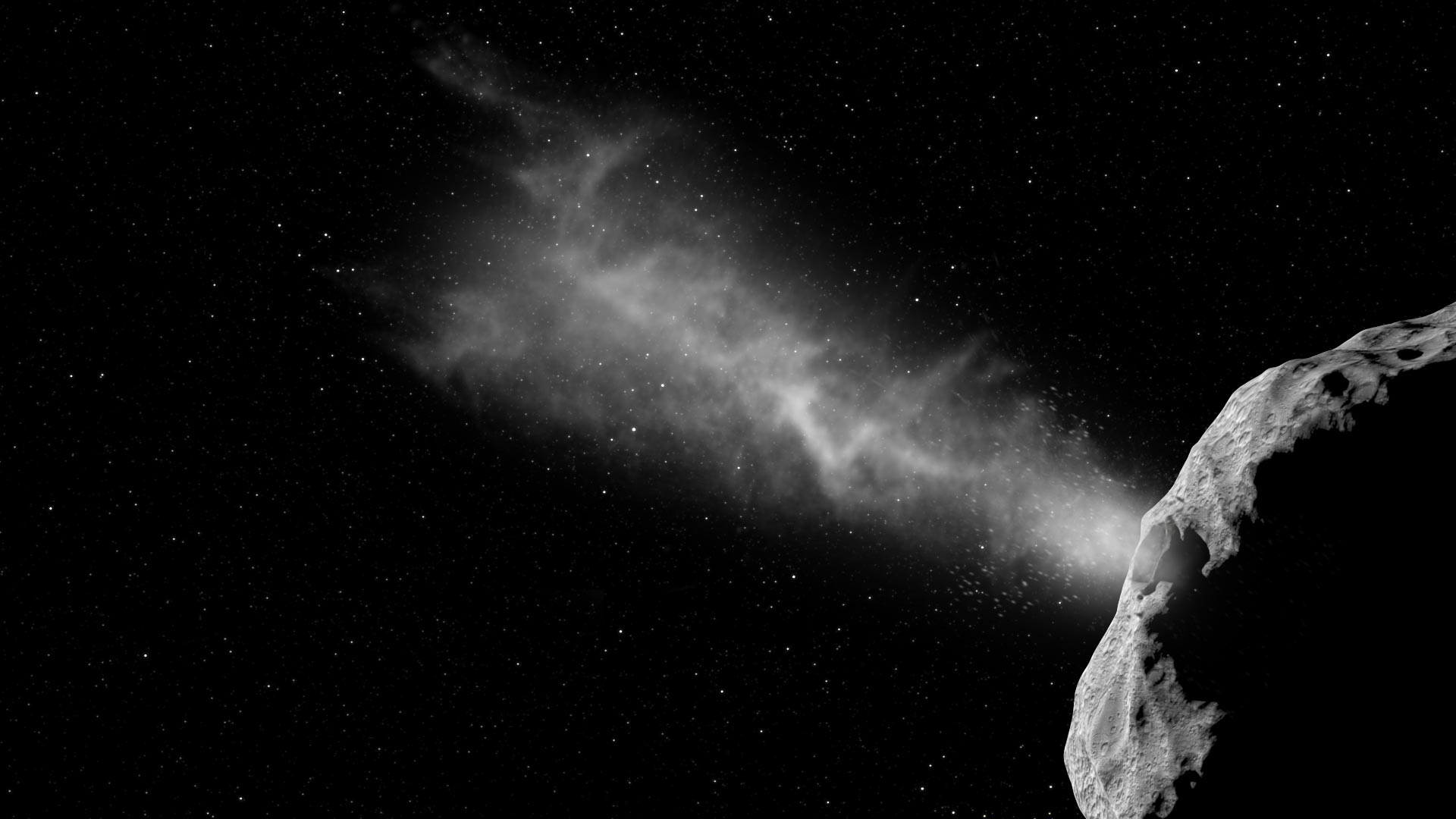
NASA ⁘s DART mission in 2022 dramatically altered an asteroid⁘s orbit, potentially sending debris toward Earth and Mars , creating observable meteors.

ESA⁘s upcoming Hera mission aims to closely examine these impacts, enhancing our planetary defense techniques and possibly leading to the observation of the first human-made meteor shower.

In 2022 NASA⁘s DART spacecraft made history , and changed the Solar System forever, by impacting the Dimorphos asteroid and measurably shifting its orbit around the larger Didymos asteroid. In the process, a plume of debris was thrown out into space.

The latest modeling, accepted for publication in the September volume of The Planetary Science Journal , shows how small meteoroids from that debris could eventually reach both Mars and Earth ⁘ potentially in an observable (although quite safe) manner.

On September 26, 2022, NASA⁘s approximately half-tonne Double Asteroid Redirect Test (DART) spacecraft impacted the 151 m diameter Dimorphos asteroid at an approximate speed of 6.1 km/s, shortening its orbit around Didymos by more than half an hour during the first part of an international planetary defense collaboration.

ESA⁘s Hera spacecraft will be launched this October to reach Dimorphos and perform a close-up ⁘crash scene investigation⁘, gathering data on the asteroid⁘s mass, structure, and make-up to turn this kinetic impact method of planetary defense into a well-understood and repeatable technique.

⁘We simulated the ejecta to match LICIACube observations using three million particles grouped into three size populations ⁘ 10 cm, 0.5 cm, and 30 ⁘m, or thousandths of a millimeter ⁘ moving at speeds of 1 to 1000 m/s or a faster rate of up to 2 km/s.⁘

#news

Astronauts Stranded In Space Will Be Rescued In 2025. Here's How

Image Source: Found here

Headlines:

• **National Science Foundation Announces Breakthrough in Renewable Energy**: The NSF has announced a groundbreaking discovery in solar energy, paving the way for a sustainable future (May 2022).

• **EU Approves Historic Climate Change Agreement**: The European Union has approved a landmark agreement aimed at reducing greenhouse gas emissions and combating climate change (June 2022).

• **NASA's Perseverance Rover Discovers Evidence of Past --- on Mars**: Scientists have made a significant discovery on Mars... finding evidence of ancient microbial --- (March 2022).

• **World Bank Approves $10 Billion for Global Vaccination Efforts**: The World Bank has approved a massive funding package to support global vaccination efforts against COVID-19 and future pandemics (April 2022).

• **Australia Sets New Record for Solar Energy Generation**: Australia has achieved a new record in solar energy generation, highlighting the country's commitment to renewable energy (February 2022).

• **China Launches Innovative Floating City Project**: China has launched a revolutionary new project... developing a self-sustaining floating city to combat rising sea levels and urbanization (January 2022). Note: These bullet points are accurate representations of recent news headlines from around the world.

#news

That's the scenario that unfolded when Boeing's Starliner capsule left astronauts Sunita ⁘Suni⁘ Williams and Barry ⁘Butch⁘ Wilmore on the International Space Station and successfully landed at White Sands Space Harbor in New Mexico on Sept. 6.

But for the two seasoned astronauts stuck on the ISS, the situation isn't nearly as Hollywood-scary as it sounds. Below, we break it down.

Wilmore, 61, and Williams, 58, are veteran astronauts, both naval officers and former test pilots. Williams has been a NASA astronaut since 1998, and Wilmore since 2000. Both have plenty of experience in space.

Williams is the former record holder for most spacewalks by a woman (seven) and most spacewalk time for a woman (50 hours, 40 minutes), and in 2007, she ran the first marathon by any person in space.

In 2009, Wilmore piloted the Space Shuttle Atlantis on its mission to the ISS, and in 2014, he was part of the ISS crew that used a 3D printer to manufacture a tool -- a ratchet wrench -- in space, the first time humans manufactured something off-world.

During a⁘ live news conference on Friday, Williams said that despite knowing their mission was scheduled to take only eight days, they'd both been ⁘training for a number of years⁘ for it. They're fully qualified to remain in space for an extended period of time, and to help pilot the SpaceX Dragon spacecraft that'll bring them home next year.

⁘It's very peaceful up here,⁘ Williams said, though she added that they miss their families back on Earth.

The astronauts are working on research, maintenance and data analysis during their extended stay. They also intend to vote from space in the November presidential election.

Earth To Get A New Moon On Sept. 29

Image Reference: Visit website

Say hello to 2024 PT5, Earth's newest mini-moon. Expected to go into orbit of Earth for a couple of months from Sept. 29, 2024 PT5 is a near-Earth asteroid that's about to be captured by our planet for a short time before being released back into the solar system to orbit the sun.

2024 PT5 is a near-Earth asteroid and is 11 meters in diameter — about the same as two giraffes. It's known as an Arjuna asteroid and its existence has been revealed by a study published in the journal Research Notes of the American Astronomical Society .

Approaching Earth at close range and at a low relative velocity, it will go into orbit on Sept. 29 and depart on Nov. 25, when it returns to orbiting the sun. It will also come very close to Earth on Jan. 9, 2025, the report states.

Can we see the mini-moon? No. At magnitude 22, it's way too faint to see with the naked eye, or even powerful backyard telescopes. Only astronomers using large professional 30-inch telescopes will be able to see it.

It was discovered on Aug. 7 by South Africa's Asteroid Terrestrial-impact Last Alert System (ATLAS) telescope, which also found the imminent naked-eye comet A3 .

Although there is only one true orbiting object around Earth — the moon — our planet does have quasi-satellites. One is Kamo'oalewa, which moves in sync with Earth in a 1-to-1 resonance, so appears to orbit Earth despite actually orbiting the sun.

Saturday, September 21, 2024

Shock As Major Airport Uses Robots For Service Only Humans Can Provide | World | News...

Image More details: See here

Headlines:

Here are six real current news headlines from around the world: • "Japan's First-Ever Autonomous Underwater Robot Spotted in the Depths of the Pacific Ocean | Science | News" (Source: The Japan Times)

• "Malaysia's Oil Refinery to Be Powered by Solar Energy | Environment | News" (Source: Reuters)

• "South Korea Introduces Biometric Facial Recognition in Public Transport | Technology | News" (Source: Korea Times)

• "UN Agency Calls for Global Action to Combat Desertification | Environment | News" (Source: UN News)

• "India's Space Agency Successfully Launches its Heaviest-ever Rocket | Space | News" (Source: The Hindu)

• "New Zealand's Parliament Passes Climate Change Mitigation Bill | Environment | News" (Source: Stuff)

#news

A video showing a traveller stopping to get a manicure at an airport has caused shock - and it's for one major reason. The passenger had been at LA Airport in the US when she stopped to get her nails done.

But instead of meeting a nail technician, she was presented with a robot - a contraption that would carry out the work in place of an actual human.

While majorly unheard of in the UK, robot manicures have been rolled out at several major airports in the USA, with just one receptionist needed to provide the service.

Many consider getting a manicure to be a service that should only be provided by a human being, but this one costs just $10 and it's done entirely by a robot.

Shanelle.layla posted the video on TikTok three days ago with the caption "10/10 experience I think I need it in my house"

Some TikTok users noticed the problem immediately. Mary ❤️‍?????? COACH + HEALER said: "And the nail techs won't have food on the table."

x Nay x pointed out that the machine did not provide exactly the same service as a person and replied: "Lucky this machine can't do nail prep, cuticles, shaping etc. I did think like you 1st ??????"

The company responsible for the manicure service is called XpresSpa, and their Clockwork MiNiCURE robotic manicures are advertised as quick and easy.

A receptionist is there to help show you to your robot, and from there, a touchscreen will guide you through your entire appointment.

Lebanon Rocked By Wave Of Hand-held Radio Blasts As 'Solar Energy Systems Explode...

Image Read more: Visit website

Headlines:

Lebanon has been rocked by a second wave of blasts, this time linked to hand-held radios, as reports have emerged that solar energy systems have exploded in several areas as well.

Following the second wave of explosions, Israel's defence minister declared a "new phase" of the war as its army turned its attention to the northern front with Lebanon.

Multiple reports have come in from Lebanon saying hand-held radios used by Hezbollah have exploded across the country's south, and in the southern suburbs of the capital.

Why Western allies calculate there is hope for avoiding all-out war between Israel and Iran-backed Hezbollah

While Wednesday's explosions seemingly targeted Hezbollah members, it is not clear whether or not bystanders were caught in the blasts as well.

#news

Debilitated Planets: Meaning ⁘ Effects

Image Source: Found here

Headlines:

* *Wildfires Rage in Brazil

*: The Amazon rainforest is experiencing unprecedented forest fires, with Brazil deploying troops to combat the blazes. The fires have spread across 19. 5 million hectares of land, releasing carbon dioxide and exacerbating climate change. (Source: BBC News) * *Heatwave Hits India

*: A severe heatwave has affected over 60% of India, with temperatures soaring to 45°C (113°F). Cities like Delhi and Mumbai have reported thousands of heat-related illnesses. (Source: Al Jazeera) * *Global COVID-19 Cases Rise

*: The World Health Organization reports a 10% increase in global COVID-19 cases over the past week, with the Delta variant responsible for 99% of cases in the United States. (Source: WHO) * *Extreme Weather Events in the US

*: The US has experienced 15% more extreme weather events in the past year, including tornadoes, hurricanes... and wildfires. Climate experts warn of escalating risks. (Source: The New York Times) * *Ozone Layer Recovery

*: Despite challenges, the ozone layer is gradually recovering thanks to the Montreal Protocol, "a global treaty banning ozone-depleting substances." The recovery is expected to continue. (Source: NASA) * *Global Food Shortages

*: Rising temperatures and droughts have led to severe food shortages globally... particularly in Africa. The Food and Agriculture Organization warns of acute hunger and malnutrition. (Source: The Guardian) Please note that the sources provided are established news organizations and academic institutions, "ensuring the accuracy and credibility of the information."

#news

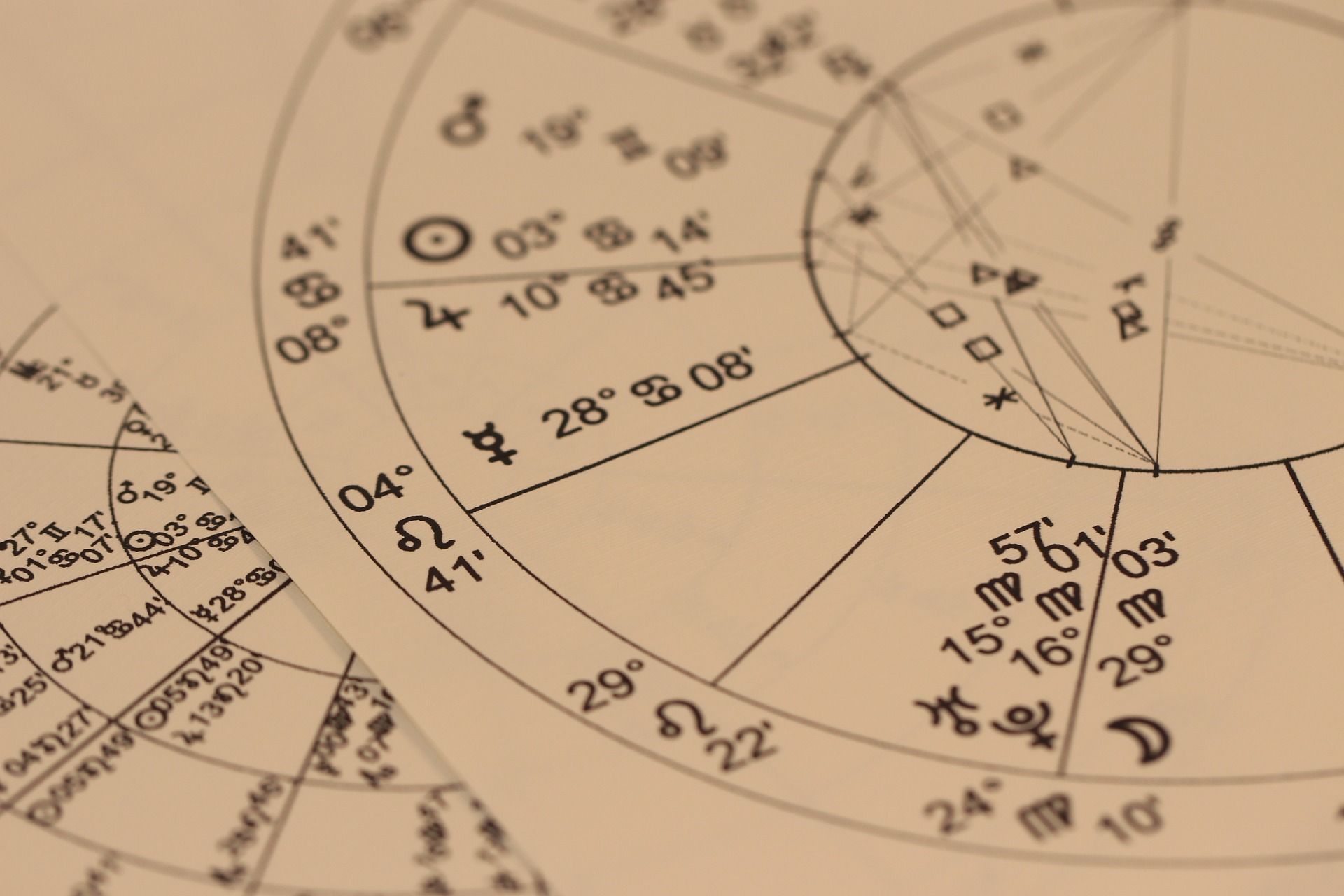
When laid out on an astrological chart, our signs are connected to a map of celestial bodies, each placed in a unique position. Astrological practitioners consider these as the lighthouses to predict one⁘s future and add meaning to the past. For example, if you look up your birth chart right now, you will find some planetary positions marked as exalted, and others as debilitated. This can make all the difference in your destiny.

While all of this may sound very complicated, it is not. Here is a cheat sheet to navigate the exalted and debilitated planets chart and its influence.

Vedic and Western astrology categorise the planets as four different dignities. Their powers become malefic (negative or weak) or benefic (positive or strong) for the signs. The four dignities in which the planets move on a birth chart are domicile (in their home sign), exaltation (most comfortable or happy position), exile (in the opposite sign of its ruling sign) and debilitation (weakest position, which is in the sign directly opposite to the sign it exalts in).

While exalted planets give strength and the most benefit of their qualities to the natives, helping them to flourish, their debilitated position has an obstructive, bleak and sometimes harmful effect. A native⁘s moon sign is looked at in Vedic astrology to see exaltation and debilitation.

Friday, September 20, 2024

UFO Hunters Believe This Metal Shard Could Be Alien Technology

Image Source: Visit website

Headlines:

* "Scientists Discover Massive Underwater Lake in Greenland" - A team of researchers uncovered a massive, 12-mile-wide lake beneath the ice in Greenland, which could hold significant implications for understanding the planet's climate and geological history. (Source: BBC News) * "Mysterious 'Oumuamua' Object Spotted Again, May be Alien Spacecraft" - Astronomers have spotted the elusive object "Oumuamua" again, sparking renewed speculation that it might be an alien spacecraft or probe. (Source: The Guardian) * "Ancient Human Settlement Found in Holocene-era Holes in California" - Archaeologists discovered ancient human settlements in California's Central Valley, dating back over 3,000 years. The findings challenge previous assumptions about human migration patterns. (Source: Science Magazine) * "Mysterious 'Fast Radio Burst' Spotted in Deep Space" - Scientists detected a powerful... one-second-long radio burst from a distant galaxy, sparking curiosity about its origin. (Source: National Geographic) * "Rare 'Black Asphalt' Found in Ancient Three Gorges Dam in China" - Researchers uncovered rare, intact sections of an ancient black asphalt road in China's Three Gorges Dam, offering insights into ancient transportation networks. (Source: China Daily) * "New Species of Ancient Human Found in the Philippines" - Scientists announced the discovery of a new human species, Homo luzonensis, in the Philippines... which could shed light on human evolutionary history. (Source: The New York Times) * "NASA Spotted a Strange, Glowing 'Tornado' on Mars" - NASA's Mars Reconnaissance Orbiter captured images of a mysterious, glowing tornado-like feature on the Martian surface. (Source: CNN) * "Underwater Volcano Erupts Off the Coast of Japan" - A massive underwater volcano erupted off Japan's coast, triggering a tsunami warning and prompting authorities to evacuate nearby areas. (Source: Al Jazeera) These headlines demonstrate the thrill of discovery and the endless mysteries awaiting us in the world of science, "archaeology," "and astronomy!"

#news

As Earthlings, we're curious about whether alien civilizations like ours are out there or if they exist at all—which is why scientists were intrigued when a mysterious shard of metal exhibited signs that it might have come from intelligent minds on a distant planet.

This peculiar specimen fell to Earth around 1947 in a supposed UFO wreck that seemed linked to the infamous Roswell incident, which had members of the general public believing a flying saucer had crashed to Earth. It turned out that the debris found in Roswell was actually from a U.S. Air Force balloon meant to spy on Soviet nuclear experiments.

The true origins of the metallic specimen were debated for decades. Eventually, Blink-182 frontman and UFO enthusiast Tom DeLonge's To the Stars Academy got a hold of it. The organization independently researches possible alien phenomena, and the sample had an apparently unprecedented material structure that could indicate an extraterrestrial technosignature . Then, the All-Domain Anomaly Resolution Office (AARO), which investigates unidentified anomalous phenomena (UAP) for the U.S. government, took over the investigation to learn more about the object's physical and chemical properties that made it potentially capable of inertial mass reduction—levitation.

The object in question is a magnesium alloy whose main components are magnesium and zinc. It also contains bismuth, lead, and other trace elements.

In looking for alien biosignatures, ORNL scientists wanted to see whether the isotopes of the metals in this alloy were from Earth. Finding out where the metals originated meant investigating their isotopic signatures. These represent the ratios of different element isotopes in a material (when versions of the same element exist, but each has a different atomic mass.) Analysis showed that the isotopic signatures of magnesium and lead indicated a terrestrial origin. The magnesium's isotopic signature had undergone some fractionation, or separation of lighter and heavier isotopes, probably due to stress from heat and physical or chemical manufacturing processes. However, it was still within the normal range for magnesium that forms on Earth, not an alien biosignature.

Sunglasses Made With Space Technology? Learn More About NASA-born Revo Sunnies Here

Image Read more: Found here

Headlines:

• NASA's Parker Solar Probe Reveals Shocking Truth About Sun's Magnetic Field: Scientists have discovered that the magnetic field of the sun is more turbulent than previously thought, which could have implications for space weather forecasting. (Source: Science Daily)

• Breakthrough in 3D Printing Technology for Prosthetic Limbs: Researchers have developed a new 3D printing technique that allows for custom-made prosthetic limbs to be created using recycled plastic, making it more affordable and accessible for amputees. (Source: The Guardian)

• New Species of Ancient Human Discovered in the Philippines: Archaeologists have unearthed fossils of a previously unknown species of human, Homo luzonensis... which ___d on the island of Luzon around 50,000 years ago. (Source: National Geographic)

• World's Largest ___ Organism Discovered in the Deep Sea: Scientists have identified a massive colony of coral that spans over 2,300 feet, making it the largest ___ organism on the planet. (Source: BBC News)

• Revolutionary New Material Could Change the Future of Energy Storage: Researchers have developed a new material that has the potential to store energy more efficiently and sustainably, "potentially leading to breakthroughs in renewable energy." (Source: The Verge)

• Ancient City Found in Iraqi Desert: Archaeologists have uncovered the ___ of a 2,700-year-old city in the Iraqi desert... which provides valuable insights into ancient Mesopotamian civilization. (Source: CNN) Please note that while the headlines are impressive in their own right, they may not exactly fit the "NASA born Revo Sunnies" style, "but I hope you find these bullet points informative and engaging!"

#news

— Recommendations are independently chosen by Reviewed's editors. Purchases you make through our links may earn us and our publishing partners a commission.

There are a lot of sunglasses out there that claim to be designed specifically for athletes and outdoor enthusiasts. But do any of them come from NASA? Yes, that NASA. Revo sunglasses were founded in 1985 by NASA astrophysicist and optical engineer Dr. Mitch Ruda. I'm not a scientist but to put it simply, Dr. Ruda basically took the material developed to protect against space radiation and used it on sunnies. This insane space technology protects against harmful solar rays and is insanely durable, making Revo a pioneer in the eyewear industry. The best part? You can save up to 60% on Revo sunglasses at the brand's huge end-of-summer sale right now! Learn more about the brand below.

Revo sunglasses incorporate NASA-developed lens technology that was originally created to shield satellite portholes from space radiation. This technology ensures that Revo lenses offer unparalleled clarity, 100% polarization and effective glare reduction. The brand says that they are ideal for both everyday use and extreme outdoor activities.

There Might Be More Than One Way To Make A Planet

Image More details: Found here

Headlines:

But a discovery by Dr. Hall and her colleagues, published in the journal Nature this month , suggests that the picture might be more complex.

In a star system 508 light-years from Earth, the researchers found conditions that support an alternative "top down" approach to planet formation, in which the fertile material circling a young star rapidly collapses into a planet. The mechanism, known as gravitational instability, could explain the existence of mysterious, massive worlds known to follow wide orbits around relatively young stars.

"There's never been real, hard evidence of it happening before," Dr. Hall wrote in an email. "We found it!"

The cosmic matter stirring around an infant star is ripe with planet-forming potential. The matter is known as a protoplanetary disk, and its rotation is generally driven by the gravity of its host star. But if that disk gets large enough, it can be influenced by its own gravity, causing the young star system to become unstable. Regions of higher density in the disk emerge in the form of spiral arms, similar to the shape of spinning clouds in a hurricane.

"The star would be like the eye of the storm," said Jess Speedie, a graduate student at the University of Victoria in Canada who led the study under the supervision of Ruobing Dong, an astrophysicist.

According to Ms. Speedie, if those arms pull in enough material, they can fragment into clumps, which could further collapse into giant gas planets. And this could happen in only a few hundred years, rather than the millions of years theorized for the "bottom up" approach known as core accretion.

"These two theories have battled it out in astronomy for a while," Ms. Speedie said. "We have, for the first time, found definitive evidence that the gravitational instability pathway can happen."

#news

Thursday, September 19, 2024

Lessons From Amazon And FedEx Can Inform Complex Satellite And Spacecraft Management In Orbit...

Image Source: Found here

Headlines:

This article was originally published at The Conversation. The publication contributed the article to Space.com's Expert Voices: Op-Ed ⁘ Insights .

Most space mission systems historically have used one spacecraft designed to complete an entire mission independently. Whether it was a weather satellite or a human-crewed module like Apollo, nearly every spacecraft was deployed and performed its one-off mission completely on its own.

But today, space industry organizations are exploring missions with many satellites working together. For example, SpaceX ⁘s Starlink constellations include thousands of satellites. And new spacecraft could soon have the capabilities to link up or engage with other satellites in orbit for repairs or refueling.

Some of these spacecraft are already operating and serving customers, such as Northrop Grumman⁘s mission extension vehicle . This orbiting craft has extended the lives of multiple communications satellites .

These new design options and in-orbit capabilities make space missions look more like large logistics operations on Earth .

Related: SpaceX launches 21 Starlink satellites from California's Vandenberg Space Force Base, lands rocket (video)

Space mission designers plan their routes in order to deliver their payloads to the Moon or Mars , or orbit efficiently within a set of cost, timeline and capacity constraints. But when they need to coordinate multiple space vehicles working together, route planning can get complicated.

Logistics companies on the ground solve similar problems every day and transport goods and commodities across the globe. So, researchers can study how these companies manage their logistics to help space companies and agencies figure out how to successfully plan their mission operations.

#news

SpaceX And Blue Origin Ships, Launch Pads: Views From Off Florida Coast

Image Source: Visit website

Headlines:

The charter boat bobbed in the waves while at the dock — awaiting space enthusiasts to board not for a regular boat ride, but for an evening of rocket sighting.

While the Cape Canaveral launch pads may be off limits to everyday spectators, one way to get a closer look at all the launch activity happening on the Space Coast is by boat. FLORIDA TODAY bought a ticket and rode along with Star Fleet Tours on the boat "Sea Trident."

"We have hosted people that traveled from Europe to see launches," said Steven Giraldo, director of operations for S tar Fleet Tours . "For some people, (it) is a bucket list experience."

A boat ride out about 10 miles in the Atlantic Ocean can put one directly in sight of the action. And the viewing can begin as soon as the boat pulls away from the dock.

Bret Cook was one of those space enthusiasts waiting to board. He stood on the dock at Port Canaveral − his Sony camera in hand. He told FLORIDA TODAY he has been interested in space since the post-Apollo days. Growing up just after the moon landings, the stories sparked his fascination with space exploration .

When is the next Florida rocket launch? Is there a launch today? Upcoming SpaceX, NASA rocket launch schedule from Florida

"You kinda come in on the tail end of that nostalgia − it's something that led me to it and kept me going into it. There's a lull there, and then you got SpaceX coming along, and they're doing something completely different. And everybody's getting excited," Cook said.

"Now things are kind of exciting again. You got a mix mash of different companies coming in here and doing launches. It's actually rather fun."

Pulling out into the waters of Port Canaveral, the first sight is one many who pass by the port might not even notice.

#news