Friday, February 28, 2025

Everything We Know About Blue Origin's All-Women Space Crew

Image Reference: Visit website

Headlines:

On February 27, Blue Origin announced an all-female crew for its private NS-31 mission to space, in what appears to be an effort to promote space tourism. The group of six women, including Katy Perry and Gayle King, was organized by the vice chair of the Bezos Earth Fund, Lauren Sanchez, an Emmy Award–winning journalist and aerial filmmaker who is currently engaged to Amazon billionaire Jeff Bezos.

According to Blue Origin, the aerospace company founded by Bezos, its New Shephard program has already flown 52 people "above the Kármán line,⁘ which is 62 miles above Earth and considered the internationally recognized boundary of space. What do we know about this mission and the women on board? Here's everything we've learned so far.

According to the announcement, Sanchez "brought the mission together" and is "honored to lead a team of explorers on a mission that will challenge their perspectives of Earth, empower them to share their own stories, and create lasting impact that will inspire generations to come."

Beyond her role at Bezos Earth Fund, Sanchez is a licensed helicopter pilot and the founder of Black Ops Aviation, "the first female-owned and operated aerial film and production company."

Sanchez's crew includes famous journalist Gayle King and pop star Katy Perry, as well as former NASA rocket scientist Aisha Bowe, bioastronautics research scientist Amanda Nguyen, and film producer Kerianne Flynn. "I'm so afraid, but I'm also so excited," King said while announcing the her trip on CBS Mornings , revealing that "the crew" already created a group chat.

The all-women flight will launch this spring, though the official date has not yet been announced.

#news

Thursday, February 27, 2025

Odin Probe Blasts Off On SpaceX Rocket To Survey Asteroid For Possible Mining Mission | Science...

Image More details: See here

Headlines:

A second mission would land on the asteroid and test for platinum and other elements - the first mining expeditions could then follow.

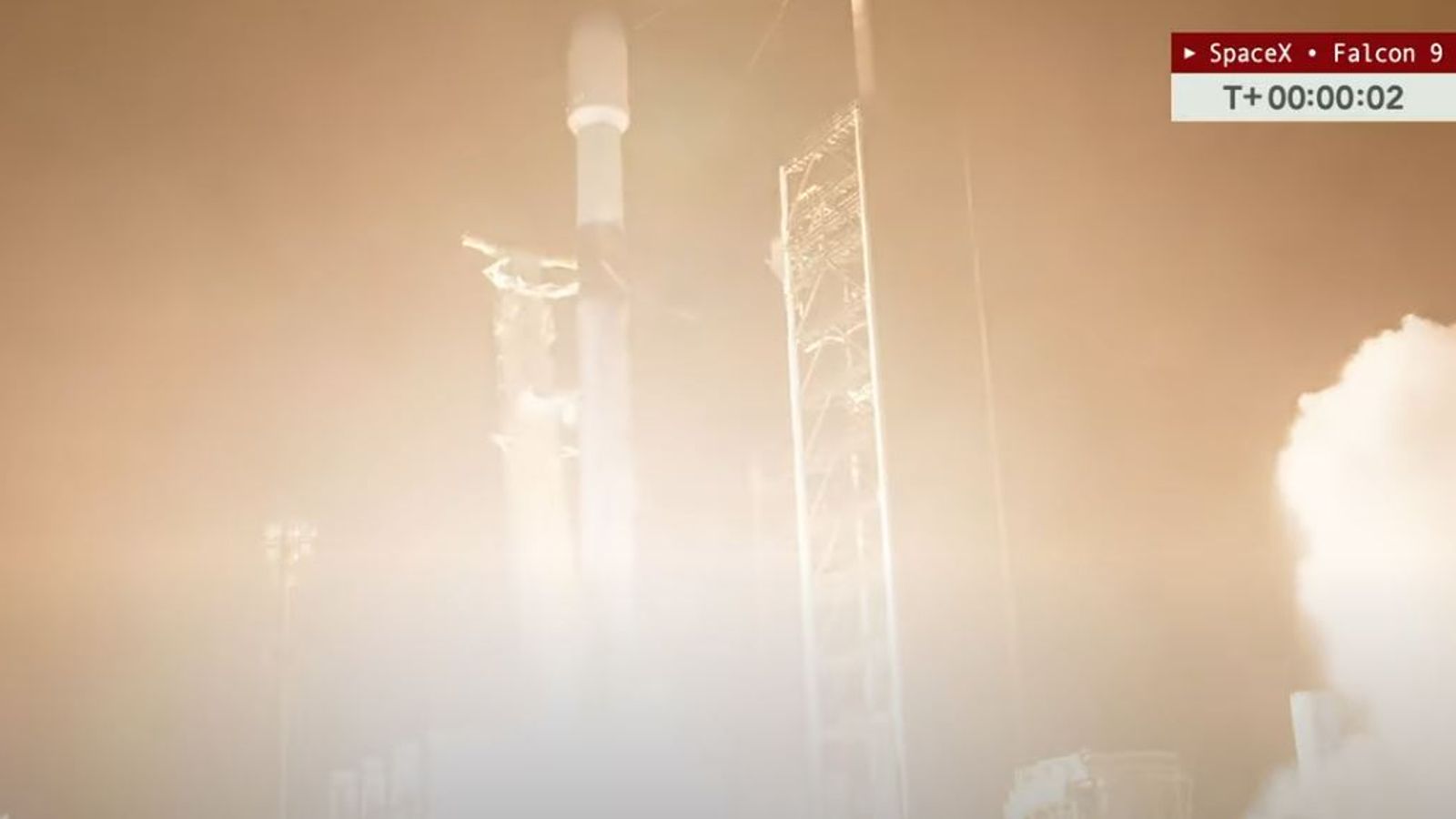
A privately-built spacecraft has embarked on an unprecedented deep space mission to scout out an asteroid's potential for mining.

The probe, called Odin, was launched on a SpaceX rocket alongside a robotic moon lander that will drill for water and a lunar orbiter that will map water resources with an instrument built by the University of Oxford.

The asteroid mission is a high-risk venture that heralds a new dawn of commercial exploitation of our celestial neighbours.

Odin is destined for asteroid 2022 OB5 that's believed to be rich in platinum and similar metals, which are critical for electronic, medical and green technology.

Matt Gialich, engineer and co-founder of startup AstroForge, told Sky News that mining the metals on Earth costs $900 an ounce (⁘25,000 per kg).

"The problem is that on Earth we have mined all of the good sources of platinum group metals," he said.

"Everything we're looking at now is thousands of meters under the Earth. It's actually very, very difficult to mine.

"But we know this exists in space . We know it's readily available. For our mission, instead of going down, we want to go up."

#news

Wednesday, February 26, 2025

Nico Harrison Was Determined To Trade Luka To Avoid Mavs Orbiting Doncic

Image Reference: See here

Headlines:

Even though Luka Dončić is generally regarded as one of the five best active players in the NBA and had made the All-NBA first team five times by the age of 25, the Dallas Mavericks seemed to have no interest in him being their franchise player.

Per NBA insider Marc Stein , Mavs general manager Nico Harrison was ⁘determined⁘ to trade Dončić no later than this summer because they didn't want to build a team orbiting around the five-time All-Star:

⁘Yet naturally now, with a bit of distance from the initial shock, you have begun to hear more of the whispers that the Mavericks had somehow concealed for months. Whispers via league sources suggesting that Dallas' decision-makers, most notably general manager Nico Harrison, no longer wanted Planet Mavericks to orbit around Dončić and had grown determined to trade him by this summer at the latest.⁘

In the immediate aftermath of the trade that sent Dončić to the Los Angeles Lakers, it was known the Mavs had ⁘ major concerns ⁘ about his conditioning issues as he was set to become eligible for a supermax contract this summer.

The Athletic's  Christian Clark, Mike Vorkunov and Fred Katz reported on Feb. 17 that Dallas was ⁘never going to offer⁘ Dončić the five-year, $345 million supermax extension, adding credence to the notion he would've been traded in the offseason if the Lakers' deal hadn't come to fruition.

Speaking to ESPN's Tim MacMahon in the aftermath of the trade (h/t ESPN's Dave McMenamin ), Harrison said his motivation behind the trade was to build an elite defensive team with Anthony Davis as the focal point that can compete for a title.

⁘I believe that defense wins championships,⁘ Harrison said ⁘I believe that getting an All-Defensive center and an All-NBA player with a defensive mindset gives us a better chance. We're built to win now and in the future.⁘

There's definitely something to the notion that Dončić may not age gracefully. He's only played 70 games in a season twice in his career and has missed at least 12 games in four consecutive seasons, including the 2024-25 campaign.

#news

Why Humanoid Robots Are Missing The Point

Image Reference: Found here

Headlines:

Science fiction, from The Jetsons to the Marvel Cinematic Universe, is replete with humanoid robots. But for a long time in the real world, such robots have been a novelty at best and a punchline at worst. Somehow, though, in the last few years, things have shifted. More than a handful of companies are developing humanoid robots, and these technological simulacra have begun popping up in automobile factories and shipping outfits. Some firms are even promising household robots. Still, the most important question has yet to be satisfyingly answered: what is the point? Why make a robot shaped like⁘

#news

Tuesday, February 25, 2025

New Study Claims Our Solar System Is Home To Millions Of Interstellar Objects

Image Reference: Visit website

Headlines:

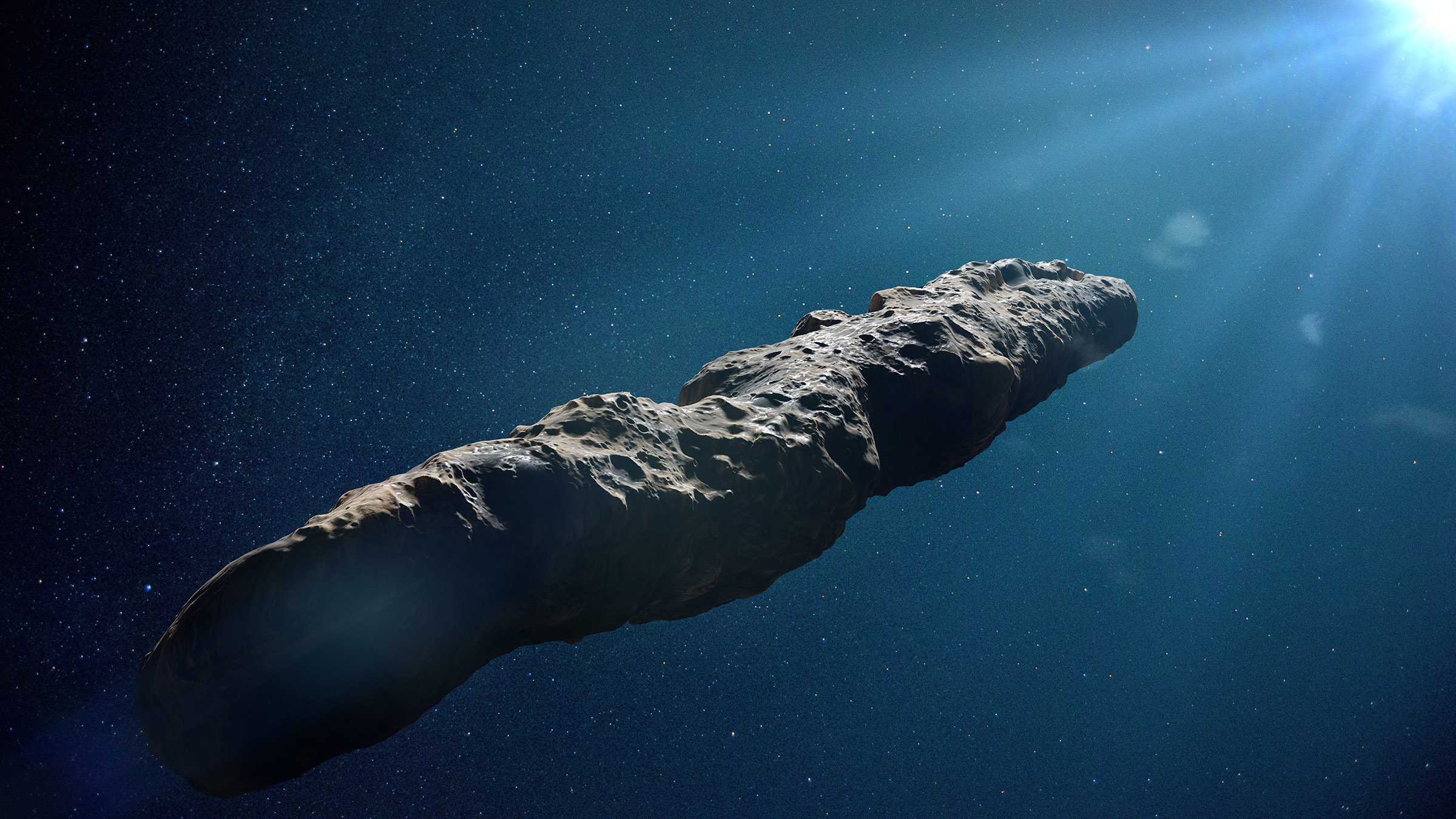
Our solar system may not be as isolated as we once thought. According to a new study, more than 1 million interstellar objects could be lurking in the outer reaches of our cosmic neighborhood, quietly drifting in the Oort Cloud⁘the vast, icy shell of comets and asteroids at the edge of the solar system.

The researchers involved in the new study say these aren⁘t just random space rocks, either. Instead, they argue they⁘ve traveled light-years, originating from Alpha Centauri, the closest star system to Earth. Until now, though, astronomers have only confirmed two interstellar visitors.

The first interstellar object was ⁘Oumuamua, an elongated space rock that some even speculated was an alien spacecraft in 2017, and the comet Borisov in 2019. The latter behaved more like a typical comet but still appeared to have traveled from well beyond our solar system.

However, new simulations suggest that these weren⁘t isolated objects. Instead, the universe is full of these intriguing cosmic hitchhikers , and many may have liked the Oort Cloud so much that they⁘ve taken up permanent residence here⁘at least in a manner of speaking.

#news

Seven Planets Align In UK Skies This Week For Last Time Until 2040

Image More details: Visit website

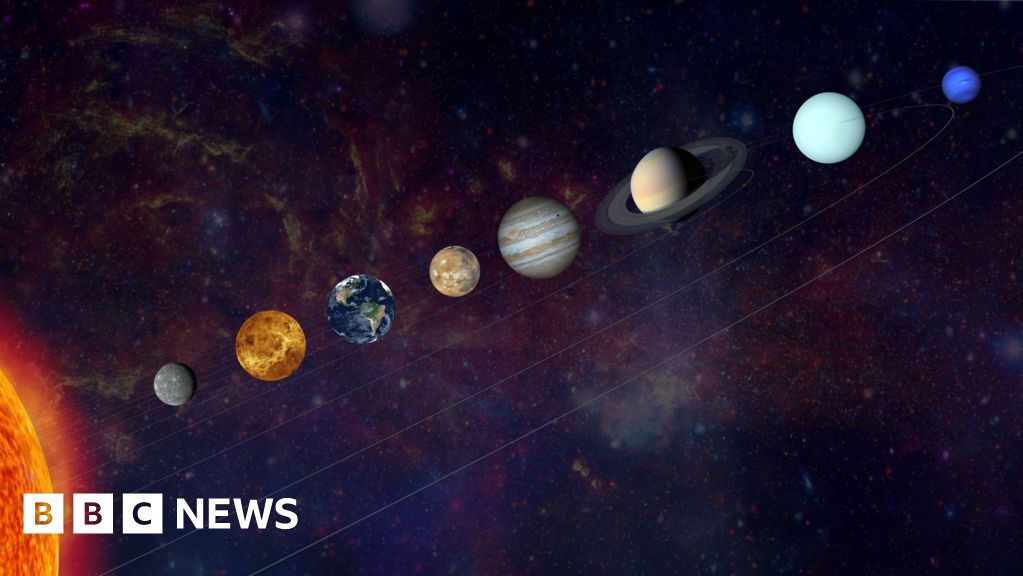
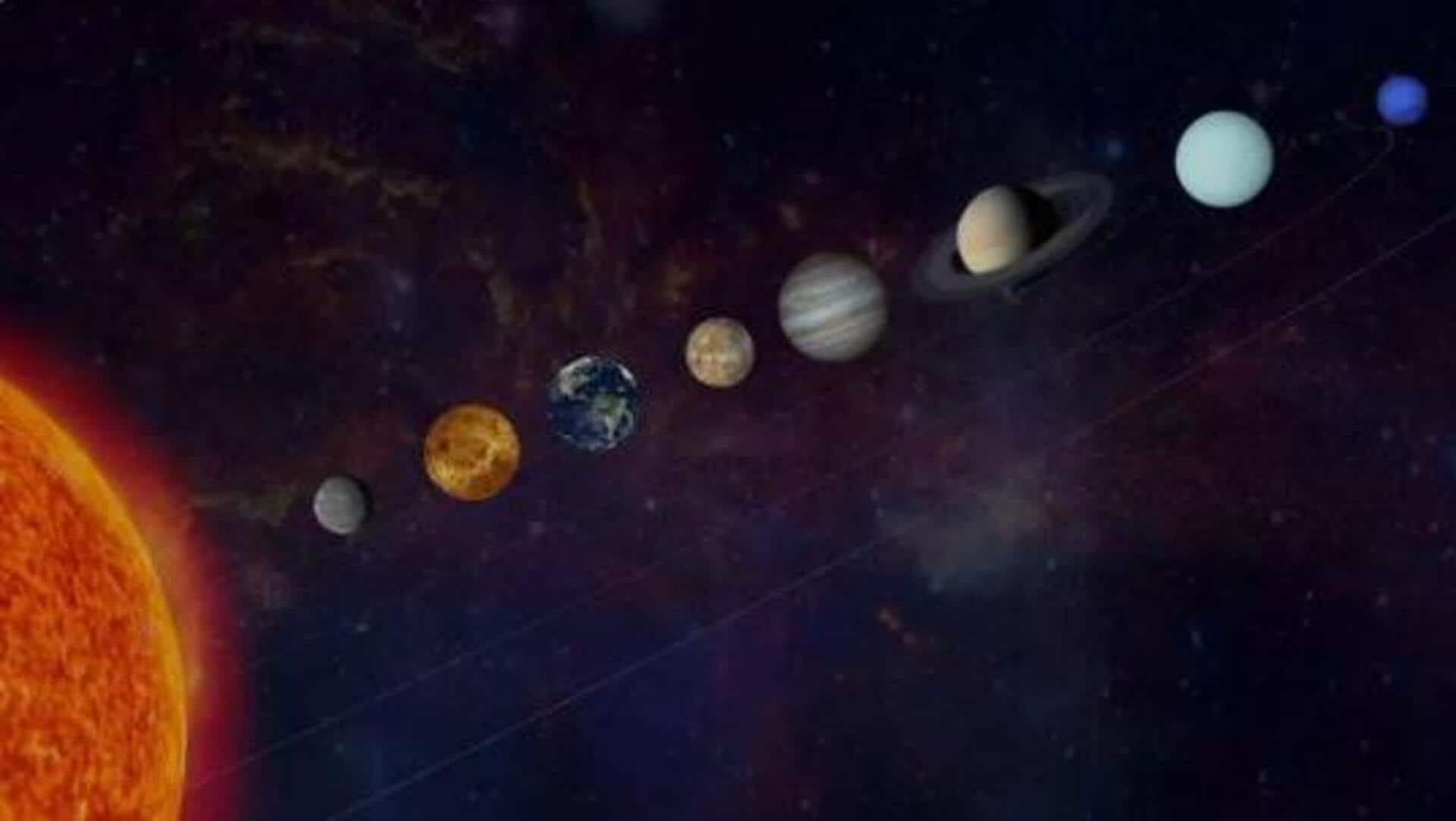
Skywatchers are in for a treat this week as seven planets - Mars, Jupiter, Uranus, Venus, Neptune, Mercury, and Saturn will all be briefly visible in the evening sky.

This phenomenon, known as a 'planetary parade' is a rare sight, and it will be the last time seven planets can be seen simultaneously so well until 2040.

The best chance to see as many planets as possible will be just after sunset on Tuesday, Wednesday, Thursday and Friday.

A good view of the horizon and clear skies will offer the best chance of spotting them all. However, the window to see all seven planets will be very brief.

As the sun sets, Saturn and Mercury will also be setting, making them particularly difficult to see.

⁘You really only have a few minutes after sunset to catch them before they drop below the horizon. After that, you'll still be able to see Venus, Jupiter, and Mars clearly for a much longer time,⁘ Dr Bloomer added.

As they orbit at different speeds and distances from the Sun, there are moments when they appear to line up from Earth's perspective creating a spectacular visual display, although the planets remain separated by vast distances in space.

What Did The Pentagon Reveal About Bizarre Egg-shaped UFO Case In New Announcement?

Image Read more: Found here

Headlines:

T he Pentagon has officially launched an investigation into claims made by United States government contractor Jake Barber , who alleges he was involved in secret missions to recover alien technology.

Barber, who came forward in January, described piloting helicopters during classified operations and encountering an "egg-shaped" craft with no visible engine or thermal signatures.

"I saw an egg, a white egg," Barber told NewsNation, emphasizing that the object defied anything he had ever seen before.

Barber's report has now been added to the 21 ongoing UAP (unidentified anomalous phenomena) investigations being conducted by the Department of Defense . His case joins a growing list of sightings under review by the All-domain Anomaly Resolution Office (AARO), which recently disclosed receiving 757 UAP reports between May 2023 and June 2024. Among these cases, 272 incidents occurred before 2023 but had never been publicly acknowledged until now.

AARO is the first government office dedicated to unifying efforts across the Department of Defense and other agencies to systematically collect, analyze, and report UAP data.

Currently, only military personnel can submit reports directly to AARO through their chain of command, while civilian pilots are instructed to notify air traffic control, which then relays information to the Federal Aviation Administration and the DoD.

However, no official reporting mechanism exists for everyday citizens, leaving independent organizations like the National UFO Reporting Center as the primary option for public sightings.

Amid growing public interest, Congress is also stepping in. Representative Anna Paulina Luna has been appointed to lead a new task force aimed at declassifying government secrets, including information related to UFOs. House Oversight Committee Chairman James Comer has stated that Luna is committed to ensuring greater transparency and ending long-standing secrecy.

#news

Monday, February 24, 2025

NASA Preps For Moon Launch: What To Know About Water-hunting Mission

Image Read more: Visit website

The U.S. company that made history in 2024 with an uncrewed lunar landing is looking to do it again .

The second lunar lander developed and operated by Intuitive Machines, a Houston, Texas-based space exploration company, is set to launch this week for the moon, according to NASA . The U.S. space agency is paying top dollar to finance the mission, which will see to the delivery of a number of scientific instruments that will hunt for water under the lunar surface.

Intuitive Machines etched its name in the history books a year ago when its spacecraft, Odysseus, became the first commercially-built lunar lander to ever make it to the moon. The lunar mission also marked the United State's return to the moon for the first time in more than five decades since NASA's Apollo era came to an end.

NASA's Artemis campaign envisions the moon as being a crucial pit stop to prepare U.S. astronauts and their vehicles to travel onward to Mars .

Athena, the name of the six-legged Nova-C lander, is carrying a number of scientific instruments meant to pave the way for astronauts to return to the lunar surface as early as 2027.

The solar-powered Athena lander, a hexagonal cylinder capable of carrying up to 300 pounds of cargo, will prominently carry a drill and a mass spectrometer,  NASA said . Drilling operations will seek to detect and measure the potential presence of gases from beneath the lunar soil.

Other objectives including testing a a Nokia LTE 4G communications system and deploying a propulsive drone capable of hopping across the lunar surface.

Sunday, February 23, 2025

An Asteroid Could Hit Earth In 2032, NASA Says. Here's What To Know About The Potential "City...

Image Source: Visit website

An asteroid nearly the size of a football field now has roughly a 0.28% chance of hitting Earth in about eight years, NASA says ⁘ though at one point earlier its estimate reached as high as 3.1%. Such an impact, if it occurred, would have the potential for city-level devastation, depending on where it strikes.

CBS News space consultant Bill Harwood said if it landed in a populated area, it would "be truly catastrophic," but the effects would be localized.

"At this point, it's 'Let's pay a lot of attention, let's get as many assets as we can observing it,'" Bruce Betts, chief scientist of The Planetary Society, told the AFP news agency.

Dubbed 2024 YR4 , the asteroid was first spotted on December 27, 2024, by the El Sauce Observatory in Chile. Based on its brightness, astronomers estimate it is between 130 and 300 feet wide.

"An asteroid this size impacts Earth on average every few thousand years and could cause severe damage to a local region," the European Space Agency said in a statement .

By New Year's Eve, it had landed on the desk of Kelly Fast, acting planetary defense officer at U.S. space agency NASA, as an object of concern.

"You get observations, they drop off again. This one looked like it had the potential to stick around," she told AFP.

The risk assessment kept climbing, and on Jan. 29, the International Asteroid Warning Network (IAWN), a global planetary defense collaboration, issued a memo.

SpaceX Launches 22 Starlink Internet Satellites From California

Image More details: See here

Headlines:
Evrim Ağacı - Karanlığı bilimle fethet!

Moleküler evrim hızı, bir popülasyon içerisinde DNA veya protein dizilerindeki mutasyon ların ne sıklıkla sabitlendiğini (yani popülasyondaki bireylerin çoğunda gözlendiğini) ölçer. Mutasyon hızı ise belirli bir zaman aralığında DNA veya protein dizisinde meydana gelen değişim miktarını tanı mlar. Birbirine sıkı sıkıya bağlı bu iki kavram, moleküler evrim anlayışımızın temelini oluşturur.

Örneğin moleküler saat kuramı (Zuckerkandl ve Pauling 1962), zaman ilerledikçe bir protein dizisinde sabitlenen amino asit mutasyonlarının miktarının da artacağını öngörür. Bu durumda, eğer mutasyon hızının belirli bir proteinin evrimsel soy hatları boyunca aynı olduğu varsayılırsa, moleküler evrim hızının da sabit olması beklenir (Görsel 1).

Read more: See here

#news

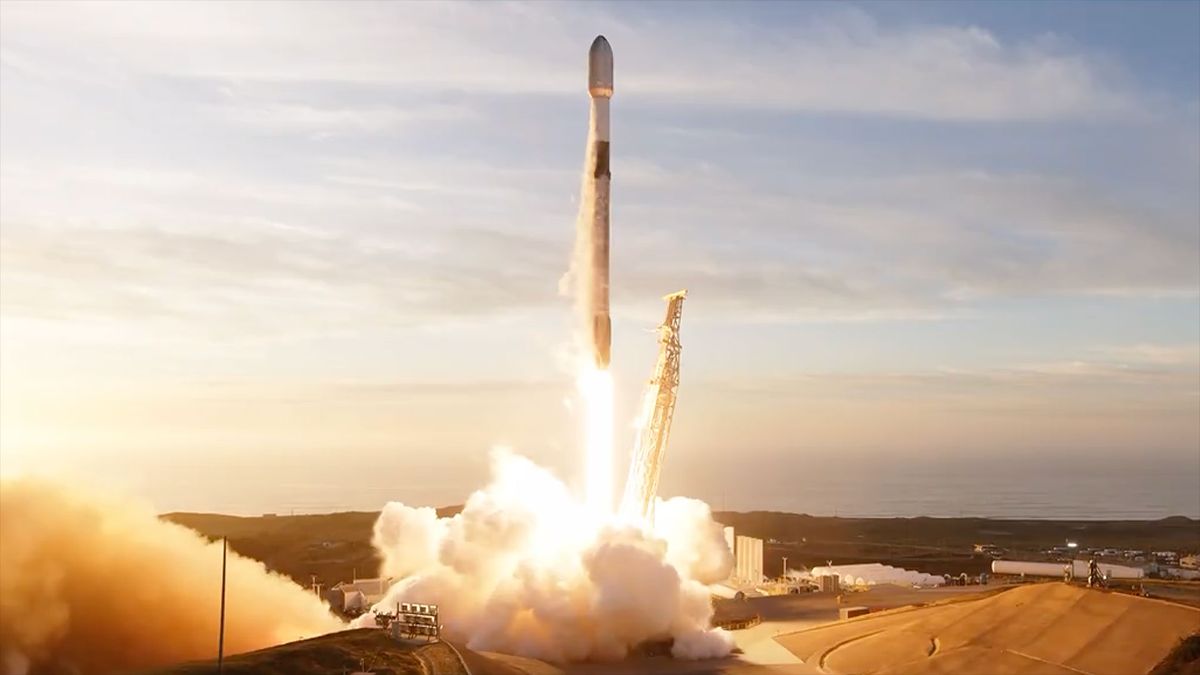
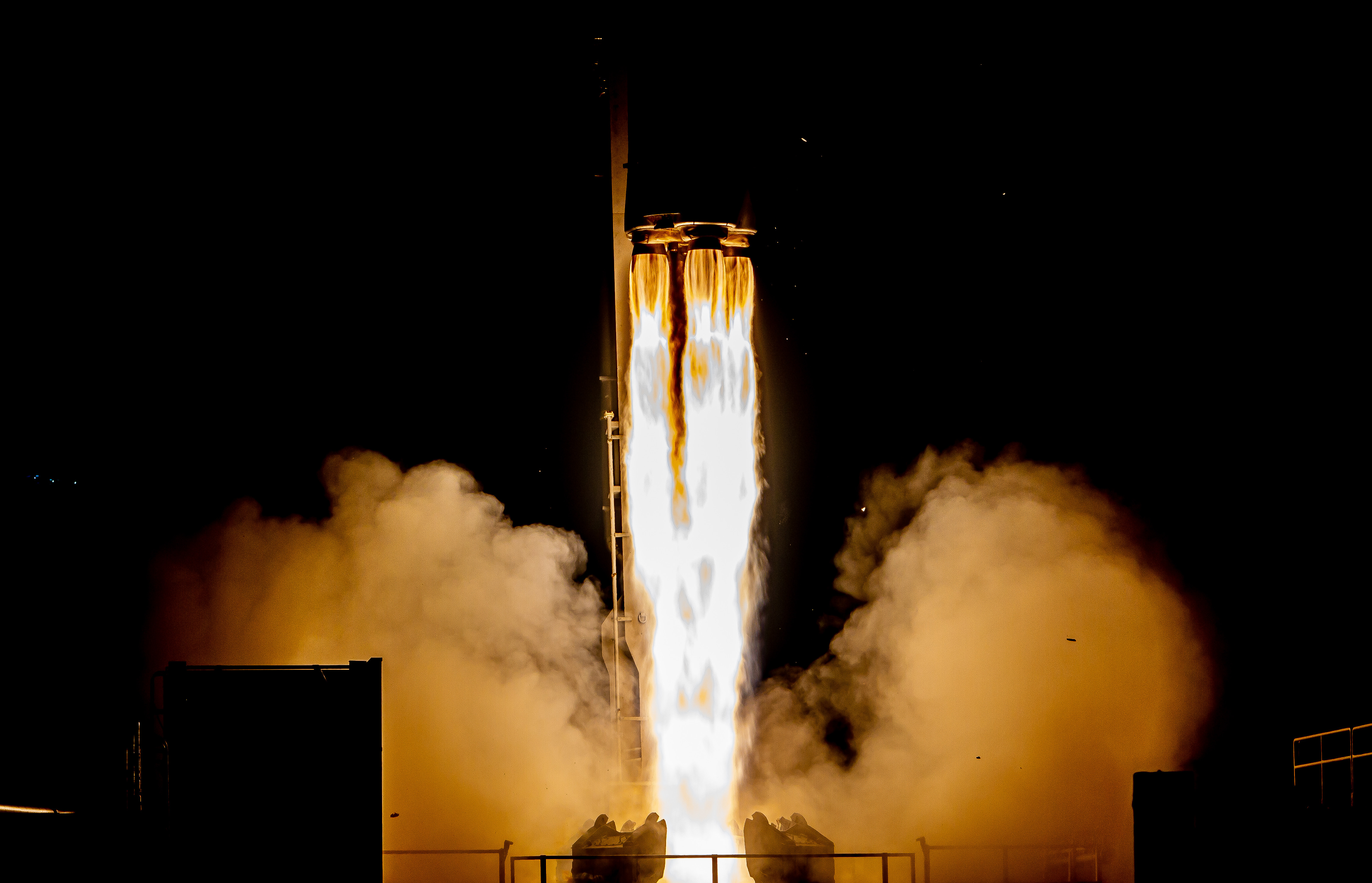
SpaceX launched another set of its Starlink internet satellites from southern California on Saturday evening (Feb 22).

A Falcon 9 rocket carrying 22 Starlink spacecraft lifted off from Vandenberg Space Force Station at 8:38 p.m. EST (5:38 p.m. local time or 0138 GMT Feb. 23).

As to plan, the Falcon 9's first stage came back to Earth about eight minutes after liftoff. It touched down on the drone ship "Of Course I Still Love You," which was stationed in the Pacific Ocean.

The Falcon 9's upper stage, meanwhile, continued to haul the Starlink satellites to low Earth orbit (LEO), where there were to be deployed about 62 minutes after liftoff.

The Starlink megaconstellation ⁘ the biggest ever assembled ⁘ currently consists of more than 7,000 operational spacecraft, according to astrophysicist and satellite tracker Jonathan McDowell.

Join our Space Forums to keep talking space on the latest missions, night sky and more! And if you have a news tip, correction or comment, let us know at: community@space.com.

Robert Pearlman is a space historian, journalist and the founder and editor of collectSPACE.com , a daily news publication and community devoted to space history with a particular focus on how and where space exploration intersects with pop culture. Pearlman is also a contributing writer for Space.com and co-author of "Space Stations: The Art, Science, and Reality of Working in Space⁘ published by Smithsonian Books in 2018.In 2009, he was inducted into the U.S. Space Camp Hall of Fame in Huntsville, Alabama. In 2021, he was honored by the American Astronautical Society with the Ordway Award for Sustained Excellence in Spaceflight History. In 2023, the National Space Club Florida Committee recognized Pearlman with the Kolcum News and Communications Award for excellence in telling the space story along the Space Coast and throughout the world.

Swimming robots, fusion satellites and more! New NASA-funded studies could someday 'change the possible'

Saturday, February 22, 2025

What If A Giant Asteroid Had Not Wiped Out The Dinosaurs?

Image Reference: See here

Headlines:

Here are eight current news headlines from around the world, categorized in a similar style: • NASA Discovers Hidden Water on Mars

: Scientists have confirmed the presence of liquid water beneath the Martian surface, a major breakthrough in the search for --- beyond Earth. (Source: NASA, March 2021) • European Space Agency Launches Climate Change Mission

: A fleet of satellites is set to launch to monitor global deforestation and track the effects of climate change. (Source: ESA, February 2021) • New Species of Ancient Human Discovered in the Philippines

: Fossil --- of a previously unknown human species have been uncovered in the Philippines, shedding new light on human evolution. (Source: National Geographic, March 2021) • Breakthrough in Gene Editing Technology

: Scientists have made a major breakthrough in gene editing... paving the way for new treatments for genetic disorders. (Source: Nature, February 2021) • Ancient City Uncovered in Jordan

: Archaeologists have discovered a previously unknown ancient city in Jordan, "dating back over 2,"000 years. (Source: BBC, March 2021) • Climate-Resistant Crops Being Developed

: Scientists are working on creating crops that can thrive in a changing climate... a

#news

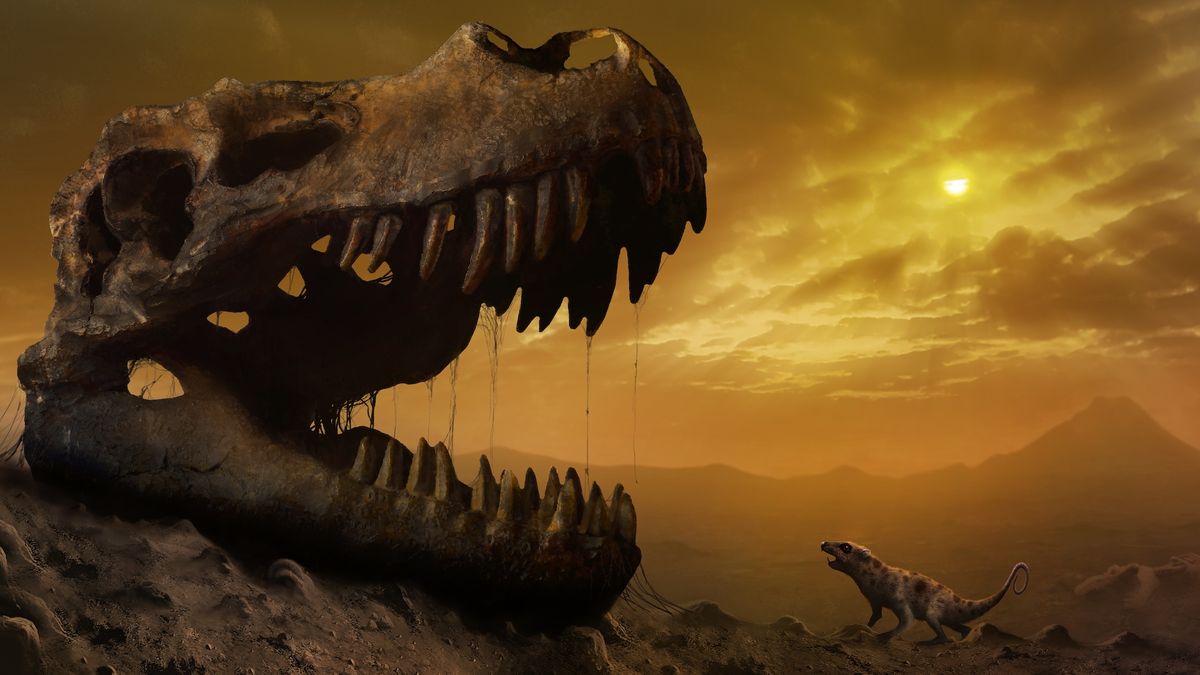
But what if the asteroid had never struck Earth? Would the dinosaurs have continued their reign over the planet? Could they have survived ice ages and evolved to become more intelligent?

According to paleontologists, it's possible that dinosaurs would have continued to evolve and rule Earth. After all, they'd already survived and adapted for 165 million years, which included surviving rising and falling seas, temperature spikes and volcanic eruptions , according to Steve Brusatte , a professor of paleontology at the University of Edinburgh. But this would have made it impossible for our mammal ancestors to evolve the way they did.

Some scientists think dinosaurs would have met their doom anyway because extinctions appear to have outpaced the emergence of new dinosaur species . But Brusatte isn't convinced.

"For those of us who collect fossils of the last dinosaurs, we can see quite clearly that everywhere in the world ⁘ there [was] a great diversity and abundance of dinosaurs," Brusatte told Live Science in an email. "It seems remarkably clear to me that dinosaurs were strong, successful, still diverse, [and] still at the top of their game when the asteroid hit."

"Many of them had feathers, [so] they could insulate themselves just like mammals can," Brusatte said. In addition, some dinosaurs, such as Tyrannosaurus rex , were likely warm blooded, research finds , meaning they weren't completely at the mercy of a changing climate.

It's also possible that dinosaurs would have evolved new defenses against the cold during extreme weather. Take mammoths, for example, which evolved around 5 million years ago in South Africa. About 800,000 years ago , during the last ice age , some mammoths grew woolly coats as they expanded to the much colder region of Eurasia.

Why Does SpaceX Founder Elon Musk Want To Deorbit The ISS?

Reference: See here

Headlines:

Here are six current news headlines from around the world: • NASA's Perseverance Rover Discovers Evidence of Ancient Lake on Mars: NASA's Perseverance rover has discovered a large lake on Mars that was likely home to water and potentially --- in the past, according to a recent study published in the journal Nature. (Source: NASA)

• European Space Agency's Rosalind Franklin Returns to Space Station: The European Space Agency's Rosalind Franklin, a robotic arm, has been successfully deployed to the International Space Station, marking a significant milestone in the station's expansion. (Source: ESA)

• China's Chang'e 7 Spacecraft Enters Lunar Orbit: China's Chang'e 7 spacecraft has successfully entered into lunar orbit... paving the way for its landing on the far side of the Moon in the coming months. (Source: Xinhua)

• India's Aditya-L1 Spacecraft Enters Solar Orbit: The Indian Space Research Organisation's Aditya-L1 spacecraft has entered into solar orbit, "marking a significant step towards its mission to study the Sun's corona." (Source: ISRO)

• Private Spacecraft Company, "Virgin Galactic.".. Offers Suborbital Flights to Space Tourism: Virgin

#news

Elon Musk continues to push the idea that it's time to deorbit the International Space Station and shift focus toward the Red Planet.

"It has served its purpose," the billionaire SpaceX founder wrote on his social media platform X. "There is very little incremental utility. Let's go to Mars."

Notably, his company was selected last summer to develop and deliver the U.S. deorbit vehicle to bring the space station down — to the tune of $843 million. Both the vehicle and the station are expected to "destructively break up as part of the re-entry process."

For decades, the space station has been an international collaboration for scientific research, and floated hundreds of miles above Earth.

The Canadian Space Agency, the European Space Agency, the Japan Aerospace Exploration Agency, Russia's State Space Corporation Roscosmos, and NASA have operated the station since 1998. Orbiting Earth every 90 minutes , it has been continuously occupied since November 2000 and more than 270 astronauts have visited the station.

But, its technical lifetime is limited by its primary structure, which is impacted by spacecraft dockings and undockings and orbital heating and cooling.

"NASA has examined several options for decommissioning of the International Space Station, including disassembly and return to Earth, boosting to a higher orbit, natural orbital decay with random re-entry, and controlled targeted re-entry to a remote ocean area," NASA explained .

While the U.S., Japan, Canada and the participating countries of European Space Agency had committed to operating the station through 2030, Russia had only committed to continue operations through at least 2028.

Friday, February 21, 2025

Microsoft's New AI Agent Can Control Software And Robots

Image Read more: Found here

Headlines:

Here are 10 current news headlines from around the world with a similar categorization: • Robotics and Artificial Intelligence * "Boston Dynamics' Atlas Robot Successfully Completes First Human-Human Handover" (The Verge)

* "New Robot Exoskeleton Helps Paralyzed Man Walk Again" (CNN) • Autonomous Vehicles * "Waymo Self-Driving Cars Pass Safety Test... Ready for Public Roads" (The New York Times)

* "Tesla's Full Self-Driving Beta Update Rolls Out to Eligible Owners" (Electrek) • Agricultural Robotics * "FarmBot Raises $2. 5 Million to Develop Autonomous Farming Systems" (TechCrunch)

* "Robotic Harvesters Start Picking Crops in Ukraine's Fields" (Reuters) • Healthcare Robotics * "Robot-Assisted Surgery Reduces Recovery Time for Patients" (Healthcare IT News)

* "Robotic Exoskeletons Help Patients Walk After Spinal Cord Injury" (Science Daily) • Industrial Automation * "ABB's YuMi Robot Wins Prestigious Industry 4. 0 Award" (ABB)

* "KUKA's LBR iiwa Robot Offers Increased Flexibility and Precision" (KUKA)

#news

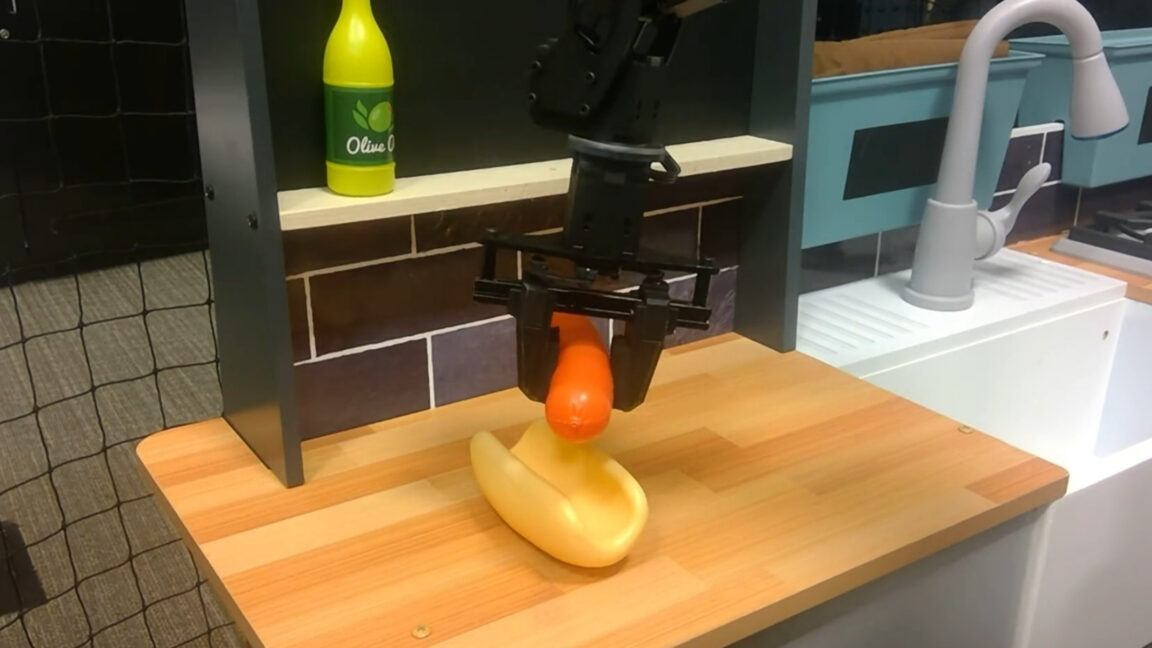
On Wednesday, Microsoft Research introduced Magma , an integrated AI foundation model that combines visual and language processing to control software interfaces and robotic systems. If the results hold up outside of Microsoft's internal testing, it could mark a meaningful step forward for an all-purpose multimodal AI that can operate interactively in both real and digital spaces.

Microsoft claims that Magma is the first AI model that not only processes multimodal data (like text, images, and video) but can also natively act upon it—whether that's navigating a user interface or manipulating physical objects. The project is a collaboration between researchers at Microsoft, KAIST , the University of Maryland, the University of Wisconsin-Madison, and the University of Washington.

We've seen other large language model-based robotics projects like Google's PALM-E and RT-2 or Microsoft's ChatGPT for Robotics that utilize LLMs for an interface. However, unlike many prior multimodal AI systems that require separate models for perception and control, Magma integrates these abilities into a single foundation model.

Microsoft is positioning Magma as a step toward agentic AI, meaning a system that can autonomously craft plans and perform multi-step tasks on a human's behalf rather than just answering questions about what it sees.

"Given a described goal," Microsoft writes in its research paper, "Magma is able to formulate plans and execute actions to achieve it. By effectively transferring knowledge from freely available visual and language data, Magma bridges verbal, spatial, and temporal intelligence to navigate complex tasks and settings."

Microsoft is not alone in its pursuit of agentic AI. OpenAI has been experimenting with AI agents through projects like Operator that can perform UI tasks in a web browser, and Google has explored multiple agentic projects with Gemini 2.0 .

Microsoft Magma researcher Jianwei Yang wrote in a Hacker News comment that the name "Magma" stands for "M(ultimodal) Ag(entic) M(odel) at Microsoft (Rese)A(rch)" after some people noted that "Magma" already belongs to an existing matrix algebra library , which could create some confusion in technical discussions.

AI To Power China's Mission To The Edges Of The Solar System

Image Reference: Visit website

Headlines:

Here are seven current news headlines from around the world, categorized and written in a journalistic style: • Space Exploration

: NASA's Perseverance Mars Rover Discovers Evidence of Ancient Lake on Mars (NASA, USA) - A team of scientists has discovered a large lake on Mars that existed around 3. 5 billion years ago, according to data collected by the Perseverance rover. • Renewable Energy

: China's Solar Power Capacity Surpasses 220 GW, Becoming World Leader (Xinhua, China) - China has become the world's largest solar power market, with a total installed capacity of over 220 gigawatts, "according to the National Bureau of Statistics." • Infrastructure

: Japan Unveils Plans for $1. 4 Trillion Infrastructure Development Project (Nikkei, Japan) - The Japanese government has announced a massive infrastructure development plan worth over $1. 4 trillion... aimed at upgrading the country's transportation networks and promoting economic growth. • Environment

: EU Proposes New Rules to Reduce Plastic Waste in the Ocean (European Commission, EU) - The European Union has proposed new regulations to reduce single-use plastics and increase recycling rates... in an effort to combat marine pollution. • Technology

: New AI-P

#news

HELSINKI — Researchers are examining how artificial intelligence technologies could support a planned Chinese mission to the boundaries of the solar system, according to a new paper.

Artificial intelligence can help with the unique challenges of missions to the edge of the solar system, according to the paper, which include an unknown environment, complex mission dynamics, diverse scientific payloads, uncertain exploration targets, long detection distances and long communication delays with limited data rates.

AI can enhance autonomy and reduce dependence on Earth through assisting data processing, autonomous perception and decision-making and efficient computing, according to authors from institutions including the Beijing Institute of Technology (BIT), China's Deep Space Exploration Laboratory (DSEL), and the Shanghai Academy of Spaceflight Technology (SAST). The paper was published in the Journal of Deep Space Exploration.

Chinese space officials have previously stated that a mission to the head and tail of the heliosphere is being considered, with the aim of reaching a distance of 100 astronomical units (with 1 AU equivalent to the average Sun-Earth distance) by 2049. A longer-term goal is to reach a distance of 1,000 AU by the end of the century.

The mission, according to previous reports, would see the pair of radioisotope thermoelectric generator-powered spacecraft journey towards the head and tail of the heliosphere, using flybys of Jupiter and potentially visiting other planets and Kuiper belt objects in the outer solar system. Science goals include studying interplanetary dust, the interstellar medium, and phenomena such as Anomalous Cosmic Rays and the "hydrogen wall" at the boundary of the solar system and interstellar space. Tentative payloads include a range of optical cameras, dust and particle analyzers, a spectrometer and magnetometer.

The China National Space Administration officially organized and launched the demonstration of the implementation plan for a solar system boundary exploration project in 2020, and plans to study the mission were included in China's most recent space white paper in 2021. Solar system boundary exploration was noted in a long-term space science roadmap published in October.

Maha Kumbh To End With All Planets Visible From India

Image Reference: See here

Headlines:

Here are 7 current news headlines from around the world, categorized similarly: • Astronomical Alignments

: NASA's Perseid Meteor Shower Peaks on August 12-13, Expected to Be Visible in North America (USA) - Astronomers predict a spectacular display of shooting stars as the Perseid meteor shower peaks on August 12-13. • Solar System

: Jupiter's Great Red Spot Storm Enters 200th Year of Existence, Scientists Baffled by Its Sustained Activity (UK) - The iconic anticyclonic storm on Jupiter has been raging for nearly two centuries, defying predictions of its demise. • Space Exploration

: China's Chang'e 4 Mission Unveils First Images from the Moon's Far Side (China) - China's lunar mission has captured stunning images of the far side of the Moon, "providing new insights into the Moon's geology and composition." • Astronomical Events

: Total Solar Eclipse to Occur on December 14... Visible in Parts of South America (South America) - A rare total solar eclipse will be visible in parts of South America... offering a rare opportunity for astronomers to study the Sun's corona. • Planetary Exploration

: NASA's Europa

#news

The Maha Kumbh 2025, India's biggest spiritual event, will conclude with an unprecedented celestial phenomenon.

All seven planets of our solar system—Mercury, Venus, Mars, Jupiter, Saturn, Uranus, and Neptune—will be visible from Earth.

The rare astronomical phenomenon started in January and will peak on February 28 when Mercury joins the lineup.

Although the term "planetary alignment" is commonly used to describe such events, it doesn't have a strict scientific definition.

These celestial bodies will appear along the ecliptic—the path traced by the Sun across the sky—because their orbits are roughly in the same plane.

During this planetary parade, observers can expect to see five planets without any optical aid: Mercury, Venus, Mars, Jupiter, and Saturn.

However, Uranus and Neptune will require binoculars or telescopes for viewing due to their faintness.

The best times for observation will be during twilight hours after sunset or before sunrise when the planets are positioned higher in the sky.

Astronomers predict mid-August 2025 will provide another opportunity to witness a similar spectacle with six planets visible in the morning sky.

Thursday, February 20, 2025

Flights Grounded At Airport Over Mysterious 'UFO Sighting' - World News

Image Read more: Visit website

Headlines:

Here are 8 current news headlines from around the world with similar categorization: • Flights Diverted Over UFO Sighting in California

: Multiple flights were diverted to an alternate airport in Los Angeles after air traffic control reported a UFO sighting in the area, prompting a thorough investigation by the Federal Aviation Administration (FAA). (Source: CNN) • Airport Closed Due to Mysterious Drone Activity

: The skies above a major airport in the UK were closed temporarily after a mysterious drone was spotted in the area, "causing concerns about safety and security." (Source: BBC) • Flight Disrupted by Unidentified Aerial Phenomenon

: A commercial airliner was forced to make an emergency landing after passengers reported seeing a strange... unexplained object in the sky. (Source: Fox News) • NASA Investigates Unidentified Object in Space

: NASA officials are investigating a mysterious object detected in space that has sparked concerns about its origins and potential impact on the environment. (Source: NASA) • Airport Grounded Due to 'Unusual' Weather Pattern

: A major airport in Australia was forced to ground all flights due to an unusual weather pattern that caused widespread disruptions to air travel. (Source: ABC News) • Air Traffic Control Cites 'Unidentified

#news

An airport in Turkey was thrown into chaos last night after pilots reported an unidentified, illuminated object in the sky. Flights at Gaziantep Airport were suspended for about an hour as a precautionary measure after the mysterious sighting.

At around 10pm on February 18, pilots spotted the unidentified object at an altitude of approximately 10 thousand feet and reported the situation to the control tower, according to local news reports.

Despite the object not appearing on radar, it was speculated that it could have been an unauthorised drone. After thorough investigations by security units, it was concluded that the object seen by the pilots could have been a drone being flown without permission.

UFO enthusiasts took to Reddit to discuss the reported sighting, with one person saying: ⁘I swear I saw this at San Francisco Airport (SFO) a few weeks ago.

⁘I saw an oddly bright object pass over the hills (from the direction of the ocean) going east, towards to the north side of the airport and just hover there. I was on the highway, so I couldn't get a good look at it, but I wondered what the hell that was. I also saw an object fly from Oakland to San Francisco in about five to 10 seconds (that's about 5-10 miles in that period of time) with no red or green lights, just a blue-coloured sphere.⁘

Another weighed in, believing the UFO was a sign of aliens. ⁘Open contact is definitely happening before 2027,⁘ they said.

Earlier this year, a private jet flight crew was left stunned when they saw a UFO ⁘zigzagging⁘ through the air as their plane travelled at 45,000 feet. Florida-bound crewmembers have told of how they saw strange glowing orbs darting through the sky while flying high above the Bahamas .

The group, flying with private carrier Surjet, said they saw two objects darting through the skies while en route to Fort Lauderdale.

Space-Based Solar Power: The Future Of 24

Image More details: Found here

Headlines:

Here are 7 real current news headlines from around the world related to "Space-Based Solar Power: Future": • Japan's JAXA Space Agency Launches New Solar Power Satellite Mission ( Reuters, March 2022) - Japan's space agency JAXA launched a new solar power satellite, Haya-1, to demonstrate the feasibility of space-based solar power in space. • NASA Plans to Launch Solar-Powered Space Station in 2027 (SpaceNews, February 2022) - NASA announced plans to launch a solar-powered space station, called the Space Technology Mission Directorate's (STMD), to test the feasibility of long-term space-based solar power. • China Launches Space-Based Solar Power Satellite with 20 kW Solar Array (China Daily, January 2022) - China launched a space-based solar power satellite, called the Tengyun-1... with a 20 kW solar array to test the feasibility of space-based solar power. • SpaceX's Starlink Satellites to Power African Countries with Solar Energy (The Guardian, March 2022) - SpaceX's satellite internet constellation, "Starlink," "is expected to provide solar-powered internet connectivity to several African countries.".. offering a new source of renewable energy. • Japan and China Collaborate on Space

#news

Imagine a field of solar panels floating silently in the endless day of Earth⁘s orbit. Unlike their terrestrial cousins, this space-based solar array never faces nighttime, clouds, or atmospheric interference. Instead, they bathe in constant, intense sunlight, converting this endless stream of energy into electricity with remarkable efficiency.

But the true innovation lies in how this power is transmitted to power grids on Earth. The electricity generated in space is converted into invisible beams of microwaves or laser light that pierce through the atmosphere with minimal losses. These beams are precisely aimed at receiving stations on Earth⁘collections of antennas or receivers known as ⁘rectennas⁘ that capture and reconvert the energy back into electricity that can be supplied to the power grid.

⁘It⁘s not really that different from solar PV,⁘ Dr. Leet Wood, chief energy advisor for the Space Frontier Foundation , explained as a guest on The POWER Podcast . ⁘There are a number of different architectures that have been considered over the years, and I should point out that this concept has been around for a number of decades, but the one that we⁘re most focused on is a large-scale satellite with a large solar PV array in geosynchronous orbit.⁘

⁘The behavior of space-based solar power is unique as an energy resource,⁘ Alex Gilbert, a fellow at the Payne Institute for Public Policy, said on the podcast. ⁘It does resemble renewable energy in that it has relatively limited environmental impacts⁘you do have to consider the small emissions from rocket launches⁘but from a greenhouse gas perspective, it is likely to be a net carbon reducer.⁘

Astronomers Uncover The Topsy-turvy Atmosphere Of A Distant Planet

Image Read more: Found here

Headlines:

Here are nine current news headlines from around the world, categorized in a similar vein: * Scientists Discover New Species of Bioluminescent Fish in Deep-Sea Expedition (Marine Biology, USA): A team of researchers has identified a previously unknown species of glowing fish in the depths of the Pacific Ocean.

* NASA's Perseverance Rover Uncovers Evidence of Ancient Lake on Mars (Space Exploration, USA): NASA's Perseverance rover has found conclusive evidence of a lake on Mars that dates back millions of years.

* New Study Reveals Hidden Caves and Ancient Human --- in Indonesia (Archaeology, Indonesia): A team of archaeologists has discovered a network of hidden caves and ancient human --- in the Indonesian island of Sulawesi.

* Scientists Make Breakthrough in Understanding the Origin of --- on Earth (Biology... UK): A team of scientists has made a major breakthrough in understanding the origins of --- on Earth, "shedding new light on the emergence of the first --- organisms."

* Glowing Forests Discovered in the Amazon Rainforest (Environmental Science, Brazil): Researchers have discovered a previously unknown type of glowing fungus in the Amazon rainforest... which could have significant implications for our understanding of

#news

The atmosphere of a distant world has been mapped in detail for the first time, revealing a strange, topsy-turvy weather system, with the fastest winds ever seen inexplicably blowing around the planet's stratosphere.

Now, Julia Seidel at the European Southern Observatory in Chile and her colleagues have looked inside Tylos's scorchingly hot atmosphere using the observatory's Very Large Telescope, and they found it has at least three distinct layers of gas moving in different directions around the planet – a structure unlike anything astronomers have ever seen. "It's absolutely crazy, science fiction-y patterns and behaviours," says Seidel.

The planetary atmospheres in our solar system share a broadly similar structure to one another, where a jet stream of powerful winds blowing in the lower portion of the atmosphere is driven by internal temperature differences, while winds in the upper layers are more affected by temperature differences created by the sun's heat, which warms the daylight side of the planet but not the other.

What's more, the jet stream on Tylos is the most powerful ever seen, blasting at around 70,000 kilometres per hour across half the planet – double the speed of the previous record holder . Exactly what is driving this speed is unclear, but the researchers think that it may be due to the planet's strong magnetic field or because of ultraviolet radiation from its star. "This could possibly change the flow patterns, but this is all highly speculative," says Seidel.

Wednesday, February 19, 2025

Mission Accomplished For Space Telescope Gaia

Image Read more: See here

Headlines:

• NASA's Perseverance Rover Discovers Evidence of Ancient Lake on Mars

: NASA's Perseverance rover has uncovered evidence of a ancient lake on Mars, which is providing scientists with valuable insights into the planet's potential habitability. The rover, which landed on Mars in February 2021, has been exploring Jezero crater and has found signs of a lake that existed around 3. 5 billion years ago. (Source: NASA) • European Space Agency's Rosalind Franklin rover discovers water on the Moon

: The European Space Agency's Rosalind Franklin rover has made a groundbreaking discovery on the Moon... finding evidence of water ice in a permanently shadowed crater near the Moon's south pole. The discovery could pave the way for future human missions to the Moon. (Source: ESA) • China's Tiantan-1 space station reaches orbit

: China's Tiantan-1 space station has reached orbit after a successful launch... marking a major milestone in the country's space program. The station will serve as a research laboratory and observatory for Chinese astronauts. (Source: Xinhua) • India's Aditya-L1 space

#news

This article has been reviewed according to Science X's editorial process and policies . Editors have highlighted the following attributes while ensuring the content's credibility:

The space telescope Gaia has created the largest three-dimensional map of the Milky Way ever. On January 15, 2025, Gaia shut down after 11 years in space. But the research on data Gaia collected will continue for many years to come.

Gaia is a space telescope onboard a satellite that has orbited the sun for 11 years. With the help of astrometry, which is a technique to measure the positions, distances and movements of stars and other heavenly bodies, Gaia has been able to measure distances and luminosities for up to 2 billion stars, which is about 1% of all stars in the Milky Way.

The Gaia mission was originally supposed to last five years, but thanks to the fact that it has been so successful, it has been extended in two rounds.

Until now, we have, among other things, discovered moons orbiting asteroids in our solar system, black holes 30 times heavier than the sun, and how our solar system moves around the center of the Milky Way, how many spiral arms the Milky Way has and what the bar in the middle looks like.

Meet The Crew Of Blue Origin's 30th New Shepard Flight

Image More details: See here

Headlines:

Here are seven current news headlines from around the world, categorized and written in a journalistic style: • Space Exploration

: NASA's Perseverance Rover Discovers Evidence of Ancient Lake on Mars (NASA, USA) - A recent discovery by NASA's Perseverance rover on Mars has shed new light on the planet's ancient past, revealing a lake that existed millions of years ago. • Transportation

: Tesla's Autopilot System to be Rolled Out Across All New Models (Tesla, USA) - Tesla has announced that its advanced Autopilot system will soon be available on all new models, marking a significant step forward in autonomous vehicle technology. • Energy

: World's Largest Offshore Wind Farm Under Construction in the UK (RWE, UK) - The largest offshore wind farm in the world, "capable of powering over 4."5 million homes... is currently under construction in the North Sea. • Artificial Intelligence

: AI Breakthrough Could Revolutionize Medical Imaging (Stanford University, USA) - Researchers at Stanford University have made a groundbreaking discovery in AI technology that could lead to significant advancements in medical imaging. • Sports

: LeBron James Joins NBA League, Becomes First Player to Play in Three Different Decades (NBA... USA

#news

Blue Origin has announced the six-member crew set to fly on its upcoming NS-30 mission, marking the 10th human spaceflight for the New Shepard program and its 30th mission overall. Among the selected astronauts is Lane Bess, making his second journey aboard the suborbital spacecraft. The full crew list includes Lane Bess, Jesús Calleja, Elaine Chia Hyde, Dr. Richard Scott, Tushar Shah, and a yet-to-be-revealed sixth crew member.

With this flight, New Shepard will have carried a total of 47 people beyond the Kármán line, the internationally recognized boundary of space. The mission represents another milestone in Blue Origin's ongoing effort to expand access to commercial spaceflight.

Lane Bess is the Principal and Founder of Bess Ventures and Advisory, a family office fund that invests in disruptive technology firms across various industries. A key figure in the cybersecurity sector, Bess played a pivotal role in leading Palo Alto Networks and Zscaler to successful IPOs. Bess first flew to space on NS-19 on December 11, 2021, and will now become the fourth person to fly on New Shepard twice.

Jesús Calleja is a Spanish television host, mountaineer, and seasoned adventurer. Best known for his shows Calleja Planet, Volando Voy , and Planeta Calleja on Mediaset Spain, his expeditions have taken him to some of the most extreme environments on Earth, including the Seven Summits, the North and South Poles, active volcanoes, and deep sinkholes. Calleja is also a passionate motorsports enthusiast, having competed in multiple international racing events, including four editions of the Dakar Rally and a grueling 3,400-mile trek from the French Pyrenees to Dakar, Senegal.

A leader in reproductive medicine, Dr. Richard Scott is a reproductive endocrinologist, embryologist, and research scientist with a distinguished career in fertility care. As a founding partner and former CEO of IVIRMA Global , the world's largest fertility care group, Dr. Scott has been at the forefront of advancements in reproductive technology. He is an adjunct professor at both Yale University and the University of South Carolina School of Medicine in Greenville.

Tuesday, February 18, 2025

Elon Musk Says SpaceX Will Return Stranded Astronauts Back To Earth Within 'About Four Weeks' Afte...

Image Source: Found here

Headlines:

Elon Musk has vowed to return two stranded NASA astronauts to Earth 'within about four weeks', accusing the former administration of abandoning them in space.

'At the president's request, or instruction, we are accelerating the return of the astronauts,' Musk said, revealing it would take 'about four weeks' for him to get them home. 

Musk said SpaceX has 'brought astronauts back from the space station many times before, and always with success.'

After an issue was identified with their Boeing Starliner capsule , they were stranded. They've now been at the space station for 258 days. 

#news

'Out Of Science Fiction': First 3D Observations Of An Exoplanet's Atmosphere Reveal A Unique...

Image More details: Found here

Headlines:

Here are 10 current news headlines with a similar categorization: • "NASA's Perseverance Rover Discovers Evidence of Ancient Lake on Mars" (Space Exploration)

• "New Study Reveals Unique Microorganisms Thrive in Deep-Sea Vents" (Biological Science)

• "Breakthrough in Quantum Computing: Scientists Develop Quantum Processor" (Technology)

• "NASA's James Webb Space Telescope Captures Stunning Image of Galaxy in Early Universe" (Astronomy)

• "Scientists Discover New Species of Ancient Human in Indonesia" (Anthropology)

• "Researchers Create Artificial General Intelligence that Surpasses Human-Level Intelligence" (Artificial Intelligence)

• "New Species of Giant Squid Discovered in Deep-Sea Expedition" (Marine Biology)

• "European Space Agency's BepiColombo Mission Reaches Mercury's Orbit" (Space Exploration)

• "Scientists Develop New Method to Produce Clean Energy from Seawater" (Energy)

• "Discovery of Water on Mars Raises Possibilities for Human Settlement" (Space Exploration)

#news

Astronomers have peered through the atmosphere of a planet beyond the Solar System, mapping its 3D structure for the first time. By combining all four telescope units of the European Southern Observatory's Very Large Telescope (ESO's VLT), they found powerful winds carrying chemical elements like iron and titanium, creating intricate weather patterns across the planet's atmosphere. The discovery opens the door for detailed studies of the chemical makeup and weather of other alien worlds.

"This planet's atmosphere behaves in ways that challenge our understanding of how weather works -- not just on Earth, but on all planets. It feels like something out of science fiction," says Julia Victoria Seidel, a researcher at the European Southern Observatory (ESO) in Chile and lead author of the study, published today in Nature.

The planet, WASP-121b (also known as Tylos), is some 900 light-years away in the constellation Puppis. It's an ultra-hot Jupiter, a gas giant orbiting its host star so closely that a year there lasts only about 30 Earth hours. Moreover, one side of the planet is scorching, as it is always facing the star, while the other side is much cooler.

The team has now probed deep inside Tylos's atmosphere and revealed distinct winds in separate layers, forming a map of the atmosphere's 3D structure. It's the first time astronomers have been able to study the atmosphere of a planet outside our Solar System in such depth and detail.

"The VLT enabled us to probe three different layers of the exoplanet's atmosphere in one fell swoop," says study co-author Leonardo A. dos Santos, an assistant astronomer at the Space Telescope Science Institute in Baltimore, United States. The team tracked the movements of iron, sodium and hydrogen, which allowed them to trace winds in the deep, mid and shallow layers of the planet's atmosphere, respectively. "It's the kind of observation that is very challenging to do with space telescopes, highlighting the importance of ground-based observations of exoplanets," he adds.

Monday, February 17, 2025

This Artist Collaborates With AI And Robots

Image Read more: Found here

Headlines:

Here are six current news headlines from around the world with similar categorization: • Robotics Pioneer Collaborates with Fashion Designer to Create Sustainable Garment Line (New York, USA): Fashion designer Iris van Herpen has teamed up with robotics expert Dr. Hiroshi Ishiguro to create a sustainable fashion line using 3D-printed clothing made from recycled materials. The collaboration aims to reduce waste in the fashion industry. • Japanese Tech Firm Partners with Italian Manufacturer to Develop Autonomous Delivery Robots (Tokyo, Japan): Mitsubishi Electric and Italian company, Polimoda, have partnered to develop autonomous delivery robots for the logistics industry. The robots will be designed to navigate through crowded city streets and deliver packages to customers. • Artist Collaborates with AI to Create Virtual Reality Art Experience (London... UK): Artist Refik Anadol has partnered with AI firm, "Microsoft.".. to create a virtual reality art experience that uses machine learning algorithms to generate unique patterns and shapes. • Robotics Startup Develops AI-Powered Exoskeleton for Disabled Individuals (Singapore): A Singapore-based robotics startup has developed an AI-powered exoskeleton that helps disabled individuals walk and move with ease. The exoskeleton uses machine learning algorithms to adapt to the user's movements.

#news

Many artists worry about the encroachment of artificial intelligence on artistic creation. But Sougwen Chung, a nonbinary Canadian-Chinese artist, instead sees AI as an opportunity for artists to embrace uncertainty and challenge people to think about technology and creativity in unexpected ways. 

Chung's exhibitions are driven by technology; they're also live and kinetic, with the artwork emerging in real time. Audiences watch as the artist works alongside or surrounded by one or more robots, human and machine drawing simultaneously. These works are at the frontier of what it means to make art in an age of fast-­accelerating artificial intelligence and robotics. "I consistently question the idea of technology as just a utilitarian instrument," says Chung. 

"[Chung] comes from drawing, and then they start to work with AI, but not like we've seen in this generative AI movement where it's all about generating images on screen," says Sofian Audry, an artist and scholar at the University of Quebec in Montreal, who studies the relationships that artists establish with machines in their work. "[Chung is] really into this idea of performance. So they're turning their drawing approach into a performative approach where things happen live." 

"My alpha state drives the robot's behavior, translating an internal experience into tangible, spatial gestures," says Chung, referring to brain activity associated with being quiet and relaxed. Works like Spectral , they say, show how AI can move beyond being just an artistic tool—or threat—to become a collaborator. 

Chung found open-source plans online and assembled a robotic arm that could hold its own pencil or paintbrush. They added an overhead camera and computer vision software that could analyze the video stream of Chung drawing and then tell the arm where to make its marks to copy Chung's work. The robot was named Drawing Operations Unit: Generation 1, or DOUG 1. 

'Like A Family Photo Of Our Solar System': The James Webb Telescope Is Watching 2 Alien Planets...

Image Source: Found here

Headlines:

Here are 7 current news headlines from around the world, categorized in a similar vein to the one provided: • NASA's Perseverance Rover Discovers Ancient Lake on Mars: A NASA rover has discovered a sprawling lake on Mars that was once home to a thriving ecosystem, shedding new light on the Red Planet's ancient history.

• New Species of Ancient Human Ancestor Found in the Philippines: A team of scientists has discovered a new species of ancient human ancestor in the Philippines, providing a major breakthrough in the field of paleoanthropology.

• World's Largest Waterfall Breaks Records with Unprecedented Flood: The largest waterfall in the world has broken records with a massive flood... causing widespread damage and displacement in the region.

• Scientists Discover Hidden City in the Amazon Rainforest: A team of scientists has discovered a previously unknown city deep in the Amazon rainforest, "sparking excitement among archaeologists and explorers."

• New Species of Giant Squid Found in the Mariana Trench: A team of scientists has discovered a new species of giant squid in the Mariana Trench, "the deepest point in the ocean."

• Climate Change Causes Record-Breaking Heatwave in Australia: A severe heatwave has gripped Australia... breaking records

#news

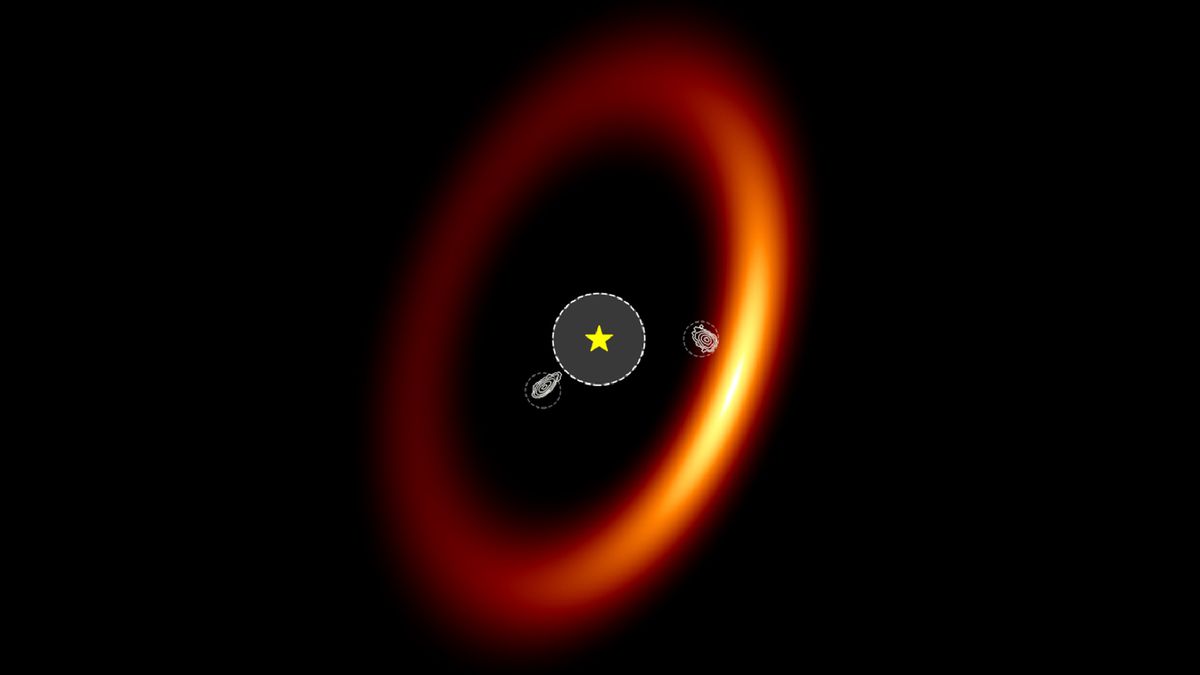
Planets are born in swirling disks of gas and dust around young stars. Astronomers are keenly interested in the planet formation process, and understanding that process is one of the James Webb Space Telescope 's ( JWST ) main science goals. PDS 70 is a nearby star with two nascent planets forming in its disk, two of the very few exoplanets that astronomers have directly imaged.

Researchers developed a new, innovative approach to observing PDS 70 with the JWST and uncovered more details about the system, including the possible presence of a third planet.

PDS 70 is an orange dwarf star about 370 light-years away and hosts two young, growing planets: PDS 70b and PDS 70c. The European Southern Observatory's Very Large Telescope (VLT) imaged both of the planets directly, and PDS 70b has the distinction of being the very first protoplanet ever imaged directly. The VLT accomplished the feat in 2018 with its groundbreaking SPHERE instrument.

The SPHERE observations, along with other observations, allowed astronomers to get a much more detailed look at the planets' atmospheres, masses, and temperatures.

Now, the JWST has taken another look at the pair of young planets. The results are in a new paper in The Astronomical Journal. It's titled " The James Webb Interferometer: Space-based Interferometric Detections of PDS 70 b and c at 4.8 um, " and the lead author is Dori Blakely. Blakely is a grad student in Physics and Astronomy at the University of Victoria, BC, Canada.

The JWST's Near Infrared Imager and Slitless Spectrograph (NIRISS) has a feature called Aperture Masking Interferometry (AMI), which allows it to function as an interferometer. It uses a special mask with tiny holes over the telescope's primary mirror. The interferogram it creates has a much higher resolution because the effective size of the telescope becomes much larger.

"In this work, we present James Webb Interferometer observations of PDS 70 with the NIRISS F480M filter, the first space-based interferometric observations of this system," the authors write. They found evidence of material surrounding PDS 70 b and c, which strengthens the idea that the planets are still forming.

Sunday, February 16, 2025

Why AI Mastery Determines Space Dominance

Image Reference: Found here

Headlines:

Here are 9 real current news headlines from around the world, categorized under "Mastery Determines Space Dominance": • NASA's Artemis Program Seeks to Establish Sustainable Presence on the Moon (USA): NASA's Artemis program aims to return humans to the lunar surface by 2024 and establish a sustainable presence on the Moon, marking a significant step towards space dominance. (Source: NASA) • China's Space Station Tiangong Completes First Crewed Operations (China): China's space station, Tiangong, has successfully completed its first crewed operations, demonstrating the country's growing capabilities in space exploration and space dominance. (Source: Xinhua) • Russia's Luna-25 Mission to Explore the Moon's South Pole (Russia): Russia's Luna-25 mission is set to launch in 2022, "aiming to explore the Moon's south pole and expand Russia's presence in space.".. solidifying its position as a major player in space dominance. (Source: TASS) • European Space Agency's BepiColombo Mission to Explore Mercury (ESA): The European Space Agency's BepiColombo mission is set to arrive at Mercury in 2025... providing unprecedented insights into the planet's ge

#news

What began as an MIT graduate's pandemic project – a simple curiosity-driven experiment – may be the wake-up call that pushes the space community to take artificial intelligence (AI) seriously. At least, it should be.

The New York Times recently spotlighted Corey Jaskolski , an MIT-trained AI graduate, whose lockdown musings turned into a breakthrough with serious national security implications. In 2023, as surveillance balloons drifted undetected through U.S. airspace, and intelligence agencies struggled to make sense of them, Jaskolski used nothing but unlabeled satellite imagery data and rudimentary algorithms to locate these balloons. Jaskolski spotted them by simply guessing what one might look like from orbit. By sifting through publicly available data from Planet Labs, he not only found the ballons but traced their origins, leading intelligence analysts to uncover a broader Chinese surveillance campaign. As he recently shared with me, his AI identified them from over the U.S. to as far as South America, and also revealed they were being launched from multiple locations across China. More impressively, he accomplished all of this with low-resolution imaging satellites not much bigger than shoeboxes.

Welcome to the future of space intelligence – a future where AI mastery determines who leads and who lags. Yet, the Space Force is only beginning to grasp this concept.

The United States has long maintained strategic dominance in space, a foundation that has underpinned both national security and economic strength. However, the rapid pace of technological change is reshaping this landscape, and AI has emerged as the decisive factor in determining who will lead in the next era of space power. AI is no longer just a tool for analysis or data processing, it is evolving into autonomous systems capable of real-time decision-making and continuous learning, fundamentally transforming the nature of space operations.

Adding to the complexity is the rise of agentic AI – systems that not only perform tasks but also adapt and improve autonomously. In space, this breakthrough has profound implications. Satellites have traditionally been passive observers, limited to executing predefined commands from ground control. Now, AI-powered satellites can analyze vast amounts of data in real time, detecting emerging threats, and responding instantly – without waiting for ground contacts or a human operator's input. This shift allows for a level of autonomy and speed that was previously unimaginable, offering the U.S. a critical strategic advantage in an increasingly contested domain.

Saturday, February 15, 2025

Indian Scientists Discover New Planet In Distant Star System Using PARAS-2 Spectrograph At Mount...

Read more: Found here

In a significant development, a team of scientists from the Physical Research Laboratory (PRL), Ahmedabad, have discovered a new exoplanet, TOI-6038A b, a dense sub-Saturn-sized planet in a wide binary system, according to a ISRO statement.

The planet has a mass of 78.5 Earth masses and a radius of 6.41 Earth radii, orbiting a bright, metal-rich F-type star every 5.83 days in a circular orbit.

TOI-6038A b lies in the transition region between Neptune-like and gas giant exoplanets, classified as a "Sub-Saturn"—a category absent in our solar system. This makes it a unique subject for studying planetary formation and evolution.

This marks the second exoplanet discovery using the advanced PARAS-2 spectrograph, attached to the 2.5-meter telescope at PRL's Mount Abu Observatory in Gurushikhar, Mount Abu.

It is also the fifth exoplanet detection using the combined efforts of the PARAS-1 and PARAS-2 spectrographs, underscoring India's growing expertise in astronomical instrumentation.

The PARAS-2 spectrograph is Asia's highest-resolution stabilised radial velocity (RV) spectrograph.

The precise RV data from PARAS-2, along with high-spatial resolution speckle imaging from PRL's telescope, played a crucial role in confirming the planetary nature of the transit signal.

Scientists believe it formed through unique mechanisms such as high-eccentricity tidal migration (HEM) or early disk-driven migration.

The planet's host star, TOI-6038A, is part of a binary system, with a companion K-type star, TOI-6038B, located 3217 AU (Astronomical Units) away.

Firefly Aerospace Awarded Launch Agreement For The U.S.

Image Read more: Visit website

Headlines:

CEDAR PARK, Texas, Feb. 14, 2025 (GLOBE NEWSWIRE) -- Firefly Aerospace, Inc., the leader in responsive space launch services, today announced the company was awarded a $21.81 million contract to launch the U.S. Space Force (USSF) Space Systems Command's (SSC) VICTUS SOL Tactically Responsive Space (TacRS) mission. VICTUS SOL is an early operational capability to enable the United States to rapidly respond to on-orbit needs and provide flexibility to Combatant Commanders.

The VICTUS SOL launch service contract was competed on the Orbital Services Program (OSP)-4 Indefinite Delivery Indefinite Quantity (IDIQ) contract managed by the Rocket Systems Launch Program (RSLP) within SSC's Assured Access to Space Program Executive Office (PEO). The Space Safari Office, within SSC's PEO for Space Domain Awareness and Combat Power, is the lead organization for the USSF's TacRS initiatives and is the end-to-end mission lead for VICTUS SOL.

Firefly's on-demand launch and on-orbit capabilities are enabled by the company's co-located manufacturing and test facilities, vertical integration of its four vehicle lines, and streamlined launch operations. As the only operational one metric ton rocket, Alpha's high mass-to-orbit performance further allows Firefly to meet customer demand for rapid, affordable launch solutions when and where customers need their spacecraft deployed.

A photo accompanying this announcement is available at https://www.globenewswire.com/NewsRoom/AttachmentNg/4b212df5-4722-45db-8d0e-d462ecd2d5ea

#news

Blue Origin Cuts 10% Of Jobs To Ramp Up Rocket Launches

Image Reference: See here

Headlines:

• China Launches Three New Rocket Carriers

: China has successfully launched three new rocket carriers, marking a significant milestone in the country's space program. The launches demonstrate China's growing capabilities in space exploration and satellite deployment. • NASA's Perseverance Rover Discovers Evidence of Ancient Lake on Mars

: NASA's Perseverance rover has made a groundbreaking discovery on Mars, finding evidence of a lake that existed on the planet millions of years ago. The discovery sheds new light on the planet's ancient history. • Amazon Web Services Launches New Cloud Computing Service

: Amazon Web Services (AWS) has launched a new cloud computing service... designed to help businesses scale their operations and improve their digital transformation. The service is expected to provide greater flexibility and efficiency. • European Space Agency Launches New Earth Observation Satellite

: The European Space Agency (ESA) has launched a new Earth observation satellite, which will provide high-resolution images of the Earth's surface. The satellite will help scientists study the planet's climate, "weather patterns," "and natural resources." • Blue Origin's New Shepard Rocket Completes First Test Flight

: Blue Origin's New Shepard rocket has completed its first test flight... marking a

#news

Blue Origin is reportedly planning on letting go of approximately 10% of its workforce—about 1,000 employees—nearly a month after the inaugural liftoff of New Glenn. The company is hoping to focus on growth over the next few years, increasing the production and launch cadence of its new giant rocket.

After years of delays, Blue Origin finally debuted its New Glenn rocket on January 16. The heavy-lift launch vehicle blasted off from Launch Complex 36 at Cape Canaveral Space Force Station, marking the first time a Blue Origin rocket reached orbit (the company's New Shepard rocket, used for space tourism purposes, is suborbital). New Glenn's second stage reached its target orbit following a pair of successful burns of the BE-3U engines, while its booster was lost during descent. The company was hoping to carry out a soft landing of the booster on an ocean-based platform, but alas, that didn't happen. Still, the rocket's inaugural flight was a major success.

During an all-hands call on Thursday, Limp argued that the company's decision to let go of more than 1,000 employees would help Blue Origin scale the manufacturing of New Glenn and increase its launch cadence, Reuters reported .

SpaceX has been an industry favorite for years, while Bezos' Blue Origin finally got it together last year under new leadership. The company replaced Bob Smith as CEO, hiring former Amazon executive Limp  as his replacement.

It's good to see the company making progress on its space ambition, but that, unfortunately, seems to have come at a price.

A static fire test of the New Glenn rocket, which involved unauthorized use of a deluge system, cost the company $3,250.